


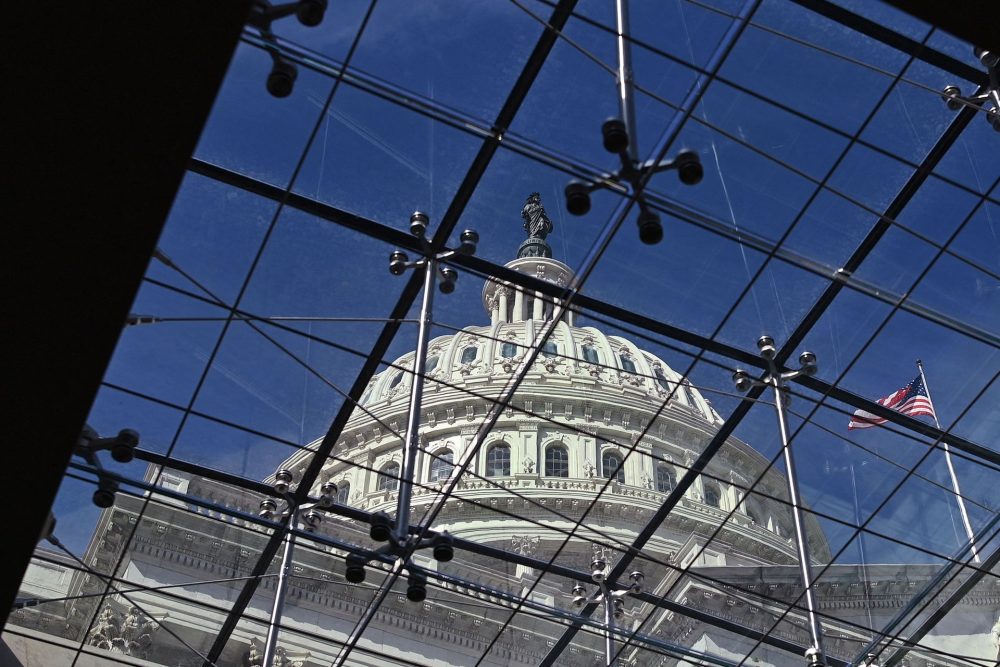
In the intricate dance of American federal budgeting, where executive requests often clash with legislative priorities, a notable trend has consistently emerged regarding key science agencies. Despite directives from the Trump administration to significantly curtail funding for various scientific research bodies, both the U.S. House of Representatives and the Senate have, with remarkable bipartisan consensus, largely ignored these proposed cuts. Instead, lawmakers have frequently moved to restore, and in some cases even boost, allocations for crucial scientific endeavours, highlighting a deep-seated commitment to research and development that transcends political divides. This legislative stance carries significant implications, not only for American innovation but also for global scientific progress, with ripple effects felt even in distant nations like India.
The Capitol’s Stance on Scientific Investment
The Trump administration’s budget proposals often reflected a desire to reduce federal spending across many sectors, and science agencies were not immune. Agencies like the National Institutes of Health (NIH), the Environmental Protection Agency (EPA)’s scientific programs, the National Oceanic and Atmospheric Administration (NOAA), and various research offices within the Department of Energy (DOE), particularly the Office of Science, frequently faced requests for substantial budget reductions. These proposals often cited aims to streamline government, reduce deficits, or shift focus.
However, year after year, congressional appropriators from both Republican and Democratic parties have demonstrably pushed back. Committees responsible for drafting spending bills have consistently rejected the administration’s proposed cuts, opting instead to provide stable or increased funding for these critical institutions. For instance, the NIH, a cornerstone of biomedical research globally, often found its budget not just restored but incrementally increased by Congress, underscoring its broad support. Similar patterns were observed for basic energy research, climate science initiatives, and environmental monitoring programs.
The rationale behind this congressional resilience is multifaceted. Lawmakers frequently point to the long-term economic benefits of scientific research, citing job creation, industrial innovation, and enhanced global competitiveness. Furthermore, investments in health research directly impact public well-being, while robust funding for environmental and climate science is seen as essential for national security and disaster preparedness. Many legislators view federal funding for basic research as a crucial seed for future breakthroughs, arguing that private industry often cannot, or will not, undertake the high-risk, long-term foundational work that government support enables.
Global Repercussions and the Indian Perspective
The steadfast congressional support for science in the U.S. is not merely an internal American affair; its ramifications extend globally, shaping the landscape of international research and development. The U.S. remains a titan in scientific innovation, and the sustained funding of its agencies fuels discoveries that benefit humanity worldwide—from medical advancements and vaccine development to climate modelling and space exploration. Nations like India, deeply invested in their own scientific ambitions, closely observe these developments.
For India, the robust funding of U.S. science agencies has several layers of significance. Firstly, a substantial number of Indian scientists, researchers, and engineers contribute to these very institutions, forming a vital part of the global scientific diaspora. Consistent funding ensures opportunities for this talent, fostering international collaboration and knowledge exchange. Secondly, collaborative research projects between Indian institutions (like the IITs, IISc, and various CSIR labs) and their U.S. counterparts often depend on the stability of U.S. federal grants. Areas such as space research (e.g., ISRO-NASA collaborations), health sciences, and sustainable energy solutions are prime examples where shared resources and expertise accelerate progress.
Moreover, the emphasis by the U.S. Congress on fundamental research serves as a pertinent lesson for emerging scientific powers like India. While India is aggressively pushing for ‘Aatmanirbhar Bharat’ (self-reliant India) in science and technology, sustained public funding for foundational research, beyond immediate commercial applications, is paramount. Such investment creates an ecosystem where groundbreaking discoveries, potentially transforming sectors like biotechnology, artificial intelligence, and quantum computing, can flourish. As former Research Policy Analyst, Dr. Anya Sharma, aptly puts it, “Investment in science isn’t an expenditure; it’s an investment in our collective future, yielding dividends in health, prosperity, and national resilience that far outweigh the initial outlay.” This sentiment resonates strongly with India’s own long-term aspirations.
The consistent defiance of executive budget cuts by U.S. lawmakers underscores a bipartisan recognition of science as an indispensable national asset. By safeguarding funding for critical research agencies, the U.S. Congress reinforces the notion that scientific progress is a long-term investment that fuels innovation, addresses societal challenges, and maintains global leadership. For India and the broader international community, this legislative commitment ensures continued opportunities for collaboration, knowledge transfer, and shared advancement in the pursuit of scientific excellence, contributing to a better future for all.
The unwavering congressional support for science in the US serves as a beacon, illustrating the profound understanding that robust scientific infrastructure is the bedrock of national growth and global well-being. This perspective encourages sustained investment in R&D across nations, including India, which is aggressively charting its course in advanced scientific domains.

