


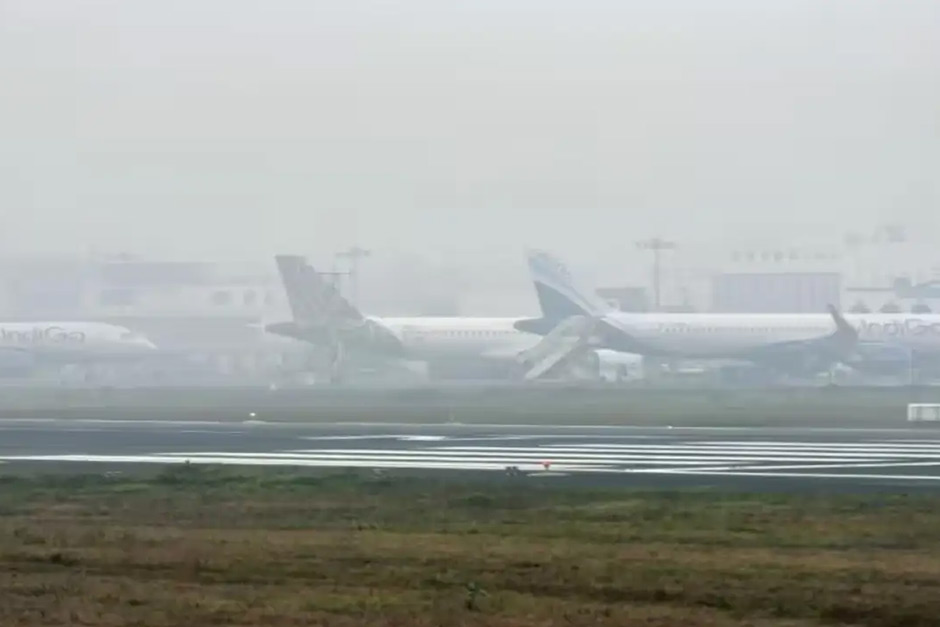
New Delhi’s Indira Gandhi International (IGI) Airport, a critical hub for domestic and international air travel, witnessed unprecedented chaos recently as dense fog brought operations to a grinding halt. The severe weather conditions led to a staggering 228 flight cancellations and over 800 significant delays, leaving thousands of passengers stranded, frustrated, and scrambling for alternative arrangements. The widespread disruption underscored the perennial challenge posed by Delhi’s winter fog and its far-reaching implications for India’s aviation sector and its myriad commuters.
Dense Fog Grips Delhi, Crippling Air Traffic
The ordeal began early morning when an extremely thick blanket of fog enveloped the national capital region, reducing visibility to near zero at times. For an airport like IGI, which handles hundreds of flights daily, such conditions severely impact operations. Standard flight take-offs and landings require a certain level of Runway Visual Range (RVR). While IGI is equipped with advanced CAT-III B instrument landing systems, allowing flights to operate in very low visibility (down to 50 meters RVR), not all aircraft and pilots are certified for these demanding conditions. This disparity creates a bottleneck, as only a limited number of flights can proceed, leading to a cascading effect of delays.
The peak of the disruption saw the airport operating at a fraction of its capacity. Arrival and departure schedules went haywire, with many incoming flights diverted to nearby airports such as Jaipur, Lucknow, and Ahmedabad. These diversions further exacerbated the problem, as aircraft and crew were displaced, impacting subsequent flights scheduled from IGI. Airlines struggled to re-route passengers, reschedule flights, and manage the logistical nightmare. The ripple effect was not confined to Delhi alone; connecting flights across the country and even internationally experienced disruptions due as the central hub was compromised.
Stranded and Stressed: The Passenger Experience
For passengers, the experience at IGI was nothing short of a nightmare. Thousands found themselves stuck in endless queues at check-in counters, airline offices, and customer service desks, desperately seeking information that was often scarce or contradictory. The sprawling terminals, usually bustling with efficient movement, turned into impromptu waiting lounges as people camped out on floors, benches, and even luggage trolleys. Families with young children, senior citizens, and business travelers with crucial appointments faced immense distress, their travel plans thrown into disarray.
Amidst the confusion, reports emerged of passengers venting their frustration at airline staff, demanding answers and alternative travel options. While airlines and airport authorities made efforts to distribute water and light refreshments, the sheer volume of affected individuals meant that resources were stretched thin. Many passengers took to social media to share their harrowing experiences, highlighting the lack of clear communication and the emotional toll of the prolonged waits. “I’ve been here for over 12 hours now,” remarked Ananya Sharma, a software engineer trying to reach Bengaluru, “My flight was cancelled without prior notice, and there’s no clarity on when I can fly next. It’s incredibly frustrating, and I’ve already missed an important meeting.” Such sentiments were echoed by countless others whose personal and professional commitments hung in limbo.
Navigating the Aftermath and Future Preparedness
As visibility gradually improved and flight operations slowly resumed, the task of clearing the backlog presented its own set of challenges. Airlines worked overtime to accommodate stranded passengers, often operating extra flights or deploying larger aircraft. However, the recovery process was slow, extending the period of inconvenience for many. The incident highlighted the need for more robust contingency plans and clearer communication protocols during such weather-induced disruptions.
While Delhi’s winter fog is a recurring phenomenon, the scale of this particular disruption was significant, underscoring the delicate balance of air traffic management in challenging conditions. Investing further in infrastructure, pilot training for CAT-III operations across more airlines, and enhancing real-time information dissemination systems are crucial steps to mitigate the impact of future weather events. As IGI continues to be a pivotal gateway, ensuring smoother operations during adverse weather remains a top priority for both passenger convenience and the economic efficiency of India’s aviation sector.
*

