


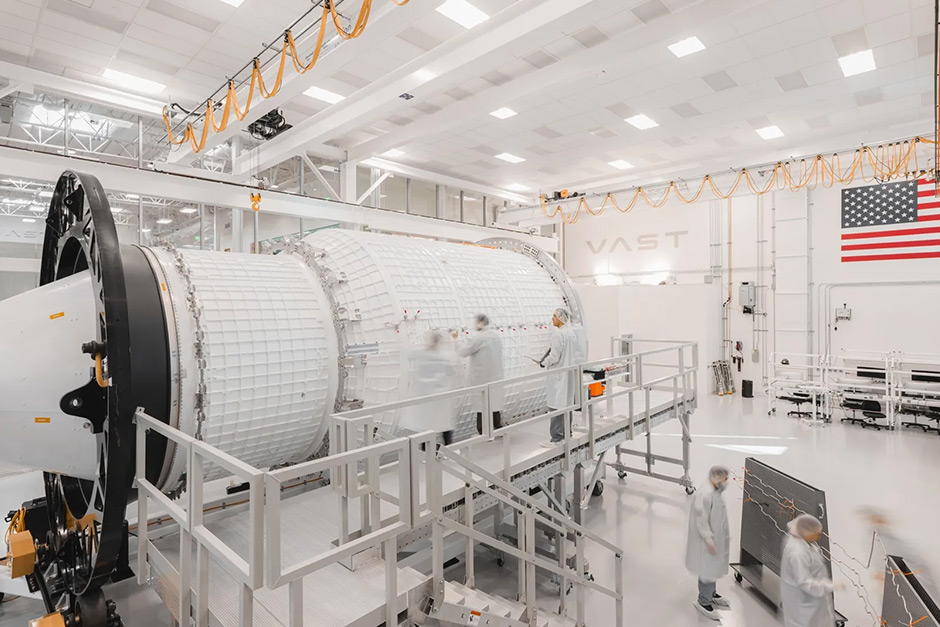
For decades, the International Space Station (ISS) has been a beacon of international collaboration and scientific endeavour in low Earth orbit. However, as the venerable outpost approaches its planned retirement, a new era of space exploration is dawning, spearheaded not by government agencies alone, but by ambitious private enterprises. Among the most prominent of these new ventures is Vast’s Haven 1, a private space station poised to redefine humanity’s presence beyond Earth, and a development keenly watched by a space-faring nation like India.
The Dawn of Commercial Space Stations: What is Haven 1?
Vast, a company founded with the bold vision of enabling humanity to live and work in space for generations, is at the forefront of this commercial revolution. Their inaugural project, Haven 1, is designed to be a compact, modular commercial space station with an initial capacity to host a crew of four astronauts for missions lasting up to 30 days. Slated for launch as early as August 2025, Haven 1 represents a significant pivot from the government-centric model to a commercially viable and accessible platform in space.
The station itself is planned to be approximately 100 cubic meters in volume, equipped with all the necessary life support systems, communication capabilities, and research facilities to support a diverse range of activities. From microgravity research and in-space manufacturing to astronaut training and eventually, space tourism, Haven 1 aims to cater to a broad clientele. Vast has partnered with SpaceX, leveraging the reliable Falcon 9 rocket for Haven 1’s launch and the Dragon capsule for crew transport, highlighting a powerful synergy between private launch providers and space station developers.
“We are excited to launch Haven-1 and its first crew to expand humanity’s reach into space, and enable a new era of space utilization,” stated Max Haot, CEO of Vast, underscoring the company’s ambitious goals. This sentiment reflects a growing global desire for more accessible and versatile platforms in orbit, offering unprecedented opportunities for innovation and discovery.
India’s Stake in the New Space Economy
The emergence of private space stations like Haven 1 holds profound implications for India, a nation rapidly accelerating its space ambitions. While ISRO (Indian Space Research Organisation) has its own long-term plans for a “Bharatiya Antariksh Station” by 2035, the immediate future might see Indian scientists, researchers, and even astronauts benefiting from access to commercial platforms like Haven 1.
India’s burgeoning private space sector, with startups like Agnikul Cosmos and Skyroot Aerospace making significant strides in launch vehicle development, could find new avenues for collaboration. Access to private space stations could offer Indian companies and academic institutions vital research opportunities in microgravity, material science, pharmaceuticals, and biotechnology without the astronomical costs and lengthy timelines associated with building and maintaining a national station from scratch. This democratisation of access to low Earth orbit (LEO) could significantly accelerate India’s scientific and technological advancements in space.
Furthermore, Haven 1 could serve as a valuable training ground for future Indian astronauts, offering practical experience in space operations and long-duration missions. Such partnerships could foster technology transfer, talent development, and integrate India more deeply into the global commercial space ecosystem. As the world shifts towards a multi-platform, multi-user approach to space infrastructure, India’s strategic engagement with private entities like Vast could prove crucial for maintaining its competitive edge and achieving its long-term space exploration goals.
Challenges and the Road Ahead
Building and operating a private space station is not without its challenges. Financial sustainability, stringent safety regulations, and the complexities of space operations are significant hurdles. However, the modular design of Haven 1, intended to eventually integrate into a much larger Vast space station, points to a scalable and potentially more resilient model for commercial space infrastructure. This approach offers flexibility and the ability to expand capabilities as demand grows and technologies mature.
The vision behind Haven 1 represents a fundamental shift in how humanity perceives and utilises space. It moves beyond the exclusive domain of government agencies, opening up LEO to a broader array of users and applications. For India, this commercial frontier presents a unique opportunity to leapfrog traditional development cycles, foster its domestic space industry, and ensure its continued prominence in the global space arena. As Haven 1 prepares for its maiden voyage, it carries with it not just the dreams of its creators, but the aspirations of nations like India, eager to explore the vast opportunities of the new space economy.

