


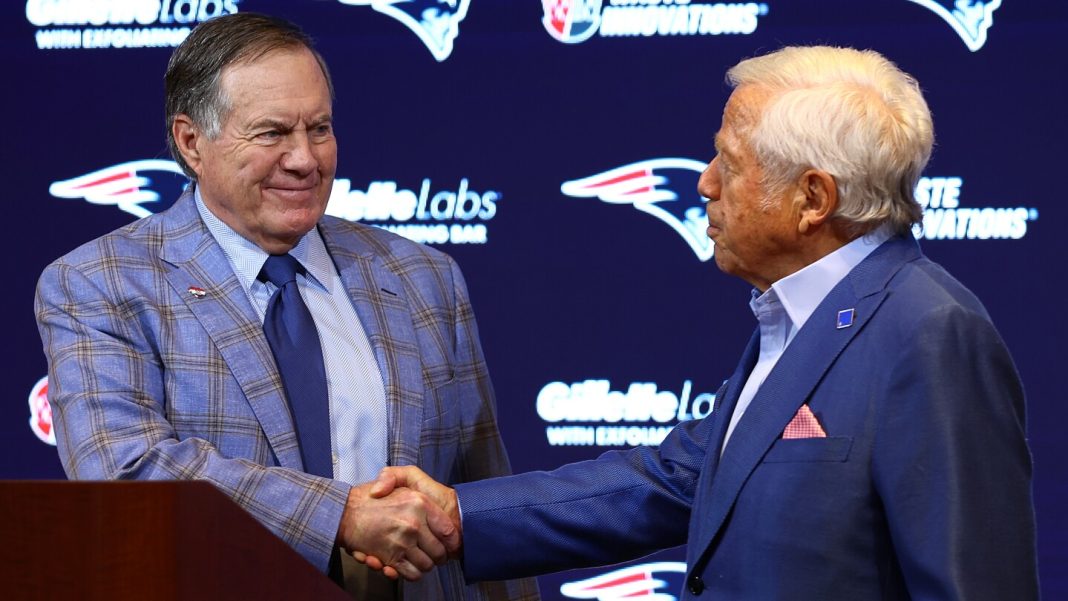
The New England Patriots dynasty is one of the most dominant in sports history, sparking countless debates about who deserves the most credit for its unparalleled success. While the eventual Hall of Fame inductions of both Bill Belichick and Robert Kraft seem inevitable, a recent explanation from Hall of Fame voter Mike Chappell has thrown a fascinating wrench into the conventional wisdom, highlighting a distinct perspective on their respective legacies. Chappell’s stance? For his vote, it’s Robert Kraft who stands out, not Bill Belichick.
The Architect vs. The Foundation: A Deeper Look at Leadership
Chappell’s rationale isn’t a slight against Belichick’s coaching genius, but rather a profound appreciation for the foundational role Robert Kraft played. When Kraft purchased the Patriots in 1994, the franchise was teetering on the brink of relocation, a perennial cellar-dweller with an aging stadium and a crumbling infrastructure. Kraft didn’t just buy a team; he saved it, planted roots in New England, and immediately set about building a first-class organization from the ground up.
Think about it: before any championships, before any coaching dynasties, there was the owner making the crucial, often financially risky, decisions that laid the groundwork. He invested in a new stadium, Gillette Field, a modern facility that became a symbol of the team’s revitalization. More importantly, he fostered a culture of excellence and accountability long before Belichick ever stepped foot in Foxborough. This isn’t just about hiring the right people; it’s about creating the environment where the right people can thrive and execute their vision. Chappell’s vote, therefore, champions Kraft as the ultimate “franchise builder” – a category distinct from the on-field tactical mastermind.
Belichick’s Brilliance, Seen Through a Different Lens
No one questions Bill Belichick’s place among the greatest coaches of all time. His six Super Bowl rings with the Patriots speak volumes about his tactical acumen, his ability to adapt, and his unparalleled understanding of the game. He revolutionized defensive schemes, maximized player potential, and consistently put his teams in a position to win. His legacy as a coach is secure, etched into NFL history forever.
However, Chappell’s argument posits that Belichick’s incredible run occurred within a framework that Kraft painstakingly constructed. Belichick inherited an organization that, while not yet a winner, was stable, well-resourced, and committed to a long-term vision. As one long-time sports analyst commented, “Kraft created the fertile ground. Belichick then planted the seeds and grew the crops. Both are essential, but you can’t have the harvest without the soil.” This perspective doesn’t diminish Belichick’s achievements; it simply highlights the crucial, often overlooked, role of the owner in setting the stage for such unprecedented success. Chappell is emphasizing that the owner’s strategic decisions and financial commitments are the bedrock upon which dynasties are built.
Ultimately, Chappell’s explanation invites us to consider the multifaceted nature of greatness within professional sports. It’s not just about the touchdowns or the tackles, the play calls or the personnel decisions. It’s also about the visionaries who build institutions, who take monumental risks, and who cultivate the entire ecosystem necessary for sustained excellence. While both Robert Kraft and Bill Belichick are undoubtedly headed for Canton, Chappell’s vote offers a compelling argument for recognizing the owner as the ultimate architect of the modern NFL dynasty, laying the foundation for all the glory that followed.

