


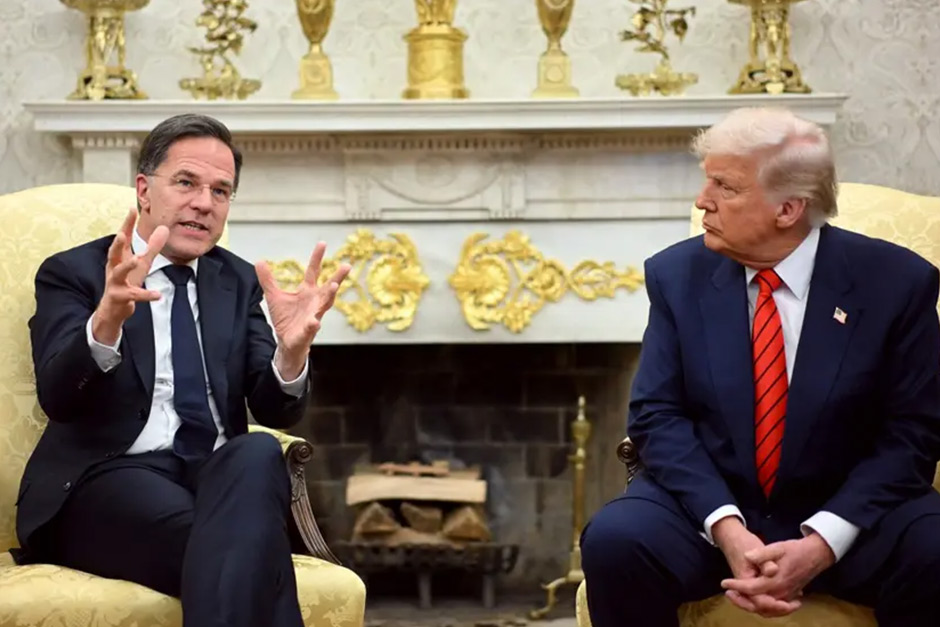
The Arctic, long a frozen frontier, has recently emerged as a hotbed of geopolitical intrigue, with Greenland at its very epicentre. What began as an unconventional proposal by US President Donald Trump to purchase the autonomous Danish territory has swiftly escalated into a diplomatic imbroglio, drawing in the North Atlantic Treaty Organization (NATO). In a development that underscores the strategic significance of the region, NATO Secretary-General Jens Stoltenberg has confirmed a phone call with President Trump and is set to meet the US President, with the specifics of their discussion regarding the Arctic remaining tightly under wraps.
The Greenland Gambit and Diplomatic Frost
The saga began with reports surfacing about President Trump’s serious interest in acquiring Greenland, an idea publicly dismissed by Denmark’s Prime Minister Mette Frederiksen as “absurd.” This sharp rejection, perceived by President Trump as an insult, led to the abrupt cancellation of his scheduled state visit to Denmark. The incident not only strained relations between two long-standing allies but also cast a spotlight on Greenland’s unique position and immense strategic value.
Greenland, though geographically part of North America, is politically an autonomous territory within the Kingdom of Denmark. Its vast landmass, rich in untapped mineral resources, and its critical geographical location – straddling the Arctic and Atlantic oceans – make it a coveted asset in an era of shifting global power dynamics. From a security standpoint, the US maintains an important airbase at Thule, Greenland, a vital component of its ballistic missile early warning system and space surveillance network. The recent diplomatic friction, therefore, has implications far beyond a simple real estate transaction, touching upon allied cohesion and regional security.
NATO’s Northern Flank and the Arctic Agenda
The intervention by NATO’s Secretary-General Jens Stoltenberg signals the broader geopolitical dimensions of the Greenland episode. While the specifics of his Arctic-focused call with President Trump and their upcoming meeting are undisclosed, it’s clear NATO views the Arctic as an increasingly critical theatre. The melting Arctic ice cap is not merely an environmental concern; it is rapidly transforming the region into a new maritime crossroads, opening up shorter shipping routes and access to vast reserves of oil, gas, and rare earth minerals.
NATO’s founding principle is collective defence, and the Arctic forms its northern flank. Member states like Norway, Canada, Denmark (through Greenland), and the United States have direct interests in the region. Russia has been steadily militarizing its Arctic coastline, reopening Soviet-era bases and conducting regular exercises. China, though not an Arctic nation, has declared itself a “near-Arctic state” and is actively pursuing its “Polar Silk Road” initiative. In this escalating competition, maintaining allied unity and a coherent strategy becomes paramount. Stoltenberg’s engagement likely aims to de-escalate tensions between the US and Denmark, reinforce allied solidarity, and ensure a coordinated approach to the evolving Arctic landscape, where freedom of navigation and responsible resource management are key concerns.
The Arctic’s Global Ripple Effect: An Indian Perspective
The “Greenland grab” saga, while centred on transatlantic relations, reverberates across the globe, including for non-Arctic nations like India. As a major emerging economy and a rapidly developing scientific and strategic power, India has a vested interest in the Arctic. Climate change impacts in the Arctic, such as melting glaciers and rising sea levels, have direct consequences for India’s monsoon patterns and coastal regions. Furthermore, the potential opening of new shipping lanes through the Arctic could significantly alter global trade routes, impacting India’s maritime commerce.
India maintains an active research station, Himadri, in Ny-Ålesund, Svalbard, and holds observer status in the Arctic Council, indicating its long-term commitment to scientific research and understanding the region’s dynamics. The increasing militarization and resource competition in the Arctic, as highlighted by the Greenland incident, are watched closely by New Delhi. “The Arctic is no longer a peripheral issue; it is central to global climate dynamics, resource security, and geopolitical stability,” says Dr. Rohan Gupta, a geopolitical analyst based in Delhi. “Any significant shift in its control or strategic alignment, even indirectly, impacts the intricate web of international relations that includes India’s broader strategic interests.” India advocates for peaceful cooperation and scientific exploration in the Arctic, aiming to balance its environmental concerns with its economic and strategic aspirations.
The Greenland episode transcends a simple diplomatic spat, morphing into a potent symbol of the Arctic’s burgeoning strategic importance. The involvement of NATO’s chief underscores the region’s critical role in global security architecture. As the ice continues to recede, revealing new pathways and resources, the world will be closely watching how major powers, and alliances like NATO, navigate the complex geopolitical currents shaping the future of this once-remote frontier.

