


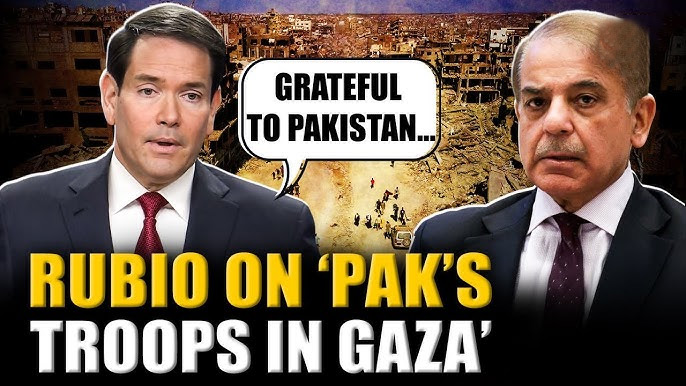
The ongoing conflict in Gaza has brought unprecedented devastation, creating a desperate humanitarian crisis and intensifying global calls for a lasting resolution. Amidst the complex diplomatic landscape, an intriguing development has emerged: Pakistan’s proactive offer to deploy troops for post-conflict peacebuilding in the besieged enclave. This overture has been met with a noteworthy response from the United States, which, while not a direct acceptance, expressed gratitude for Islamabad’s willingness to contribute.
The situation in Gaza remains dire, with relentless hostilities leading to immense civilian casualties and the widespread destruction of infrastructure. International efforts are focused not only on securing an immediate ceasefire but also on envisioning a sustainable future for the Strip. It is against this backdrop that Pakistan’s proposal takes on significant diplomatic weight, signaling a desire from a key South Asian nation to actively participate in resolving one of the world’s most intractable conflicts.
Pakistan’s Overture and Washington’s Acknowledgment
Pakistan’s proposal, reportedly conveyed through diplomatic channels, outlined a readiness to deploy its forces for post-conflict stabilization and peacebuilding efforts in Gaza. This move comes as the international community grapples with the immense challenge of not only securing a lasting ceasefire but also envisioning the ‘day-after’ scenario for Gaza, which includes critical humanitarian aid delivery, reconstruction, and ensuring the safety of displaced populations. Pakistan has a long and distinguished history in United Nations peacekeeping operations, having contributed hundreds of thousands of troops to various missions across the globe over decades, a factor that likely underpins its confidence in making such an offer.
The United States, through State Department spokesperson Matthew Miller, publicly acknowledged and expressed appreciation for Pakistan’s initiative. “We are grateful for countries who are willing to contribute to peace and stability in the region,” Miller stated during a press briefing, underscoring the complexities involved. He further elaborated that while the US is exploring various options for a post-conflict Gaza, any such deployment would necessitate detailed discussion and careful consideration of the operational environment. This diplomatic acknowledgment signals Washington’s recognition of Islamabad’s desire to play a constructive role, even as the specifics of any future mission remain highly uncertain.
The Intricate Path to Peacebuilding in Gaza
Deploying an international force for peacebuilding in Gaza presents a labyrinth of logistical, security, and political challenges. The primary hurdle remains the absence of a clear, internationally agreed-upon post-conflict governance structure for the enclave, as well as the deeply entrenched security concerns of all parties involved, including Israel and Hamas. A peacebuilding mission would require not only robust security protocols but also a clear mandate, perhaps from the United Nations Security Council, which itself is often subject to geopolitical divisions.
Moreover, the very definition of ‘peacebuilding’ in a territory ravaged by conflict and suffering from decades of political deadlock is complex. It goes beyond merely maintaining a ceasefire; it involves safeguarding humanitarian corridors, facilitating reconstruction, and potentially contributing to a transitional administrative setup. Analysts suggest that any external force would need not only permission from a legitimate governing authority in Gaza – which is currently undefined – but also assurances from Israel regarding troop safety and operational freedom. The lack of a universally accepted blueprint for Gaza’s future makes any immediate deployment a distant prospect, requiring painstaking diplomatic negotiations and convergence of interests among key international and regional players.
Regional Dynamics and Broader Implications
Pakistan’s offer, irrespective of its immediate viability, carries significant diplomatic weight. For Islamabad, it serves to reinforce its image as a responsible global actor committed to international peace and security, potentially enhancing its standing in the Muslim world and with key Western powers, including the United States. It also aligns with Pakistan’s long-standing foreign policy of advocating for the Palestinian cause, a sentiment shared across much of the Islamic world.
The broader implications extend to the evolving geopolitical landscape of the Middle East. As calls for a two-state solution gain renewed urgency and discussions around a post-conflict Gaza intensify, various models for international oversight and assistance are being debated. Pakistan’s readiness adds another dimension to these deliberations, highlighting the potential for diverse contributions from nations far beyond the immediate region. From an Indian perspective, such developments in Pakistan’s foreign policy, particularly its engagements with the US and its projection of influence in critical geopolitical hotspots, are always observed with keen interest, contributing to the complex tapestry of South Asian strategic calculations. The success or failure of such proposals could shape future multilateral approaches to conflict resolution and peacekeeping in volatile regions.
Pakistan’s offer to contribute troops for peacebuilding in Gaza, and the US’s diplomatic gratitude, underscores the urgent global search for solutions to the humanitarian catastrophe and political vacuum in the Strip. While the path to actual deployment is fraught with immense challenges and requires extensive international consensus, the development itself is a testament to the persistent diplomatic efforts to bring stability to one of the world’s most volatile regions. The journey towards a peaceful and stable Gaza remains long and arduous, demanding unprecedented levels of cooperation, compromise, and a shared vision for the future.

