


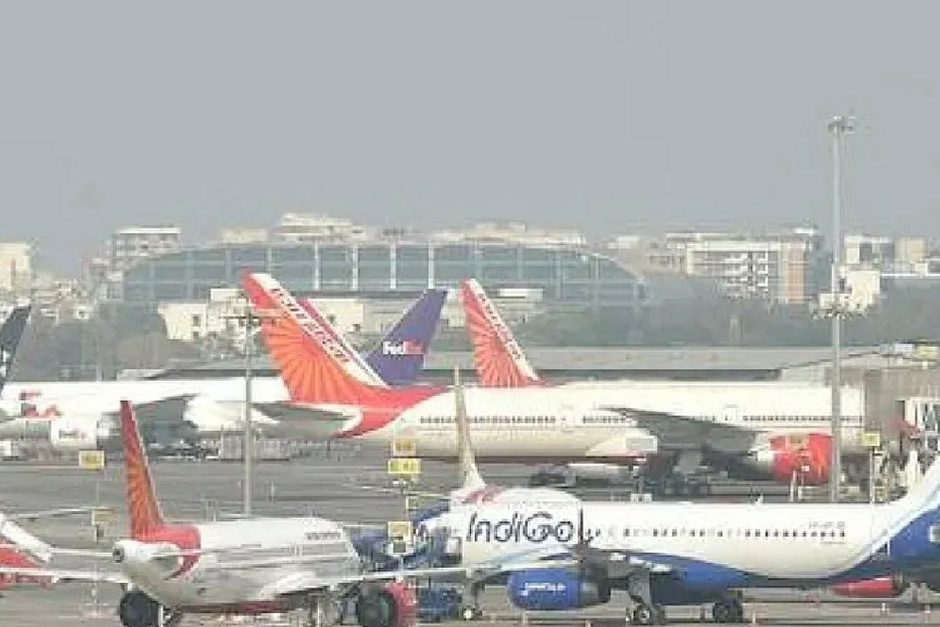
India’s aviation sector is currently grappling with a significant challenge as the government officially confirms incidents of GPS spoofing near Delhi Airport and widespread Global Navigation Satellite System (GNSS) interference affecting other major airports, including Mumbai and Kolkata. This revelation has brought to the forefront critical questions about aviation safety, national security, and the robustness of navigation infrastructure in the country.
The confirmation, emanating from official circles, underscores a growing concern that could potentially compromise the precision required for modern air travel. While GPS (Global Positioning System) is the most widely known GNSS, the term GNSS encompasses multiple satellite navigation systems such as Russia’s GLONASS, Europe’s Galileo, China’s BeiDou, and India’s own NavIC. Any disruption to these systems poses a direct threat to flight operations, particularly during crucial phases like takeoff and landing.
Understanding GPS Spoofing Near Delhi
The incident near Delhi Airport is particularly alarming due to its nature: GPS spoofing. Unlike jamming, which merely blocks or degrades GPS signals, spoofing involves transmitting fake GPS signals designed to deceive a receiver into calculating an incorrect position or time. This is a far more sophisticated and potentially dangerous form of interference. An aircraft receiving spoofed signals could be led to believe it is in a different location than its actual position, a scenario that could have catastrophic implications, especially in dense airspaces and during instrument approaches.
Sources within the aviation regulatory bodies indicate that the spoofing incidents have been intermittent but persistent, primarily observed in certain corridors leading to and from the Indira Gandhi International Airport. While immediate safety protocols, such as reliance on alternative navigation systems (like ILS – Instrument Landing System, and VOR – VHF Omnidirectional Range) and radar guidance, have prevented any immediate dangers to flights, the malicious intent or source behind these spoofed signals remains a subject of intense investigation. The Directorate General of Civil Aviation (DGCA) has reportedly issued advisories to airlines and air traffic controllers, emphasizing heightened vigilance and the mandatory use of conventional navigation aids as primary references if GPS discrepancies are noted.
Widespread GNSS Interference Across Major Airports
Beyond Delhi’s specific spoofing challenge, a broader pattern of GNSS interference has been detected at other major Indian airports, including Chhatrapati Shivaji Maharaj International Airport in Mumbai and Netaji Subhas Chandra Bose International Airport in Kolkata. This interference, while not explicitly confirmed as spoofing in all cases, points to a general degradation of satellite navigation signals in these critical aviation zones.
The nature of this wider interference can vary. It could stem from unintentional sources such as faulty ground-based electronic equipment, powerful radio frequency emitters, or even specific cellular network infrastructure. However, it could also be a result of deliberate jamming, where signals are intentionally overwhelmed with noise. Pilots operating in these affected airspaces have reported temporary loss or degradation of GPS signals, requiring a prompt switch to conventional navigation methods. This adds to pilot workload and introduces an element of uncertainty in an environment where precision is paramount.
The Airport Authority of India (AAI) and other relevant agencies are actively monitoring signal integrity and attempting to pinpoint the sources of these interferences. The complexity lies in distinguishing between accidental, benign interference and malicious, deliberate attempts to disrupt navigation. “This is a serious security and safety concern. Our priority is to ensure seamless and accurate navigation for all aircraft operating in Indian airspace,” stated a senior official involved in the investigation, highlighting the gravity of the situation and the government’s unwavering focus on resolving it.
Implications and India’s Response
The confirmed incidents carry significant implications for India’s aviation safety record and its strategic security. A reliable GNSS is fundamental for modern air traffic management, enabling efficient routes, precise landings, and overall operational efficiency. Disruption to these systems can lead to increased fuel consumption due to less direct routing, flight delays, and, most importantly, a heightened risk of navigational errors.
In response, the Indian government is adopting a multi-pronged approach. Firstly, enhanced surveillance systems are being deployed to accurately detect and localize sources of interference. Secondly, there’s a renewed focus on strengthening alternative navigation infrastructure, ensuring that traditional systems like ILS and VOR are fully operational and regularly maintained. Thirdly, the DGCA is working closely with intelligence agencies to investigate potential malicious actors or sources behind the spoofing incidents, especially near Delhi. Furthermore, discussions are underway to leverage India’s indigenous NavIC system more effectively as a resilient alternative or supplementary navigation source, reducing reliance on foreign GNSS systems in critical situations.
The situation demands continuous vigilance and technological innovation. As air traffic continues to grow, ensuring the integrity of navigation signals remains a top priority for maintaining India’s strong aviation safety standards. The ongoing efforts reflect a firm commitment to safeguarding the skies against both known and emerging threats to satellite navigation.

