


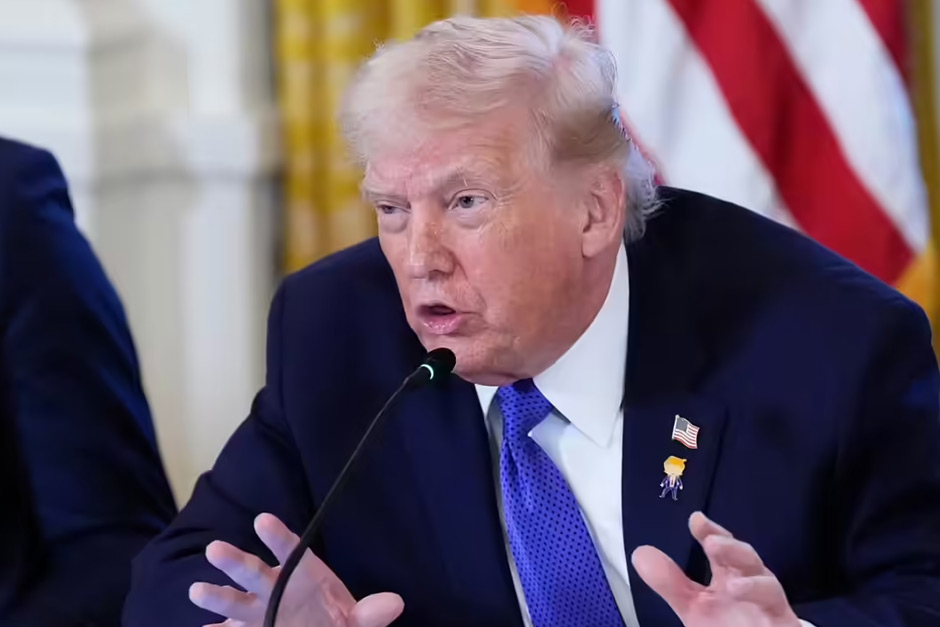
The Arctic, long viewed as a remote and pristine wilderness, is rapidly transforming into a new frontier for global geopolitical competition. At the heart of this unfolding drama is Greenland, the world’s largest island, whose strategic importance has recently been underscored by former US President Donald Trump. In a recent statement, Trump reiterated his commitment to US interests in Greenland, explicitly linking it to the perceived expansionist ambitions of Russia and China, and vowing to pursue American objectives “the hard way.” This declaration, coming years after his controversial proposal to purchase the island, signals a renewed focus on the critical role Greenland plays in the evolving balance of power, a development that India watches with keen interest.
The Arctic’s Geopolitical Chessboard and Greenland’s Pivotal Role
Greenland, an autonomous territory within the Kingdom of Denmark, is far more than just a vast landmass of ice and rock. Its strategic significance is multifaceted, encompassing abundant natural resources like rare earth minerals, oil, and gas, as well as its unique geographical position. The accelerating melt of Arctic ice caps is opening up new shipping lanes – the fabled ‘Arctic Silk Road’ – dramatically reducing transit times between Asia and Europe. For global powers, control or influence over these routes and resources translates directly into economic and strategic advantage.
The United States has long maintained a military presence in Greenland, most notably the Thule Air Base, a critical component of North American air defence and space surveillance. However, the dynamics are shifting. Russia has significantly ramped up its military activities and infrastructure development in its Arctic territories, while China, despite being a non-Arctic state, has declared itself a “near-Arctic state” and is actively pursuing its “Polar Silk Road” initiative through investments in shipping, mining, and research. This convergence of interests from major powers has heightened anxieties in Washington, making Greenland a crucial bulwark against what the US perceives as encroaching influence from its rivals.
For India, an observer member of the Arctic Council, developments in this region are not abstract. India’s scientific expeditions to the Arctic, particularly the Himadri research station, highlight its long-standing commitment to understanding climate change and its global impacts. Beyond environmental concerns, India recognizes the potential for new trade routes and resource exploration, even if its direct involvement remains primarily scientific and observational. The intensifying competition in the Arctic, therefore, impacts the very multilateral frameworks India often champions and underscores the challenges of maintaining peace and stability in an increasingly contested world.
Trump’s ‘Hard Way’ Vow: A Shift in Strategy?
The latest comments from Donald Trump mark a notable evolution from his initial, largely dismissed, proposition to purchase Greenland in 2019. That audacious offer, which was swiftly rejected by Denmark as “absurd,” sparked diplomatic ripples and highlighted the island’s unique status. Now, the rhetoric has moved from acquisition to assertion, with Trump stating, “Going to do it the hard way. They were talking about Russia and China taking over Greenland. I said, ‘Wait a minute, you have to remember that.’ It’s a very important strategic piece of property.”
What exactly “the hard way” entails remains open to interpretation. It could signify a multifaceted approach involving increased diplomatic pressure on Denmark and Greenland’s local government, augmented US military presence and exercises, or substantial economic investment and aid packages designed to counter Russian and Chinese overtures. The US already provides millions in aid to Greenland for economic development and natural resource exploration, signalling an intent to strengthen ties without resorting to outright purchase. This approach aligns with a broader US strategy of using a combination of military deterrence, economic leverage, and diplomatic engagement to counter the influence of strategic competitors globally.
Such an assertive posture by a major global power invariably creates ripples across the international community. While the US views its actions as necessary to secure its strategic interests and maintain regional stability, the pursuit of “the hard way” could also be seen as an imposition on sovereign nations and a further militarisation of the Arctic. For Denmark, balancing its NATO alliance obligations with its constitutional responsibilities towards Greenland, and for Greenlanders, who value their autonomy and indigenous rights, navigating this great power rivalry is a delicate act.
Conclusion: Greenland at the Crossroads of Global Power
Greenland, with its vast wilderness and strategic location, has undeniably become a focal point in the intricate web of global geopolitics. Donald Trump’s vow to pursue US interests “the hard way,” citing the perceived threats from Russia and China, underscores the accelerating competition for influence, resources, and strategic advantage in the Arctic. As the ice melts and new opportunities emerge, the island stands at the crossroads of major power ambitions, climate change, and the rights of its indigenous population.
From an Indian perspective, these developments in the Arctic are a critical barometer of the evolving global order. The intensification of strategic competition between major powers in new theatres like the Arctic highlights the imperative for countries like India to maintain strategic autonomy, diversify partnerships, and advocate for multilateral solutions to shared challenges. The future of Greenland will not only shape the geopolitical landscape of the Arctic but also offer a significant indicator of how global powers intend to manage their rivalries in the years to come.
*

