


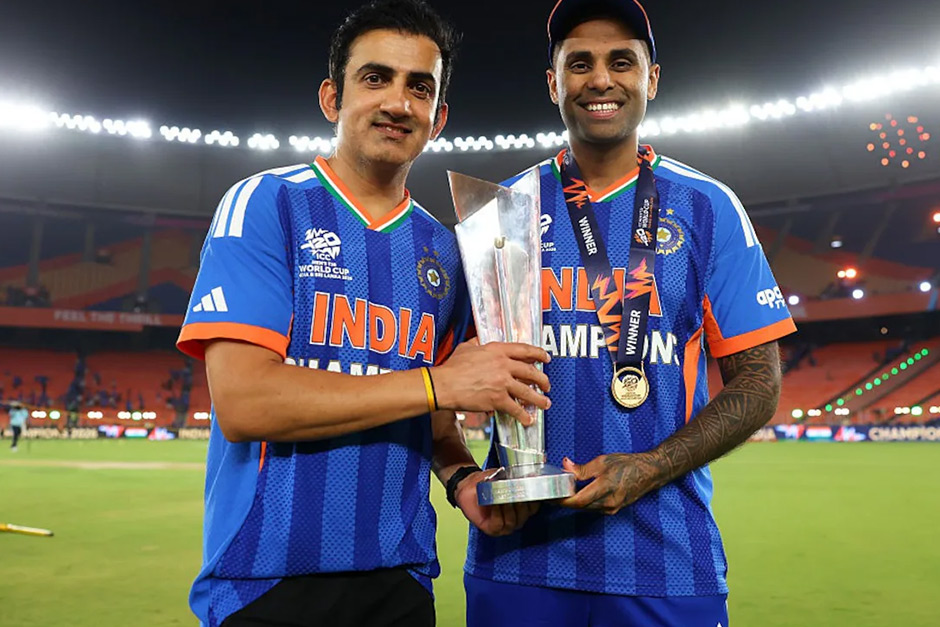
The air across India crackled with unparalleled euphoria as the Men in Blue lifted the ICC T20 World Cup 2024 trophy, ending a 13-year wait for an ICC title. From triumphant celebrations in the Caribbean to jubilant scenes back home, the nation united in an outpouring of joy and pride. Amidst the deafening cheers and widespread adulation, a voice known for its candidness and unvarnished opinions cut through the celebratory noise: Gautam Gambhir. The former India opener and architect of two World Cup wins made a pointed remark concerning “people on social media” that has since resonated, prompting discussions beyond the immediate triumph and delving into the evolving landscape of sports fandom.
The Euphoria and the Undercurrent
India’s journey to the T20 World Cup glory was nothing short of spectacular, culminating in a nail-biting final against South Africa. The victory, particularly sweet after a series of near misses in major tournaments, unleashed a nationwide catharsis. Players were hailed as heroes, their names chanted in every street corner, and their achievements celebrated with unprecedented fervour. Yet, Gautam Gambhir, a figure revered for his crucial contributions in 2007 and 2011 World Cup finals, chose a moment of peak national celebration to offer a perspective that seemed to address an underlying current in modern cricket fandom.
As the mentor of Kolkata Knight Riders, a successful IPL franchise, and a seasoned commentator, Gambhir possesses a unique vantage point on the dynamics of player performance, public expectation, and media scrutiny. His commentary often reflects a deep understanding of team dynamics over individual heroics, and a consistent emphasis on the collective spirit. It was from this informed position that his post-victory comments emerged, hinting at a nuanced take on how success and failure are perceived and amplified in the digital age.
Gambhir’s Pointed Observation on Social Media Fandom
Speaking to the media after India’s historic win, Gambhir’s remarks were a clear challenge to the prevalent narrative often pushed by online platforms. He asserted the importance of team effort and collective contribution over individual glorification, directly confronting the tendency to credit or blame single players for a team’s fortunes. His words, delivered with characteristic conviction, underscored a broader sentiment that has long been a talking point in sports circles, particularly in a cricket-obsessed nation like India.
Gambhir’s precise quote, which quickly went viral, encapsulated his perspective succinctly: “This is not about one individual, it is about India. It is about the 15 players, it is about the support staff, it is about the selectors. It is about everyone who has put their hard work. And this is not about social media.” This direct reference to “social media” was particularly striking. It wasn’t merely a dismissal of online chatter but seemed to be a deliberate attempt to redirect focus from transient online narratives to the tangible, collective effort that goes into achieving such a monumental victory. Gambhir has often been critical of what he perceives as a disproportionate focus on individual statistics or fame, advocating instead for the selflessness required to build a winning unit.
The remark can be interpreted as a subtle critique of how social media platforms often create echo chambers, amplify individual storylines, and sometimes even foster unrealistic or hyper-critical fan behavior. In a country where cricketers are elevated to demi-god status, the online space can become a double-edged sword, showering immense praise one day and unleashing vitriolic criticism the next. Gambhir, having experienced both extremes during his playing career and now as a public figure, likely sought to ground the celebration in the reality of teamwork, far removed from the often-superficial metrics of online popularity or trending topics.
The Evolving Landscape of Indian Cricket Fandom
Gambhir’s statement touches upon a crucial aspect of modern sports: the pervasive influence of social media on fan engagement and player perception. In India, where cricket is more than just a sport, platforms like X (formerly Twitter), Instagram, and Facebook have become arenas for instant analysis, passionate debates, and often, unbridled emotional responses. This digital shift has democratized sports commentary, allowing every fan a platform, but it has also introduced new challenges for players and teams.
Players are constantly under the scanner, with every performance, every gesture, and even personal lives subjected to intense scrutiny and commentary. While social media can foster a deeper connection between fans and their heroes, it can also breed toxicity, create unrealistic expectations, and fuel narratives that may not always align with the ground realities of team sport. Gambhir’s comments serve as a timely reminder that genuine sporting success is built on sustained effort, strategic planning, and collective sacrifice, elements that often get diluted in the rapid-fire, often sensationalized world of online discourse. His call was perhaps for a more discerning and holistic appreciation of the game, one that values the ‘team India’ spirit above all else, even when navigating the complexities of the digital age.
Ultimately, while the nation rightly celebrated a historic World Cup triumph, Gautam Gambhir’s “people on social media” remark injected a moment of introspection. It urged fans to look beyond the transient trends and focus on the fundamental values that underpin sporting success: unity, perseverance, and selfless dedication. It was a call to celebrate the collective achievement, recognizing that true glory is a mosaic of many contributions, far beyond the reach of a single hashtag or viral post.
The T20 World Cup 2024 victory will be remembered for decades, not just for the exhilarating cricket, but also for the powerful discussions it sparked, including Gambhir’s poignant reminder about the essence of true sportsmanship in an increasingly digital world.

