


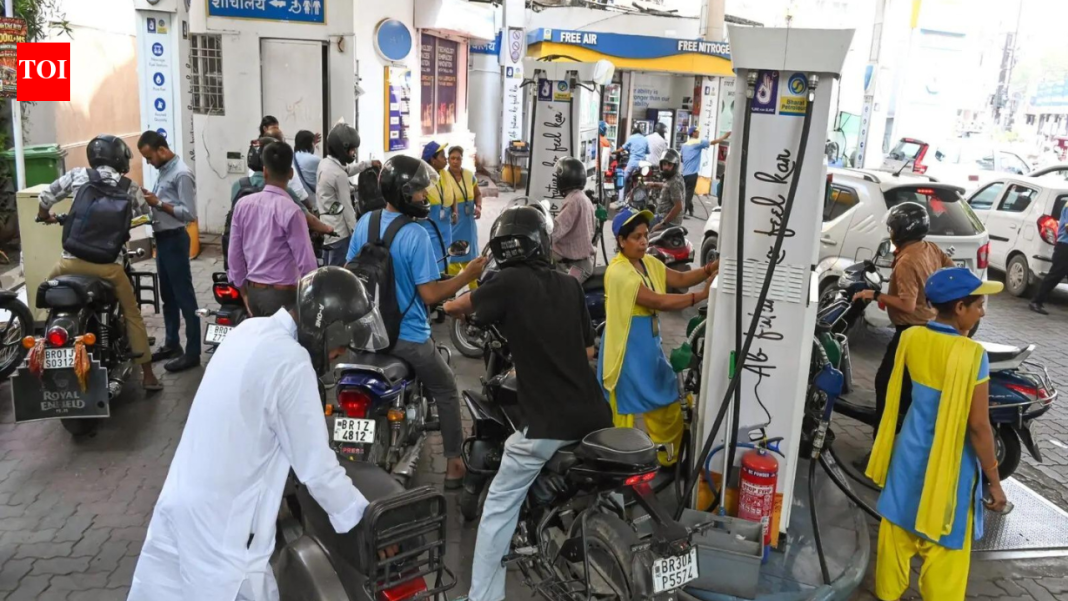
Indian consumers are once again feeling the pinch as fuel prices have registered their third increase in just ten days. This relentless upward trend at the pumps is not only impacting household budgets but also revealing a stark financial reality for the nation’s state-owned oil marketing companies (OMCs). Reports suggest that these public sector undertakings (PSUs) are currently incurring substantial losses, estimated at Rs 13 per litre on petrol and a staggering Rs 38 per litre on diesel, highlighting a complex economic challenge facing India.
The Relentless Climb: A Closer Look at Price Revisions
The recent series of price hikes marks a significant shift after an extended period of relative stability, a stability maintained despite volatility in international crude oil markets. India operates on a system of dynamic fuel pricing, where petrol and diesel rates are revised daily based on a 15-day rolling average of international benchmark prices and foreign exchange rates. Ideally, this mechanism allows OMCs to pass on global price fluctuations to consumers promptly, preventing large sudden shocks and ensuring their financial health.
However, the current scenario suggests a deviation from this ideal. For several months leading up to the recent increases, prices remained largely static, even as global crude oil prices steadily climbed, driven by geopolitical tensions, robust demand recovery, and supply constraints from major oil-producing nations. Brent crude, a global benchmark, has been hovering around the $100 per barrel mark, a level not seen in years. This delayed adjustment meant that OMCs like Indian Oil Corporation (IOC), Bharat Petroleum Corporation Limited (BPCL), and Hindustan Petroleum Corporation Limited (HPCL) were absorbing the rising input costs, leading to the substantial “under-recoveries” now coming to light. The recent, frequent, albeit smaller, hikes are an attempt to bridge this widening gap.
OMCs Under Pressure: The Burden of Under-recoveries
The term under-recoveries refers to the difference between the cost of procuring, refining, and distributing fuel and the price at which it is sold to consumers. When OMCs sell fuel below their cost price, they incur losses, which accumulate rapidly given the sheer volume of fuel sold across the country daily. The reported losses of Rs 13/litre on petrol and Rs 38/litre on diesel are indicative of the severe financial strain these companies are currently under. These figures are not mere accounting entries; they represent real money that OMCs are losing on every litre sold.
Such significant under-recoveries have far-reaching implications. For one, they erode the profitability of these government-owned entities, impacting their ability to fund capital expenditures, invest in infrastructure upgrades, or even declare dividends to the government, which is a major shareholder. Prolonged losses could also affect their credit ratings and overall financial stability. The delicate balance between ensuring affordable fuel for the populace and maintaining the financial viability of OMCs is a perpetual challenge for policymakers.
Industry experts have weighed in on the situation. “The current under-recoveries faced by Indian OMCs are unsustainable in the long run,” commented Dr. Ramesh Kumar, an independent energy analyst. “The delay in passing on international crude price increases has created a significant hole in their balance sheets. While the recent price adjustments are necessary for their survival, they unfortunately burden the consumer and underscore the need for a more transparent and responsive pricing mechanism that truly reflects global realities without undue lag.”
The Ripple Effect: Inflationary Pressures and Consumer Impact
For the average Indian household, the increasing fuel prices translate directly into higher expenditure. Transportation costs, whether for personal commute or public transport, rise immediately. Beyond direct impact, there’s a significant inflationary ripple effect across the economy. Fuel is a critical input for almost every sector. Logistics and freight charges increase, pushing up the cost of essential goods, including food items and other daily necessities. Farmers face higher expenses for operating machinery and transporting produce to markets, which invariably gets passed on to the end consumer.
This widespread inflationary pressure puts immense strain on household budgets, particularly for those with fixed incomes. Small and medium-sized enterprises (SMEs) also feel the heat, as their operational costs surge, potentially impacting their profitability and growth. The government, on its part, faces a complex dilemma: balance the need for revenue generation through fuel taxes (excise duty and state VAT form a substantial portion of the final fuel price) with the imperative to control inflation and ease the burden on consumers and businesses.
The current fuel price scenario is a stark reminder of India’s significant reliance on crude oil imports and its vulnerability to global market fluctuations. While the OMCs struggle to recover costs, consumers brace for potential further hikes and the broader economic implications of sustained inflationary pressures. Navigating this intricate web of global economics, domestic policy, and consumer welfare remains a critical challenge for the nation.

