


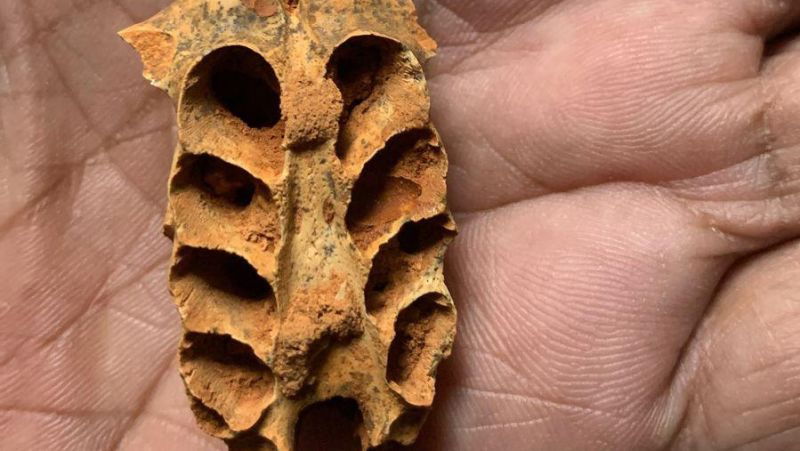
The world beneath our feet, especially the ancient one, often holds secrets far more imaginative than any fiction. We often think of dinosaurs when we talk about fossils, but sometimes, the tiniest imprints left by the smallest creatures can reveal the most astonishing stories. That’s precisely what a recent find of fossil bee nests has done, unveiling a behavior so unique, so unexpected, that it’s challenging everything we thought we knew about our winged friends.
A Glimpse into Ancient Ingenuity
Imagine discovering a perfectly preserved nursery, not of a large mammal, but of ancient solitary bees from millions of years ago. These aren’t just empty chambers; they are detailed capsules, offering an intimate look into the daily lives of creatures that buzzed long before humans walked the Earth. Paleontologists, sifting through ancient sedimentary layers, unearthed these remarkably intact nesting cells, each a testament to meticulous construction.
What makes this find particularly compelling is not just the preservation, but the material used. While modern solitary bees, like leafcutter bees, are known for lining their nests with carefully cut pieces of leaves or even mud, these ancient architects employed something entirely different, something truly extraordinary.
The Petal Architects of Yesteryear
The astonishing revelation from these fossil nests is that the ancient bees didn’t use leaves or resin; they used flower petals to line their individual brood cells. Think about that for a moment: delicate, colorful petals, meticulously gathered and arranged to create a soft, protective cradle for their offspring. This is a behavior largely unprecedented in the fossil record, and incredibly rare among living bees.
The implications are profound. This isn’t just about nest construction; it speaks volumes about the ancient ecological relationships between these bees and the flowering plants of their time. It suggests a sophisticated selection process, perhaps even a specific preference for certain plant species whose petals offered not just insulation, but possibly even antimicrobial properties or a specific scent profile. As Dr. Lena Petrova, a paleontologist specializing in insect trace fossils, remarked, “It’s like finding a tiny, colorful time capsule that shows us these ancient bees were true artists, using nature’s pigments and textures in ways we’d never imagined. It completely redefines their known behavioral repertoire.“
This discovery forces us to reconsider the adaptability and ingenuity of ancient insects. These bees weren’t just survivors; they were innovators, using the resources available in their environment in a way that maximized the chances of success for their future generations.
Echoes of an Ancient Bloom
While modern bees have diversified their nesting strategies, the widespread use of petals on such a scale remains a captivating anomaly. It highlights the immense plasticity of insect behavior over geological timescales and reminds us that evolution often explores paths we might deem too intricate or specific. This ancient practice of petal-lining might have been a highly specialized adaptation to a particular floral landscape, offering advantages that simpler leaf or mud linings couldn’t match.
The existence of such a nuanced behavior millions of years ago underscores the deep co-evolutionary dance between insects and flowering plants. Every fossil, every tiny trace, adds another brushstroke to the grand tapestry of life on Earth, continuously challenging our assumptions and expanding our understanding of biological complexity.
Ultimately, these fossil bee nests are far more than just ancient remnants. They are a vibrant window into the creative solutions and intricate lives of creatures long past. They remind us that even the smallest beings can harbor the most astonishing secrets, waiting patiently for us to uncover them. This discovery isn’t just a win for paleontology; it’s a testament to the endless wonders of the natural world and a compelling invitation to look closer, listen harder, and appreciate the incredible ingenuity that has shaped life on our planet for eons. What other marvels are still hidden, waiting to redefine our understanding?

