


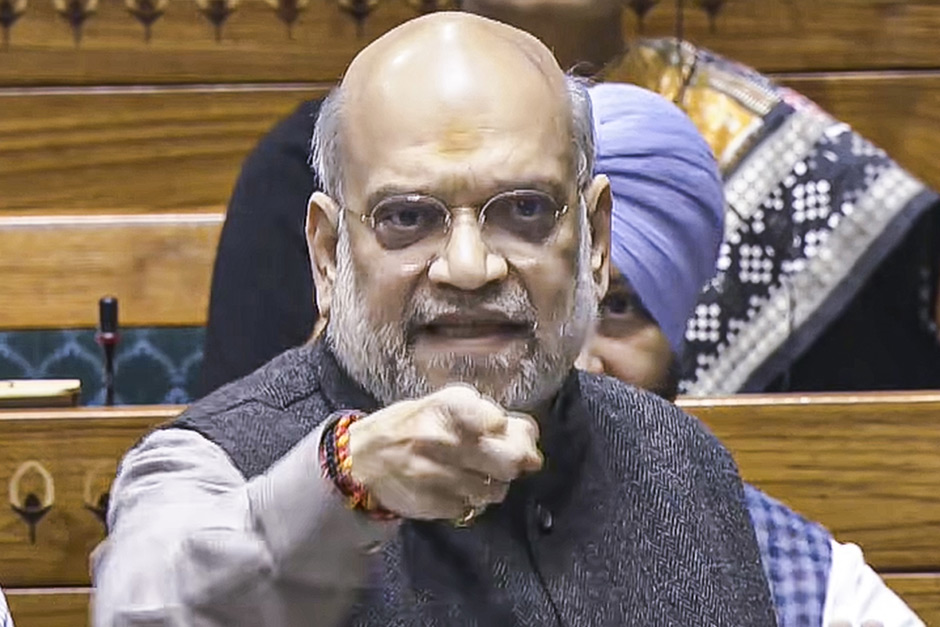
In a significant escalation of political rhetoric, Union Home Minister Amit Shah recently launched a scathing attack on the Congress party, accusing it of a history of “vote chori” (vote theft) stretching back to the nation’s early years. Shah, speaking at a public rally, specifically named three prominent figures from the Nehru-Gandhi dynasty – Jawaharlal Nehru, Indira Gandhi, and Sonia Gandhi – as orchestrators of these alleged electoral manipulations. The accusations have not only ignited a fierce debate across the political spectrum but have also triggered immediate protests from the Congress party, highlighting the charged atmosphere as India approaches crucial electoral cycles.
The Allegations: A Historical Revisit through Shah’s Lens
Amit Shah’s claims delve deep into India’s political past, presenting a narrative designed to question the democratic credentials of the Congress. He began his indictment with India’s first Prime Minister, Jawaharlal Nehru, citing instances he described as early acts of undermining democratic mandates. Shah notably pointed to the dismissal of the elected Communist government in Kerala in 1959, just two years after it came to power, a move sanctioned by Article 356 of the Constitution, which he labeled as Nehru’s first “vote chori.” He also alluded to the delay in Goa’s liberation, suggesting it was politically motivated rather than strategically sound, another instance, according to Shah, of disregarding public will.
Moving to Indira Gandhi, Shah intensified his allegations. He focused on the controversial period of the Emergency (1975-1977), calling it a blatant assault on democracy and a direct theft of the people’s fundamental rights and their right to vote. Furthermore, Shah referenced the Allahabad High Court’s judgment in 1975, which unseated Indira Gandhi from her Lok Sabha seat on grounds of electoral malpractices. While the Supreme Court later granted a conditional stay, Shah highlighted this period as a clear example of systemic “vote chori” and a profound disrespect for institutional integrity.
The accusations were then extended to Sonia Gandhi, particularly concerning the post-1999 era. Shah pointed to the formation of the United Progressive Alliance (UPA) government in 2004, arguing that the Congress, despite not securing a clear majority, engineered a coalition that allegedly sidelined genuine public mandate through backroom dealings. He specifically mentioned the perceived “remote control” wielding of power by Sonia Gandhi during the UPA’s tenure, suggesting it was an indirect form of democratic subversion. “First Nehru, then Indira and Sonia Gandhi – these three instances represent a clear pattern of Congress disrespecting democratic processes and indulging in vote chori,” Shah asserted, encapsulating his broad charge against the dynasty.
Congress’s Vehement Rebuttal and Nationwide Protests
The Congress party wasted no time in strongly refuting Amit Shah’s allegations, calling them baseless, malicious, and a desperate attempt to divert attention from the current government’s own failures. Senior Congress leaders dismissed Shah’s historical interpretations as distorted and politically motivated, designed to rewrite history for electoral gains. They argued that the accusations were a deliberate attempt to malign the legacy of towering national figures who laid the foundation of modern India’s democracy.
In response to Shah’s inflammatory remarks, Congress workers and supporters across various states took to the streets in protest. Demonstrations were reported in major cities, with party cadres chanting slogans against the BJP and Home Minister Shah. Protesters accused Shah of disrespecting India’s democratic institutions and its founding leaders. They emphasized that such remarks only serve to communalize the political discourse and destabilize the national fabric. Many demonstrations saw effigies of Amit Shah being burnt, symbolizing the party’s outrage and firm rejection of the accusations.
The protests underscore the deep ideological fault lines in Indian politics. Congress leaders highlighted that such rhetoric is particularly dangerous in a vibrant democracy like India, as it erodes trust in democratic processes and can incite political animosity. They called upon the public to reject what they termed as “propaganda” aimed at discrediting the opposition and creating an atmosphere of mistrust ahead of upcoming state and general elections.
Political Implications and the Battle for Narrative
Amit Shah’s “vote chori” allegations against the Congress, particularly against the Nehru-Gandhi family, represent a calculated move by the ruling BJP to control the political narrative. By invoking historical events and framing them as instances of democratic subversion, the BJP aims to delegitimize the Congress’s claim to democratic principles and cast a shadow on its past rule. This strategy also serves to energize its own voter base and reinforce a narrative of historical wrongs perpetrated by the grand old party.
The political implications of these accusations are far-reaching. They not only intensify the ongoing war of words between the ruling party and the principal opposition but also force a re-evaluation of historical events through a highly politicized lens. Such debates often resonate deeply with different segments of the electorate, particularly those influenced by specific interpretations of India’s past. The Congress, on its part, is compelled to defend its historical legacy and its leaders, thereby engaging in a battle for public perception that consumes significant political capital.
As India gears up for upcoming elections, the discourse is likely to remain charged with such historical reinterpretations and allegations. The “vote chori” narrative, while controversial, serves as a powerful tool in electoral campaigning, aiming to influence public memory and electoral choices. The immediate protests triggered by Shah’s remarks indicate that this battle for narrative is far from over, promising a period of intense political debate and contention.
The controversy surrounding Amit Shah’s “vote chori” allegations against Nehru, Indira, and Sonia Gandhi has undeniably injected a fresh wave of acrimony into India’s political landscape. While the BJP aims to leverage these claims for electoral advantage, the Congress’s fierce rebuttal and widespread protests signify its determination to protect its historical legacy. This ongoing exchange of accusations and counter-accusations underscores the heightened political tensions and the relentless struggle for public opinion in the world’s largest democracy.

