


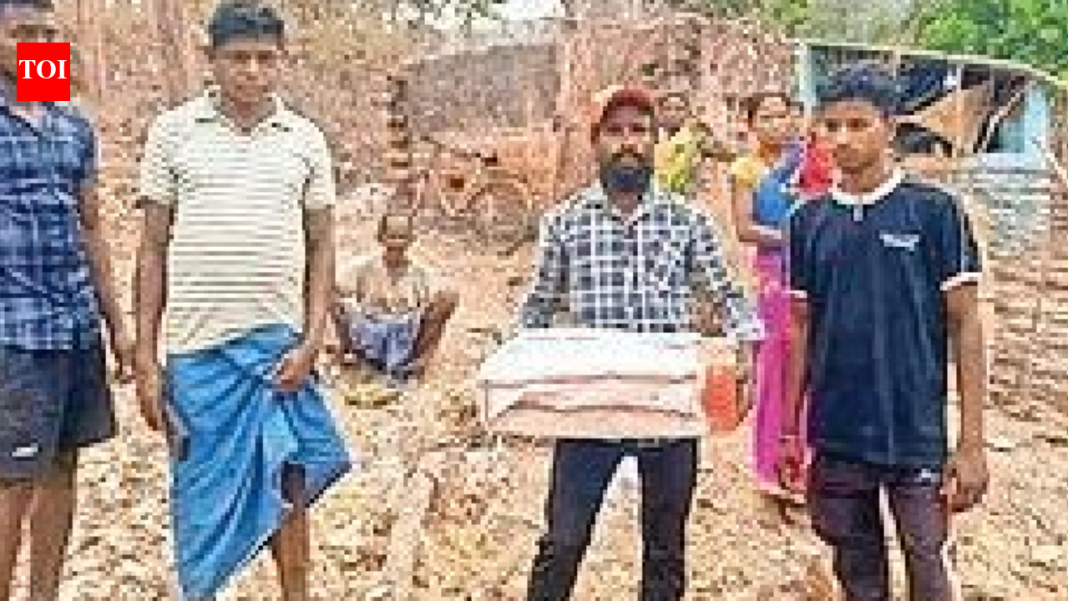
The stark, haunting image has once again exposed gaping fissures within India’s public healthcare system. In a gut-wrenching incident from Jharkhand, a father was compelled to carry his stillborn baby’s body in a cardboard box, allegedly after being denied an ambulance by a government hospital. This isn’t merely a tale of individual suffering; it is a stark emblem of systemic neglect and the immense challenges vulnerable citizens face in accessing basic, dignified medical care. The incident, unfolding in Chatra district, has ignited debate about accountability, empathy, and the urgent need for robust infrastructure in remote and underserved regions.
The Heartbreaking Journey Home
The tragedy began when the wife of Sanjay Oraon, a resident of Pratappur village, was rushed to the Chatra Sadar Hospital in the early hours due to labour complications. Upon arrival, the infant was unfortunately stillborn. While the profound grief of losing a child is immense, the ordeal for the Oraon family was far from over. Sanjay Oraon recounts approaching hospital authorities, desperately requesting an ambulance or any form of transport to take his deceased child and recovering wife back to their village, situated a considerable distance away.
According to Oraon, his pleas were met with a denial; hospital staff allegedly cited unavailability or directed him to arrange a private vehicle, a cost beyond his meagre means. Faced with this insurmountable financial barrier and the crushing weight of his loss, Sanjay Oraon made a heart-wrenching decision. He procured a cardboard box, gently placed his stillborn child inside, and began the arduous journey home on foot, his wife trailing behind, still weak from childbirth. The sight of a father clutching a cardboard box containing his deceased child on a public road quickly drew attention, sparking outrage and prompting local media to report on the distressing incident. This act of desperation not only highlighted the personal tragedy but also exposed glaring deficiencies in emergency medical services’ last-mile connectivity.
Systemic Failures and the Road Ahead
This incident in Chatra is regrettably not an anomaly but a distressing pattern underscoring critical deficiencies in India’s public health infrastructure, particularly in its rural and tribal belts. Despite numerous government initiatives for accessible, affordable healthcare, including free ambulance services under schemes like the Janani Shishu Suraksha Karyakram (JSSK), such harrowing tales emerge with alarming regularity. The JSSK, for instance, mandates free transport for pregnant women and sick neonates. The alleged denial in this case directly contravenes these vital programs.
Experts and local activists point to a confluence of factors: a severe shortage of functional ambulances, especially in remote areas; inadequate funding for maintenance and fuel; bureaucratic hurdles; and a perceived lack of empathy and accountability among certain hospital staff. “Such incidents are a blot on our collective conscience,” stated a local social activist, Rakesh Kumar Sinha, addressing the media. “It’s not just about one ambulance; it’s about the dignity of our poorest citizens and the fundamental right to humane treatment, even in death. Our policies exist, but their implementation often falls tragically short, leaving families like the Oraons utterly abandoned.”
The widespread condemnation following the Chatra incident has prompted local authorities and the Jharkhand state government to initiate an investigation. While such inquiries are standard, the real challenge lies in ensuring they lead to tangible improvements, not just symbolic gestures. Beyond punitive measures, a systemic overhaul is imperative. This includes augmenting the fleet of operational ambulances, bolstering staff training in patient care and empathy, and ensuring strict adherence to established protocols regarding free services. Digital tracking and clearer communication channels could enhance transparency. Ultimately, the goal must be to ensure that no family, regardless of socio-economic status, is ever again forced to endure such an undignified ordeal during their most vulnerable moments.
The image of a father carrying his stillborn child in a cardboard box from a public hospital in Jharkhand is more than just a fleeting news headline; it is a profound testament to the systemic vulnerabilities that plague a significant segment of India’s population. It calls for introspection into the efficacy of our public health policies and their reach to the last mile. While individual acts of compassion can sometimes bridge the gap, only robust infrastructure, empathetic personnel, and unwavering accountability can truly prevent such heartbreaking incidents from recurring. India, aspiring to be a global leader, must first ensure that dignity and basic human rights are upheld for all its citizens, particularly in their moments of deepest sorrow and need.

