


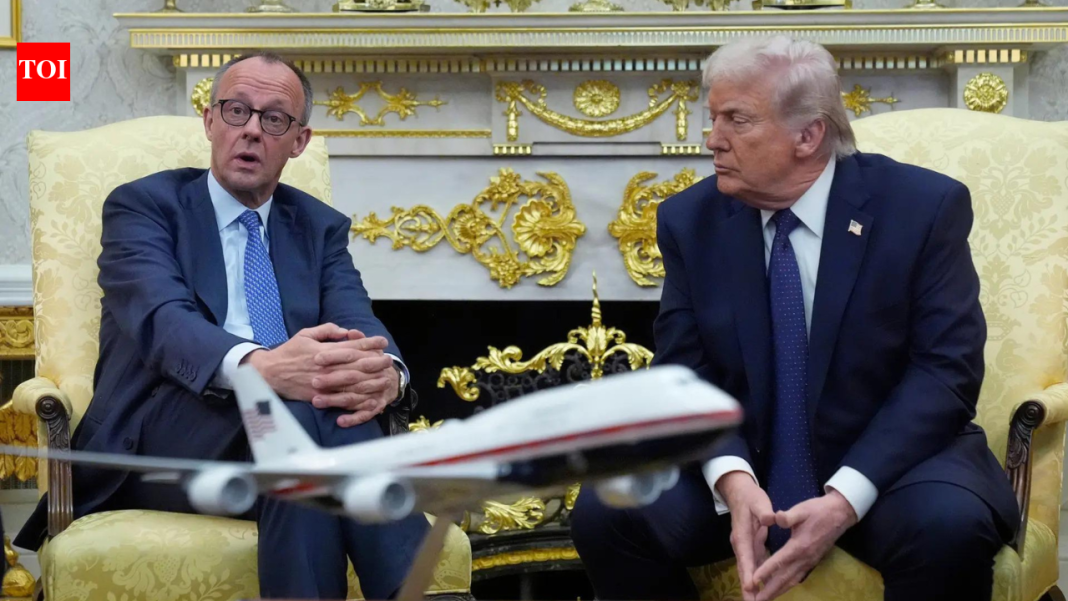
In a significant move that underscores evolving transatlantic dynamics, the United States has announced its intention to withdraw approximately 5,000 troops from Germany. This decision, reducing the US military presence from 34,500 to 29,500 personnel, has been framed by Washington as a consequence of Germany’s “failure to provide adequate support” and its consistent shortfall in meeting NATO defence spending targets. The announcement arrives amidst a backdrop of escalating tensions with Iran, raising questions about the broader geopolitical implications, especially for alliances and global strategic alignments. For India, a nation keenly observing shifts in international power structures, this development signals a complex re-evaluation of Western unity and its potential ripple effects on global stability.
The Rationale: Burden-Sharing and Strategic Realignment
The White House’s rationale for the troop reduction points squarely at Germany’s defence spending. NATO guidelines stipulate that member states should allocate at least 2% of their Gross Domestic Product (GDP) to defence. Germany, a major economic power, has consistently fallen short of this commitment, a point of contention that has frequently strained relations with Washington, particularly over recent years. US officials have cited a lack of host nation financial support as a primary driver, suggesting the move is a punitive measure aimed at compelling Germany to shoulder more of the collective defence burden. The withdrawal is also being viewed by some as part of a broader strategic realignment by the US, potentially shifting resources to other theatres deemed more critical to American interests or to allies perceived as more compliant.
Beyond the fiscal arguments, deeper ideological rifts have simmered. Disagreements over key foreign policy issues, such as Germany’s continued support for the Nord Stream 2 gas pipeline with Russia and its adherence to the Iran nuclear deal (JCPOA) despite US withdrawal, have further frayed the partnership. This troop withdrawal, therefore, can be interpreted not merely as a cost-cutting exercise, but as a deliberate signal of displeasure, underscoring Washington’s frustration with what it perceives as Germany’s divergent strategic priorities and insufficient burden-sharing within the NATO framework.
Geopolitical Ripple Effects and the Iran War Rift
The decision to reduce troop presence in Germany carries substantial geopolitical weight, particularly given the widening chasm over Iran. The US withdrawal from the JCPOA and its subsequent “maximum pressure” campaign against Tehran have been met with less than enthusiastic support from European allies, including Germany, who maintain that diplomacy is the best path forward. This troop withdrawal could be seen as an attempt by the US to leverage its military presence to exert pressure on Germany to align more closely with its hawkish stance on Iran, or it could simply reflect a redeployment of resources towards regions deemed more pertinent to countering Iranian influence.
The move inevitably weakens NATO’s traditional collective defence posture in Europe, potentially creating a vacuum or forcing other European nations to increase their own military contributions. As a seasoned geopolitical analyst recently observed, “This troop withdrawal from Germany is not just about numbers; it’s a tangible manifestation of a deeper fracture within the transatlantic alliance, one that will undoubtedly resonate across strategic discussions from the Middle East to the Indo-Pacific.” This erosion of transatlantic unity could embolden adversaries and complicate multilateral responses to global crises, including those emanating from the Middle East. For European security, the reduction signals a diminishing US commitment, potentially compelling Berlin and its neighbours to re-evaluate their own defence strategies and levels of autonomy.
Implications for India and Global Stability
From India’s perspective, these developments are crucial to monitor. India has consistently advocated for a stable, rules-based international order, and the fracturing of long-standing alliances, particularly within the West, introduces an element of unpredictability. A weakened transatlantic relationship could lead to greater instability in the Middle East, a region vital for India’s energy security and home to millions of Indian expatriates. Any escalation in the US-Iran conflict, exacerbated by a disunited Western front, would have direct and severe repercussions for India’s economic interests and regional stability.
Moreover, India’s own strategic partnerships with both the US and European nations are complex and multifaceted. As New Delhi navigates its relationships with global powers, a less cohesive Western bloc might necessitate a recalibration of diplomatic approaches. The episode also highlights the growing emphasis on national interest in foreign policy decisions, a principle India itself often upholds. While the immediate impact on India might not be direct, the long-term ramifications for global power dynamics, multilateral cooperation, and the international security architecture warrant close observation by Indian policymakers and strategic thinkers.
The US decision to withdraw troops from Germany is more than just a logistical exercise; it’s a potent symbol of shifting alliances, growing strategic divergence, and the persistent challenges of burden-sharing within established security frameworks. As the world grapples with a widening Iran war rift and other geopolitical flashpoints, the cohesion, or lack thereof, among major powers will undeniably shape the global landscape for years to come.

