


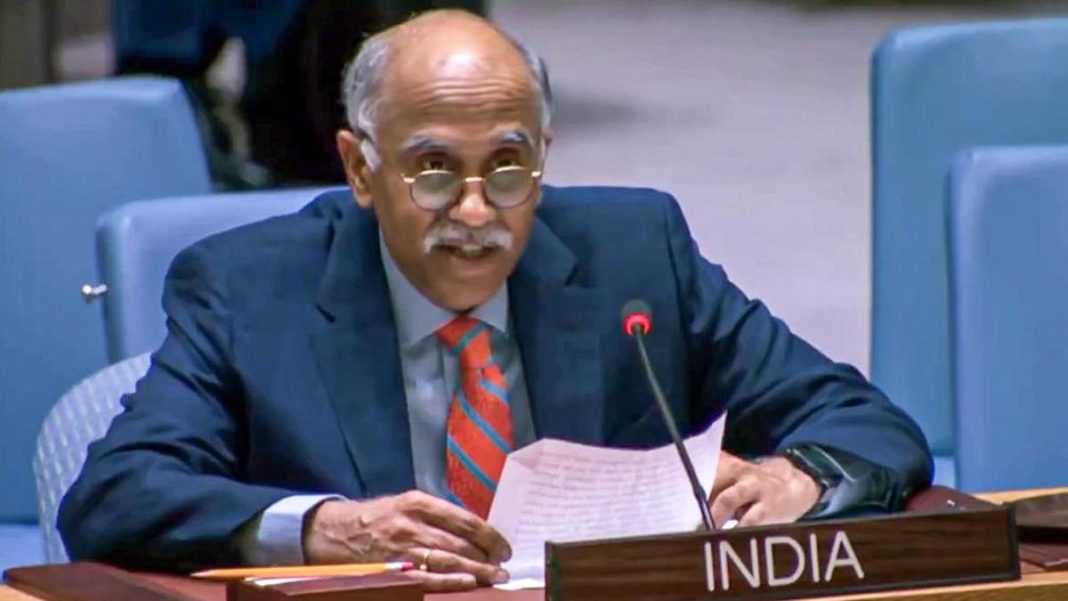
The protracted conflict in Gaza continues to be a focal point of international concern, demanding urgent diplomatic efforts for de-escalation and a lasting resolution. Amidst the ongoing complexities, India has notably expressed its appreciation for the United States’ sustained engagement in addressing this long-standing issue. This sentiment underscores India’s consistent commitment to peace and stability in the Middle East and highlights the converging interests in finding a comprehensive solution to a conflict that has had profound humanitarian and geopolitical repercussions for decades.
India’s Principled Stance and the Quest for Stability
India’s foreign policy regarding the Israeli-Palestinian conflict has historically been guided by a principled and consistent approach, advocating for a
The recent intensification of the Gaza conflict has brought immense suffering and carries significant potential for broader instability, impacting global peace and economic security. For India, a nation with vital energy interests and a substantial diaspora in the Middle East, regional stability is paramount; any escalation poses direct threats to its economic interests and diaspora’s well-being. Therefore, India consistently calls for immediate de-escalation, protection of civilians, and unimpeded humanitarian aid. India’s appreciation for US efforts is thus not merely a diplomatic formality, but reflects a shared understanding of the urgent need to address the humanitarian crisis and work towards a political resolution, aligning with New Delhi’s repeated emphasis on dialogue and adherence to international humanitarian law.
US Diplomatic Engagements and India’s Recognition
The United States has undertaken extensive diplomatic initiatives since the recent escalation of the Gaza conflict, involving high-level visits, intensive shuttle diplomacy, and negotiations aimed at securing ceasefires, facilitating humanitarian access, and exploring pathways for long-term solutions. These efforts have included engaging with Israeli and Palestinian authorities, as well as key regional actors like Egypt, Qatar, and Saudi Arabia, who play critical roles in de-escalation and mediation.
India’s expression of appreciation acknowledges the complexity and persistence required in such diplomatic endeavors. The US’s focus on securing temporary pauses for humanitarian purposes, striving for the release of hostages, and pushing for mechanisms to rebuild and stabilize Gaza, all resonate with India’s calls for tangible progress. While a permanent resolution remains arduous, these efforts significantly alleviate civilian suffering and create space for dialogue. For India, recognizing these efforts is a strategic move that underlines its support for constructive engagement and aligns with its aspirations for a stable global order. Given its unique position, the US holds significant sway in encouraging all parties towards a more peaceful resolution, making India’s appreciation a pragmatic acknowledgement of practical steps taken to address a deeply entrenched issue.
Towards a Comprehensive and Lasting Peace: An Indian Perspective
While appreciating immediate efforts, India’s ultimate goal remains a comprehensive and lasting resolution rooted in the two-state solution. The Gaza situation underscores the urgent need to revive credible political processes beyond temporary ceasefires, ensuring Israel’s security and upholding the Palestinian people’s rights to statehood. The diplomatic heavy lifting by the US in navigating complex regional dynamics is thus crucial for future political negotiations.
As External Affairs Minister S. Jaishankar has often emphasized: “The need of the hour is a peaceful resolution, and that requires sustained dialogue and commitment from all sides, supported by the international community.” This encapsulates India’s view that international efforts, including those led by the US, are vital for creating an environment where such dialogue can thrive and eventually lead to a just and equitable outcome.
India’s acknowledgment of the United States’ efforts in navigating the complexities of the Gaza conflict reflects a pragmatic approach to international relations, prioritizing regional stability and humanitarian welfare. While the path to a permanent resolution remains fraught with challenges, recognizing constructive diplomatic engagement is a crucial step towards fostering an environment where a just and lasting peace, consistent with India’s long-held principles, can eventually be realized. It underscores a shared understanding that alleviating suffering and building a foundation for political dialogue are paramount imperatives.

