


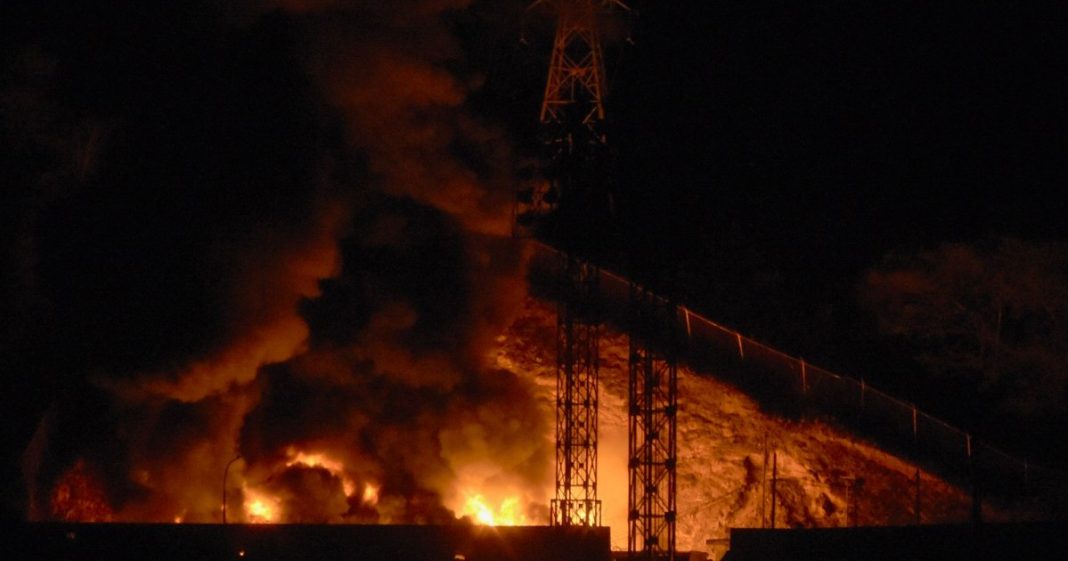
Caracas, Venezuela, has recently been the scene of reported explosions, an event that has quickly captured international attention, particularly given the ongoing and complex relationship between Venezuela and the United States. While details remain scarce and official explanations are pending, the reports have generated significant discussion and concern, reflecting the fragile geopolitical climate of the region.
Unconfirmed Reports and Public Reaction
Accounts from various parts of the Venezuelan capital describe loud, concussive sounds that many residents characterized as explosions. These reports, circulating primarily through social media and local channels, emerged without immediate official confirmation or explanation from Venezuelan authorities. Eyewitnesses shared diverse accounts, with some describing a singular powerful blast, while others noted a series of smaller, distinct noises. The lack of an immediate, clear explanation from official channels has naturally led to a surge in speculation and anxiety among the populace.
In such a tense environment, the absence of verified information often fuels the rumor mill. Some initial theories circulating among residents and online communities suggested everything from sonic booms caused by military aircraft to potential domestic incidents. Regardless of the actual cause, the public’s reaction underscores a heightened state of alert, particularly when any unusual event can be interpreted through the lens of external pressures or internal instability.
The Backdrop of US-Venezuelan Tensions
The significance of these reported explosions cannot be fully appreciated without acknowledging the persistent and often strained relationship between Venezuela and the United States. For years, the two nations have been locked in a geopolitical standoff characterized by economic sanctions, diplomatic disputes, and stark disagreements over Venezuela’s political landscape. The US has maintained significant pressure on the Venezuelan government, advocating for democratic reforms and expressing concern over human rights issues and regional stability. This long-standing friction means that any unusual occurrence within Venezuela’s borders is often viewed through the prism of these bilateral tensions.
Sanctions imposed by the US have had a profound impact on Venezuela’s economy, leading to widespread shortages and an exodus of citizens. In turn, Venezuelan officials have frequently accused the US of interventionist policies and attempts to destabilize the country. This history of mutual distrust and accusations means that events like the reported explosions are immediately scrutinized for any potential connection to the broader geopolitical struggle. As a local observer, who requested anonymity due to the sensitive nature of the situation, commented, “In an environment already charged with geopolitical complexities, any unexplained event creates a ripple of concern. People are naturally anxious for clarity.”
Uncertainty and the Search for Answers
As the situation unfolds, the primary challenge remains the scarcity of verified information. Without official statements clarifying the source and nature of the reported explosions, it’s difficult to draw definitive conclusions. Various possibilities are often considered in such situations, ranging from legitimate, albeit unexplained, domestic incidents to potentially more complex scenarios. The world watches keenly, hoping for transparency and clarity, as such incidents can have broader implications for regional stability.
In the absence of concrete data, it is crucial to rely on confirmed reports as they emerge and to approach speculation with caution. The immediate impact, however, is clear: an increase in public unease within Caracas and renewed international focus on a nation already navigating significant internal and external challenges. As the dust settles, the international community, along with the Venezuelan public, will undoubtedly be looking for definitive explanations to understand what transpired over the capital.
*

