


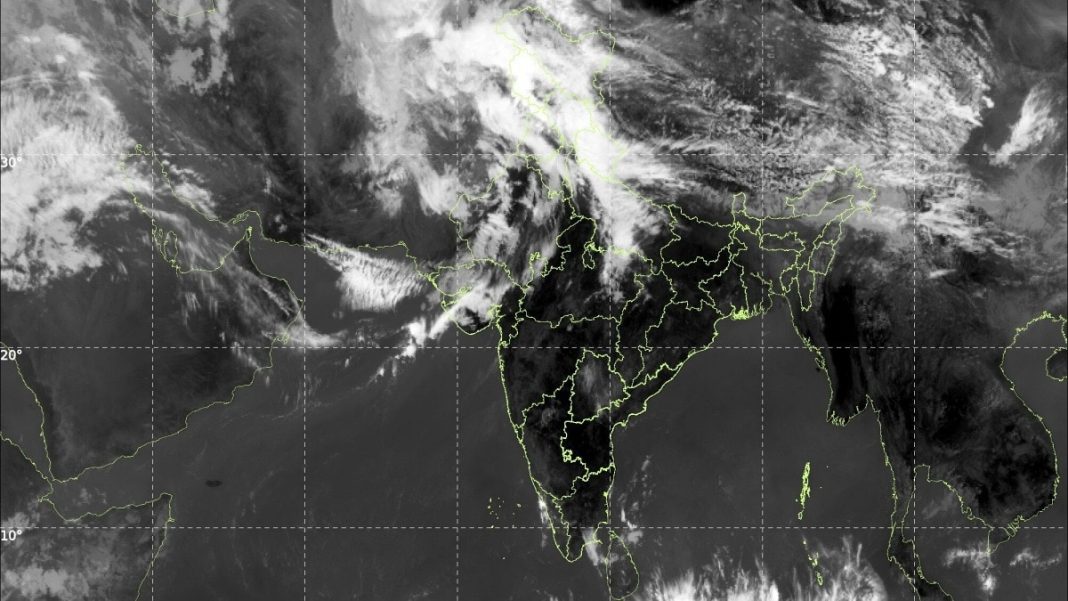
A colossal white ribbon, stretching for a staggering 1000 kilometers across the subcontinent, has been captured by recent satellite imagery. This dramatic cloud build-up, observed looming over vast swathes of India and Pakistan, signals the imminent arrival of widespread rainfall. As meteorological departments issue advisories, residents across affected regions are preparing for a significant shift in weather patterns, promising both much-needed relief and potential challenges.
The Satellite’s Vantage: A Panoramic View of Moisture
From its perch high above Earth, an advanced weather satellite has delivered a breathtaking, yet critical, perspective on the atmospheric dynamics unfolding over South Asia. The imagery reveals an unbroken band of dense cloud cover extending approximately 1000 kilometers, traversing from parts of Pakistan’s western provinces eastward into India’s northern plains. This extraordinary formation is not merely an aesthetic marvel; it’s a testament to a robust moisture convergence, where warm, moist air is rising and condensing on a large scale.
Such an extensive cloud deck is a clear precursor to precipitation, indicating a substantial influx of atmospheric moisture being drawn into the region. Meteorologists are closely monitoring its trajectory and intensity, using these satellite insights to refine their forecasts and pinpoint areas most likely to experience significant rainfall in the coming days. The sheer scale of this phenomenon underscores the power of modern meteorological tools in providing early warnings and comprehensive overviews of evolving weather systems.
Anticipating the Deluge: Regions on Alert
The immense cloud band is poised to bring rainfall to a broad spectrum of territories across the two nations. In India, states such as Punjab, Haryana, Rajasthan, Uttar Pradesh, and the National Capital Region (NCR) are expected to witness varying intensities of rain. Across the border, provinces like Punjab, Sindh, and Balochistan in Pakistan are also bracing for the impending wet spell. The precipitation is anticipated to range from light to moderate showers, though isolated pockets might experience heavier downpours accompanied by gusty winds or even hailstorms, depending on local atmospheric conditions.
For agricultural communities, particularly in rain-fed areas, this rainfall could be a welcome blessing, potentially alleviating dry spell concerns and providing essential moisture for standing crops. However, the sudden influx of water also carries risks. Urban centers, notorious for their drainage issues, could face localized waterlogging and traffic disruptions. Temperature drops are also likely across affected areas, offering a temporary respite from any prevailing heat. Preparedness measures are already underway, with civic authorities advising residents to take necessary precautions.
“This 1000-km cloud band is a strong indicator of a significant influx of moisture,” explains Dr. R. Sharma, a senior meteorologist at the India Meteorological Department (IMD). “Such extensive formations promise widespread, sustained rainfall, which could be beneficial for certain crops, but also necessitates readiness for urban areas and infrastructure to mitigate potential flooding. Our satellite monitoring allows us to track these systems with remarkable precision, helping us issue timely advisories.”
Meteorological Insights and The Road Ahead
The formation of such a colossal cloud system typically results from a complex interplay of atmospheric pressure systems and moisture advection. Often, the interaction of a strong low-pressure trough with moisture-laden winds from the Arabian Sea or the Bay of Bengal can create conditions ripe for extensive cloud development. This particular event highlights the dynamic nature of the subcontinent’s weather, constantly influenced by regional and global atmospheric patterns.
While the immediate focus is on the impending rainfall, meteorological departments will continue to track the movement and dissipation of this system. The intensity and duration of the rain will determine its ultimate impact, from replenishing groundwater levels and reservoirs to potentially triggering flash floods in vulnerable areas. The event serves as a crucial reminder of the importance of continuous weather monitoring and the public’s role in staying informed through official channels. As the subcontinent collectively watches the skies, the promise of rain hangs heavy – a dual prospect of relief and vigilance.
The satellite’s capture of a 1000-km-long cloud build-up over India and Pakistan heralds a period of significant weather activity. With widespread rainfall anticipated, communities across both nations are preparing for the ensuing changes. This natural phenomenon, meticulously observed through advanced technology, underscores the delicate balance between nature’s bounty and its potential challenges. As the clouds gather, the region stands ready to embrace the rain, with an informed awareness of its multifaceted implications.

