


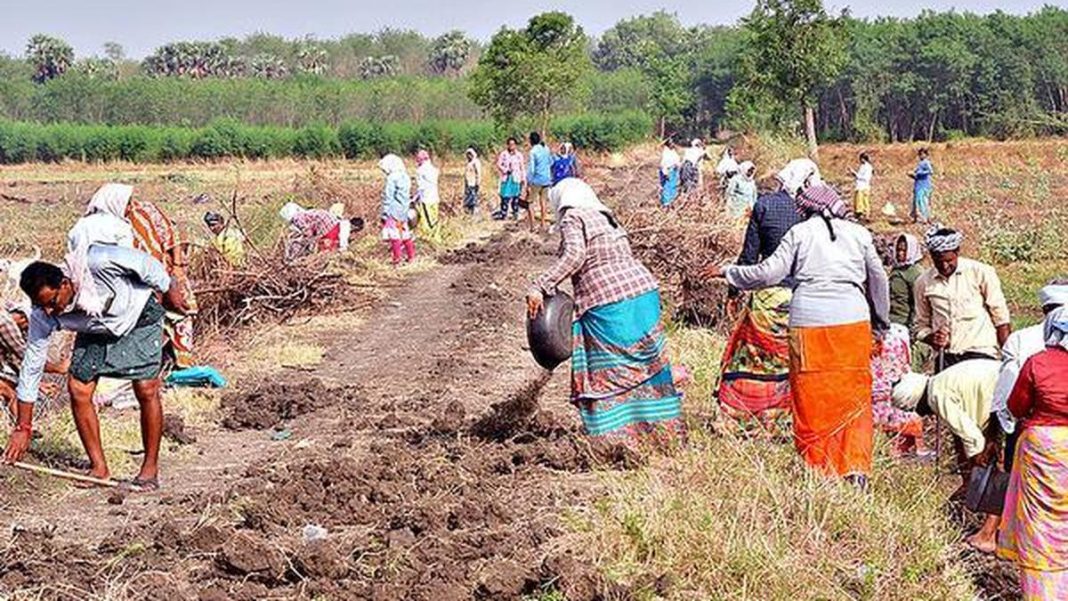
The Economic Survey, an annual document offering an in-depth review of the Indian economy, has once again stirred significant policy debate. This year, its insights into rural employment have particularly captured attention, suggesting a radical re-evaluation of the Mahatma Gandhi National Rural Employment Guarantee Scheme (MGNREGS). Established as a crucial safety net for rural households, the survey now posits that structural flaws and a demonstrably strengthening rural economy may warrant a complete overhaul, or even the eventual phasing out, of the widely implemented program.
A Shifting Paradigm for Rural Employment
The core of the Economic Survey’s recommendation hinges on two critical observations. Firstly, it highlights several structural flaws within MGNREGS that have persisted despite numerous attempts at reform. These include concerns about the quality of assets created, often criticised for their short-term utility and lack of sustainable impact on rural productivity. Instances of leakages, administrative inefficiencies, and the bureaucratic burden on local panchayats have also been cited as persistent challenges. Furthermore, the survey suggests that in some regions, the scheme may inadvertently be creating a disincentive for workers to seek higher-paying, more skilled employment in the private sector, thereby distorting local labour markets and potentially hindering overall economic progress.
Secondly, and perhaps more fundamentally, the survey points to a robust and evolving rural economy that has reportedly outgrown the scheme’s original premise. Over the past decade, significant investments in rural infrastructure, connectivity, and agricultural diversification, coupled with the growth of non-farm rural enterprises, have led to increased employment opportunities and rising real wages. Data presented in the survey indicates a notable reduction in distress migration and an uptick in household incomes from varied sources, suggesting that the rural poor are less reliant on basic manual labour for survival. The argument is thus framed around the idea that while MGNREGS was a vital lifeline during periods of economic vulnerability, the current rural landscape presents a different picture, necessitating a policy response that moves beyond mere wage guarantee towards skill enhancement and sustainable livelihood creation.
The Evolution of India’s Rural Landscape
When MGNREGS was enacted in 2005, India’s rural economy faced different challenges. Agriculture was even more dominant, distress migration was rampant, and a safety net against unemployment and poverty was desperately needed. The scheme, guaranteeing 100 days of wage employment per household, served as a powerful tool for social protection, injecting purchasing power into rural areas and empowering women, among other benefits. However, the subsequent years have witnessed profound transformations, largely driven by policy interventions, technological advancements, and market forces.
The survey likely underscores the impact of various government initiatives beyond MGNREGS, such as the Pradhan Mantri Gram Sadak Yojana (PMGSY) for rural roads, Swachh Bharat Abhiyan for sanitation, and increased access to digital services and financial inclusion through schemes like Jan Dhan Yojana. These interventions have collectively improved living standards, reduced isolation, and opened up new avenues for income generation. Private sector investments in agro-processing, rural manufacturing, and service sectors have also contributed to a more diversified rural job market. Workers today, especially the younger generation, are often seeking opportunities that offer higher wages, skill development, and upward mobility, rather than just subsistence-level manual labour.
“The survey’s recommendation reflects a maturity in our rural economy,” notes Dr. Priya Sharma, an economic analyst specialising in rural development. “While MGNREGS was indispensable at one point, we now observe rural households increasingly seeking entrepreneurial avenues or higher-skilled positions. Continuing to heavily invest in a scheme designed for a different era, particularly when its core utility is diminishing in many areas, demands careful reconsideration of resource allocation.” This perspective suggests that resources freed from a potentially redundant scheme could be channelled into more contemporary and impactful programs that foster skill development, entrepreneurial support, and advanced rural infrastructure.
The Economic Survey’s proposal to consider phasing out or significantly restructuring MGNREGS marks a pivotal moment in India’s approach to rural development. It challenges the conventional wisdom that long-standing welfare schemes must continue indefinitely, regardless of changing economic realities. By emphasising structural inefficiencies and the growing strength of the rural economy, the survey urges policymakers to think beyond temporary employment generation and focus on creating an environment for sustainable livelihood creation and upward economic mobility.
While the debate surrounding such a significant policy shift is bound to be robust, with valid concerns about vulnerable populations and regional disparities, the survey’s findings provide a compelling analytical framework. Any decision will require a delicate balance between social welfare objectives and the imperative for economic efficiency, ensuring that India’s rural transformation continues on a path of inclusive and sustainable growth.

