


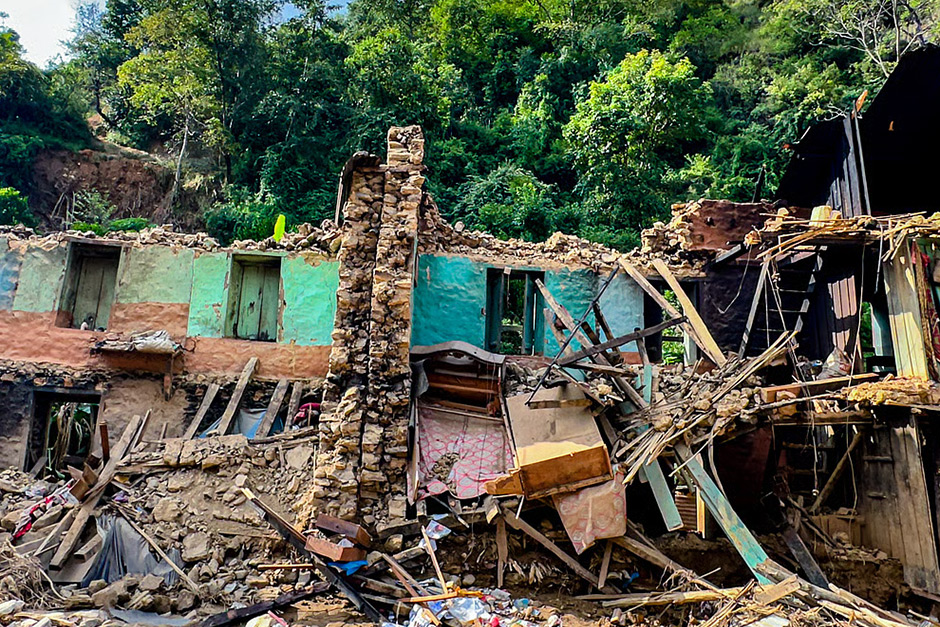
The ground beneath Assam stirred once again on Tuesday, October 3rd, 2023, as an earthquake of magnitude 5.1 struck Morigaon district. This tremor, recorded at approximately 12:44 PM IST, sent ripples of concern across the northeastern state and beyond, coming barely a day after a significant 6.2 magnitude earthquake had rattled far-western Nepal, its tremors felt as far as Delhi and parts of northern India. While the seismic events are geographically distinct, their close succession has once again highlighted the inherent vulnerability of the Indian subcontinent to tectonic shifts.
Understanding Assam’s Recent Tremors
The National Center for Seismology (NCS) reported the 5.1 magnitude earthquake in Morigaon, Assam, with its epicentre located at a latitude of 26.24°N and a longitude of 92.27°E, at a depth of 10 km. The relatively shallow depth often means that tremors are felt more acutely over a smaller area. Residents in Morigaon, Guwahati, and other parts of Assam reported distinct shaking, with many rushing outdoors as a precautionary measure. While the jolt was certainly noticeable and caused momentary panic, initial reports from local authorities indicated no immediate damage to property or loss of life, a relief that underscores the resilience of the region’s infrastructure against moderate seismic activity.
Assam, situated in India’s highly active seismic Zone V, is no stranger to earthquakes. The region lies atop the collision zone of the Indian and Eurasian tectonic plates, a geological dynamic that leads to frequent seismic events. The eastern Himalayan syntaxis, where these plates converge, is one of the most seismically active regions globally. This continuous tectonic pressure necessitates constant vigilance and adherence to stringent building codes to mitigate potential risks from stronger quakes.
Echoes from the Himalayan Belt: A Day After Nepal’s Jolt
The Morigaon earthquake gained particular attention due to its proximity in time to the 6.2 magnitude quake that struck Nepal just the previous day. On October 2nd, a powerful earthquake with an epicentre in Baitadi district, far-western Nepal, caused widespread panic across northern India, including the National Capital Region. While less devastating than the 2015 Gorkha earthquake, it served as a stark reminder of the region’s seismic volatility. The tremors in Delhi caused buildings to sway and residents to evacuate, highlighting the ripple effect of seismic events in this interconnected geological landscape.
However, seismologists are quick to clarify that despite their close timing, the earthquakes in Assam and Nepal are unlikely to be directly causally linked. “While these events are geographically spread out, they undeniably serve as a potent reminder of the high seismic vulnerability of the entire Himalayan region and the critical need for continued preparedness and adherence to building codes,” stated Dr. Anjali Sharma, a leading seismologist based in Delhi. She further explained that separate fault lines and stress accumulations drive these distinct events, even though they occur within the same broad tectonic plate boundary.
Navigating a Seismically Active Zone: Preparedness is Key
For states like Assam and countries like Nepal, situated in regions prone to seismic activity, preparedness is not merely an option but a continuous imperative. India’s disaster management agencies, including the National Disaster Response Force (NDRF), are always on high alert, conducting regular drills and awareness campaigns. The recurrence of tremors, even moderate ones, serves as crucial reminders for communities to review their emergency plans, secure heavy furniture, and ensure safe evacuation routes are known.
Furthermore, stringent enforcement of earthquake-resistant building codes, particularly in urban centres and new construction projects, is paramount. Public awareness campaigns, educating citizens on the ‘Drop, Cover, and Hold On’ protocol, and fostering a culture of readiness are equally vital. While smaller earthquakes like the one in Morigaon often cause no significant damage, they help to test response systems and keep the populace conscious of the ever-present geological forces at play.
The recent tremors in Assam and Nepal underscore the dynamic nature of our planet. For residents of the Indian subcontinent, especially those in seismically active zones, these events are powerful reminders that proactive preparedness and informed vigilance are the cornerstones of mitigating potential risks and building more resilient communities.

