


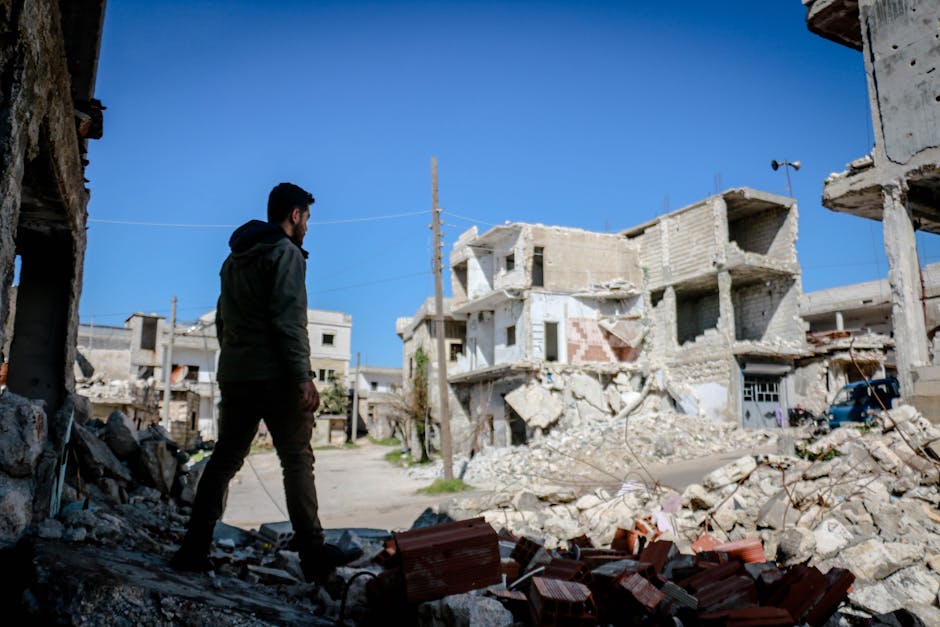
In a region frequently gripped by geopolitical tremors, a literal one recently added another layer of complexity. An earthquake of magnitude 4.1 struck Iran’s Kerman province on Wednesday, April 24th, 2024, according to reports from the Seismological Center of the Institute of Geophysics at the University of Tehran. While relatively moderate in intensity and reportedly causing no immediate casualties or significant damage, the timing of this natural event has resonated through a landscape already bristling with heightened tensions between Iran, the United States, and Israel. For India, a nation with deep historical ties and significant strategic interests in West Asia, such developments are watched with an acute awareness of their potential ramifications for regional stability and global peace.
A Shudder in Kerman Amidst Political Fault Lines
The earthquake’s epicenter was identified near the town of Hojedk in Kerman province, a region that has experienced seismic activity in the past due to its proximity to major fault lines. Registering a depth of around 10 kilometers, the tremor was felt by local residents, but initial assessments from Iranian state media indicated no major structural damage or injuries. Such a magnitude is generally not destructive, especially in areas where building codes account for seismic activity.
However, the geographical location of Iran places it squarely on several active seismic faults, making earthquakes a relatively common occurrence. From a purely geological standpoint, this tremor was a routine natural phenomenon. Yet, in the current climate, where every development is scrutinised through a geopolitical lens, a natural event, however minor, cannot be entirely divorced from the prevailing atmosphere of conflict. The immediate response from authorities focused on public safety, a critical function that becomes even more paramount when national resources and attention are stretched by external pressures.
For India, understanding Iran’s domestic resilience to such events is important. A stable Iran, capable of managing both natural disasters and geopolitical challenges, contributes to a more predictable West Asian landscape, which in turn safeguards India’s energy security and trade routes through vital waterways like the Strait of Hormuz. The stability of any major regional player directly impacts the broader economic and security environment.
Geopolitical Volatility and Regional Implications
The seismic event occurred at a juncture where the long-standing animosity between Iran and Israel had recently escalated into unprecedented direct military exchanges. Following an attack on Iran’s consulate in Damascus, attributed to Israel, Tehran responded with a large-scale drone and missile assault on Israeli territory. Israel, in turn, conducted a retaliatory strike, reportedly targeting an air base near Isfahan. This cycle of escalation has raised alarm bells globally, with world leaders calling for de-escalation and restraint to prevent a wider regional conflict.
The United States, a key ally of Israel and a traditional adversary of Iran, maintains a significant military presence in the region and has been actively involved in diplomatic efforts to contain the conflict. The ongoing tensions surrounding Iran’s nuclear programme, its support for regional proxies, and its naval activities in the Persian Gulf further contribute to an already volatile situation. Any event, whether natural or man-made, occurring in such a high-stakes environment naturally attracts global attention and raises questions about its potential, however indirect, to influence regional dynamics.
Dr. Rohan Gupta, a Delhi-based expert on West Asian affairs, observed, “While the earthquake is a natural event, its occurrence amidst such heightened regional friction serves as a stark reminder of the multifaceted vulnerabilities in the region. Every development, even non-political, is now scrutinized through the lens of potential escalation, making diplomacy and careful communication even more crucial.” This perspective underscores India’s consistent emphasis on dialogue and de-escalation, advocating for all parties to step back from the brink and embrace diplomatic solutions to long-standing issues.
From an Indian perspective, the stability of West Asia is not merely a matter of distant geopolitics but has tangible implications. India’s reliance on the region for crude oil and natural gas, the presence of millions of Indian expatriates, and its ambitious connectivity projects, such as the India-Middle East-Europe Economic Corridor (IMEC), all necessitate a peaceful and predictable environment. Therefore, any development that adds even marginal uncertainty to the region is viewed with concern in New Delhi.
Conclusion: Navigating a Complex Landscape
The magnitude 4.1 earthquake in Iran’s Kerman province, while not a catastrophic event, stands as a poignant reminder of the complex tapestry that is West Asia. It highlights the simultaneous presence of natural forces and human-driven conflicts that shape the region’s destiny. For Iran, managing natural disasters alongside intense geopolitical pressures demands significant domestic resilience and robust governance. For the international community, and particularly for countries like India with vital interests at stake, it underscores the urgent need for sustained diplomatic engagement to cool temperatures and foster an environment conducive to peace and stability.
As the dust settles from this latest tremor, both geological and geopolitical, the focus remains on de-escalation. The hope is that prudence and statesmanship will prevail, preventing any further escalation and allowing the region to address its multitude of challenges, both natural and man-made, without the specter of widespread conflict.

