


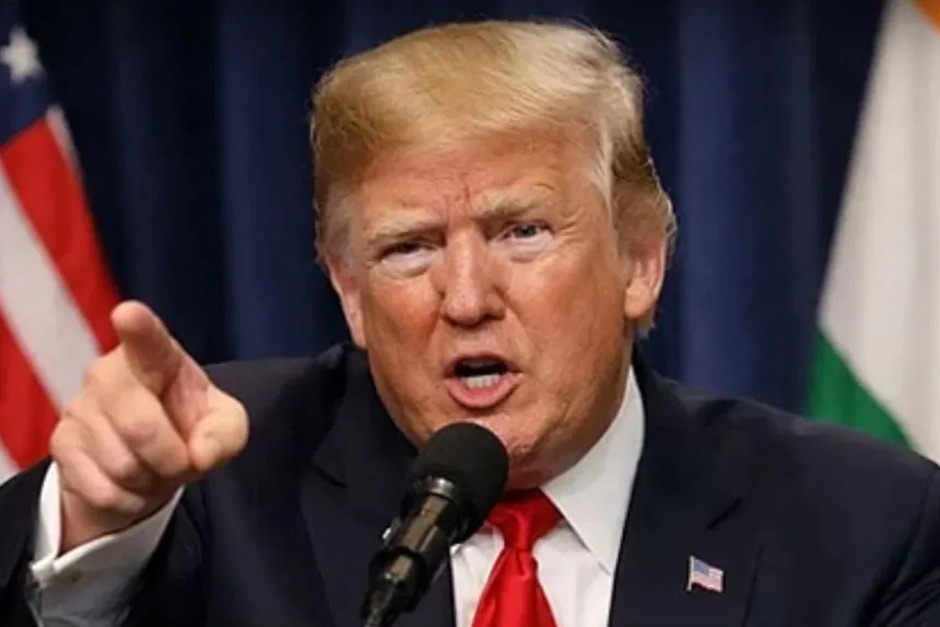
The global economic and geopolitical landscape often hinges on the pronouncements of major world powers. Recently, former US President Donald Trump sent ripples across international markets and strategic circles with an audacious proposal: a “Dream Military” budget soaring to an unprecedented $1.5 trillion by 2027. This figure represents a dramatic increase from the current projected $1 trillion. This budget isn’t just a testament to his vision for American military might; it’s intrinsically linked to an equally provocative funding mechanism – income from tariffs. For nations like India, deeply embedded in the global trade network and navigating complex geopolitical alignments, such proposals from a potential future US administration demand meticulous scrutiny, promising significant shifts in both security paradigms and economic stability.
The Vision of a “Dream Military”
Donald Trump’s concept of a “Dream Military” encapsulates his long-held belief in projecting overwhelming American strength globally. The proposed $1.5 trillion defence budget for 2027 represents a colossal increase, signifying not just an inflation adjustment but a substantial real-term expansion of military capabilities. Such a budget would undoubtedly facilitate accelerated research and development in cutting-edge technologies – from advanced AI-driven warfare systems and hypersonic missiles to next-generation naval fleets and air superiority fighters. It envisions a military unparalleled in prowess, capable of projecting power across every global theatre, cementing America’s strategic dominance.
This substantial financial commitment aligns with Trump’s “America First” doctrine, which prioritises national interests through a potent combination of economic protectionism and robust military deterrence. The rationale is to counter rising global challenges, including assertive rivals and evolving asymmetric threats. For many, this move could be seen as a necessary fortification of national security; for others, it might signal an escalating arms race, potentially destabilising international relations. The budget’s scale, dwarfing current US defence expenditure, underscores a fundamental re-imagining of military investment.
Tariffs: The Unconventional Funding Mechanism
Perhaps the most contentious aspect of Trump’s defence proposal is its proposed funding source: a significant portion of income derived from tariffs. Historically, defence spending is primarily funded through general taxation and national debt. Trump’s innovative approach suggests leveraging tariffs – taxes on imported goods – to directly finance military expansion. This strategy aims for dual purposes: revenue generation for the military and encouraging domestic production, echoing his past trade policies.
Economists globally, however, have voiced significant concerns regarding the widespread implementation of tariffs. While theoretically tariffs can generate revenue, they often lead to retaliatory measures from trading partners, escalating into full-blown trade wars. Such scenarios would invariably increase costs for consumers and businesses alike, disrupt intricate global supply chains, and potentially stifle economic growth. India, relying heavily on international trade, could face multi-faceted ramifications. Increased global tariffs, especially between major economies, could lead to higher import costs, affect Indian exports, and introduce volatility into global commodity prices, impacting India’s inflation and trade balance. Indian industries, from textiles to software, could find themselves navigating a more unpredictable and costly international trade environment.
Geopolitical Ripples and India’s Strategic Calculus
A significantly expanded American military, financed through tariffs, would inevitably send geopolitical ripples across the Indo-Pacific and beyond. While some allies might welcome a stronger US presence as a bulwark against regional adversaries, others might view the accompanying trade protectionism as a threat to global economic stability. The prospect of renewed trade tensions could force nations to re-evaluate their economic partnerships and supply chain resilience. India, committed to a rules-based international order and multilateralism, would find itself navigating an even more complex strategic landscape.
India’s own defence modernization efforts are ongoing, and its strategic autonomy is a cornerstone of its foreign policy. While India shares a growing strategic partnership with the US, particularly in defence and security, a global environment marked by heightened trade protectionism could present challenges. Indian exports to the US could face new barriers, and the cost of critical imports from other nations might rise due to broader tariff-induced inflation. Furthermore, the global economic slowdown that often accompanies trade wars could impact foreign direct investment into India and overall economic growth projections.
“The notion of funding such a massive defence expansion through tariffs is economically audacious and fraught with risk,” remarks a New Delhi-based economic analyst. “While it promises domestic revenue, the potential for global trade disruption and retaliatory measures could well outweigh the benefits, leading to a net economic negative for many nations, including those that are traditional US partners. The interconnectedness of today’s world means economic shocks rarely stay confined.” This highlights the broader apprehension surrounding Trump’s economic proposals and their cascading effects.
For Indian policymakers, the challenge involves safeguarding national economic interests, advancing strategic partnerships, and contributing to regional stability. Emphasis would likely be on diversifying trade relationships, strengthening domestic manufacturing, and advocating for open, fair trade practices amidst a fractious global trading environment.
Donald Trump’s proposal for a $1.5 trillion “Dream Military” budget for 2027, uniquely tied to tariff income, represents a potential paradigm shift in global defence spending and economic policy. It paints a picture of a dramatically stronger America, but one that is also willing to upend established global trade norms to achieve its strategic objectives. The vision promises an era of unparalleled US military might, yet simultaneously raises profound questions about global trade stability and economic cooperation.
For nations like India, the implications are extensive, touching upon economic resilience, strategic autonomy, and the future of the multilateral trading system. As the world watches these proposals unfold, the coming years promise a fascinating, albeit potentially turbulent, period of re-evaluation for international relations and global commerce. The balance between national security ambitions and global economic interdependence will be severely tested, requiring careful navigation from all stakeholders.

