


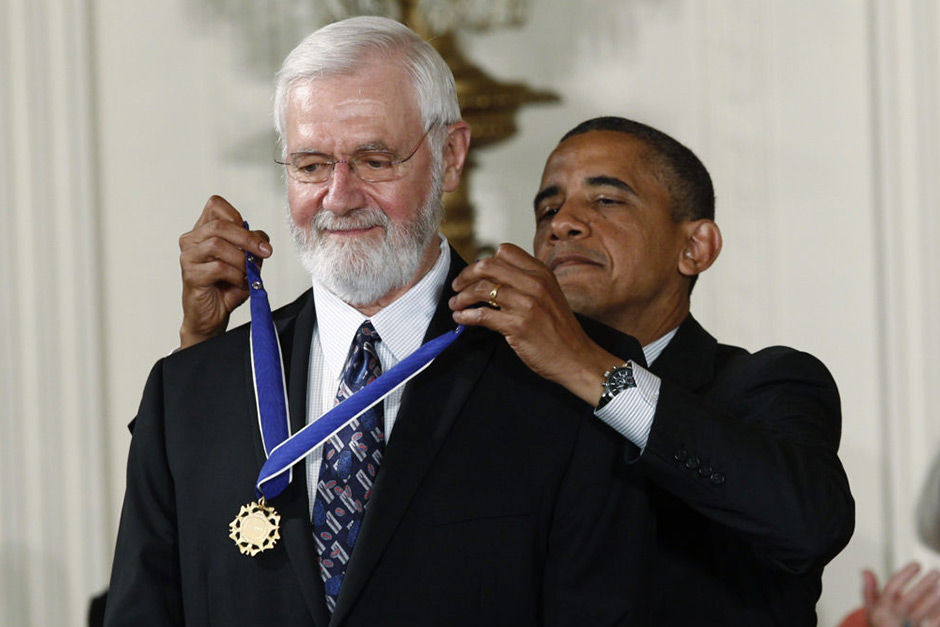
The world recently said goodbye to a true giant of public health, a man whose name, while perhaps not universally known, is etched into the very fabric of human triumph: Dr. William Foege. His passing marks not just the end of a remarkable life, but a moment to reflect on a singular achievement that few in history can claim – the eradication of a devastating disease. Dr. Foege was the architect of the strategy that wiped smallpox off the face of the Earth, a feat once thought impossible, saving countless lives and fundamentally altering the trajectory of global health.
The Audacity of Eradication
Imagine a disease so fearsome, so ancient, that it had plagued humanity for millennia, leaving a trail of disfigurement and death across continents. Smallpox was that monster. For generations, the idea of simply ending its existence felt like a fantastical dream. Yet, Dr. Foege, with a blend of brilliant strategy and relentless determination, turned that dream into reality. Working with the Centers for Disease Control and Prevention (CDC) and the World Health Organization (WHO) in the 1970s, he spearheaded the audacious plan that would become known as “ring vaccination.”
Instead of trying to vaccinate every single person – an insurmountable task in many remote regions – Foege’s team focused on containing outbreaks. When a case of smallpox was identified, they would swiftly vaccinate everyone in the immediate vicinity, creating a “ring” of immunity around the infected individual. This ingenious, targeted approach was revolutionary. “His genius wasn’t just in the science, but in his unwavering belief that a disease could truly be eliminated – a radical idea at the time,” says Dr. Anya Sharma, a global health historian. “He showed the world what was possible, not just for smallpox, but for humanity’s capacity to overcome seemingly insurmountable challenges.” It was a battle fought village by village, arm by arm, until, against all odds, smallpox was declared eradicated.
A Legacy Beyond Smallpox
Dr. Foege’s impact didn’t end with smallpox. The successful eradication effort became a blueprint and a powerful motivator for subsequent global health initiatives. It proved that with vision, collaboration, and adaptive strategies, humanity could conquer its deadliest foes. Foege went on to serve as the Director of the CDC, where he championed childhood immunizations and HIV/AIDS prevention. His leadership continued to shape public health policy for decades, including his crucial role in establishing and guiding the work of the Bill & Melinda Gates Foundation’s global health programs, further expanding his influence on issues like polio eradication and measles control.
He was a quiet force, a strategist, and an eternal optimist who believed in the power of collective action. His work wasn’t just about vaccines and epidemiology; it was about human dignity, about protecting the most vulnerable, and about proving that even the most daunting health crises could be overcome through intelligence, compassion, and persistence. His life stands as a testament to the profound difference one dedicated individual can make in the vast landscape of global suffering.
Remembering a True Hero
Dr. William Foege left us a world free from smallpox, a gift of incalculable value. His legacy is not just in medical textbooks or public health archives; it lives on in every child spared from disease, every family protected, and every global health worker inspired by his audacious spirit. As we face new health challenges, his life serves as a powerful reminder of what is achievable when we dare to dream big and act with conviction. He was a hero in the truest sense, and his impact will resonate for generations to come.
*

