


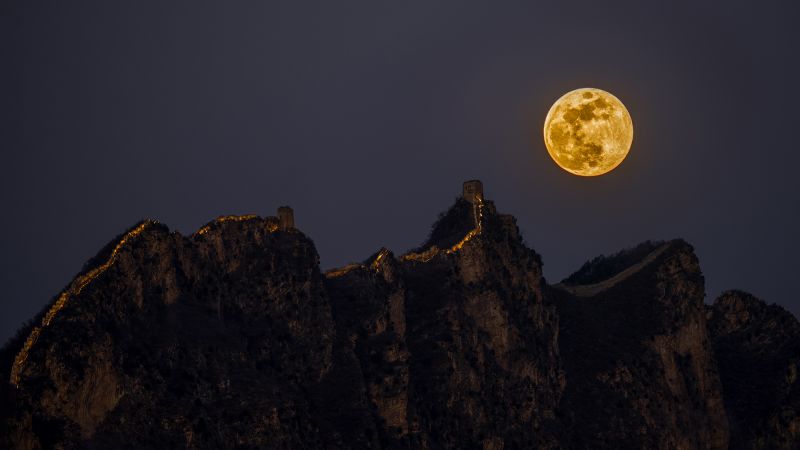
Every month, the moon graces our sky with its changing phases, culminating in the radiant glow of a full moon. Each one carries a unique name, often rooted in the natural cycles and ancient traditions of various cultures. As winter holds its grip, a particularly luminous spectacle awaits: February’s full Snow Moon. This celestial event isn’t just another full moon; it’s a profound connection to history, nature, and the sheer wonder of our universe.
The Lore Behind the Snow Moon’s Name
The name “Snow Moon” is perhaps one of the most evocative and instantly understandable of the full moon monikers. Its origins are primarily attributed to Native American tribes, particularly those in the northern and eastern parts of North America. February, historically, is often the month with the heaviest snowfall, making hunting difficult and life challenging. The brilliant full moon, illuminating vast, snow-covered landscapes, became a beacon during these harsh times. It was a signpost in a world blanketed in white, a reminder of the season’s intensity.
Other traditional names for this full moon reflect similar themes of scarcity and the turning of the seasons. It has also been known as the “Hunger Moon” due to the difficulty of finding food, or the “Bear Moon,” referring to the time when bear cubs are born or bears begin to emerge from hibernation. Regardless of the specific name, they all underscore the profound relationship between ancient cultures and the rhythms of the natural world, using the moon as a celestial calendar.
What Makes This Full Moon Special?
While every full moon is a beautiful sight, the Snow Moon often presents a particularly striking appearance. Against the typically crisp, clear, and cold winter skies, its light can feel especially sharp and brilliant. The reflective qualities of snow on the ground can further amplify its luminosity, creating an almost ethereal glow that transforms nighttime landscapes.
Astronomically, a full moon occurs when the Moon is directly opposite the Sun in its orbit, meaning its entire face is illuminated from our perspective on Earth. For the Snow Moon, this alignment often happens when the Earth is still leaning away from the sun, leading to longer nights in the Northern Hemisphere, providing ample opportunity for skygazers to enjoy its splendor.
Many find a unique quietness and introspection during the winter months, and the Snow Moon can heighten this feeling. It invites us to pause, look up, and appreciate the simple, enduring beauty above. As amateur astronomer, Clara Jenkins, eloquently puts it, “There’s something incredibly humbling about gazing at the Snow Moon. It’s a silent, ancient witness to countless winters, reminding us of nature’s power and our place within its grand design.”
Witnessing the Lunar Spectacle
To truly appreciate the Snow Moon, you don’t need any special equipment. Simply finding a spot away from bright city lights, if possible, will enhance your viewing experience. Step outside, bundle up, and let your eyes adjust to the darkness. Watch as the moon rises above the horizon, often appearing larger and tinged with a warm, almost golden hue due to atmospheric scattering. As it climbs higher, its brilliant white light will dominate the night sky.
Consider taking a moment to reflect on the generations who looked upon this same lunar face, navigating their lives by its light. The Snow Moon is more than just an astronomical event; it’s a thread connecting us to history, to the natural world, and to the shared human experience of wonder. So, as the next full moon approaches, take a moment to step outside and let the silent, luminous beauty of the Snow Moon inspire you.

