


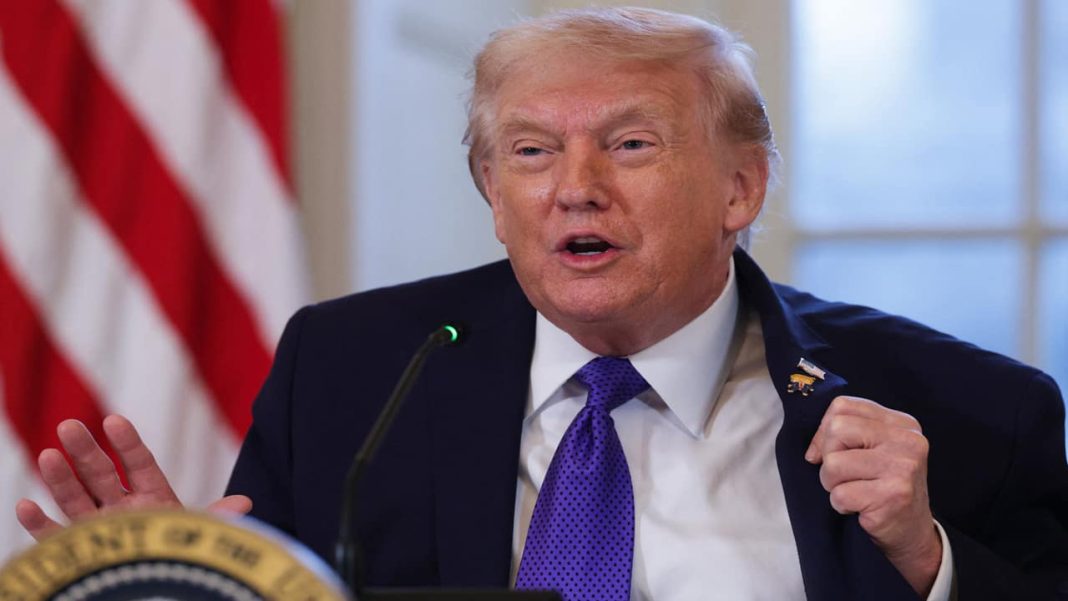
The global political landscape witnessed another significant move as then-US President Donald Trump signed an executive order aimed at safeguarding Venezuelan oil revenue held within American jurisdiction. This order, often described as “firewalling” these critical funds, signals a deeper commitment by the US to prevent the Maduro regime from accessing what it considers assets belonging to the Venezuelan people, intended instead for a future, democratically elected government. For an oil-importing nation like India, such geopolitical maneuvers, particularly involving a major oil producer, carry far-reaching implications that extend beyond diplomatic corridors into economic realities.
The US Move: A Financial Firewall for Venezuela
President Trump’s executive order directly targeted the financial mechanisms through which the Venezuelan state-owned oil company, Petróleos de Venezuela, S.A. (PDVSA), operates within the United States. Essentially, the order prohibits any transactions involving assets of PDVSA or any entity majority-owned by it, if these transactions are deemed to benefit the Nicolás Maduro regime. This action was a direct consequence of the US recognition of opposition leader Juan Guaidó as Venezuela’s interim president, following what Washington and many other nations considered fraudulent presidential elections in 2018.
The stated purpose behind this financial firewall is to ensure that the proceeds from Venezuelan oil sales, which constitute the vast majority of the nation’s export earnings, are preserved for a future government aligned with democratic principles and led by Guaidó. US officials articulated this as a measure to prevent further “looting” of state assets by the Maduro administration, which has been widely accused of corruption and human rights abuses. This move effectively tightened the economic squeeze on Caracas, aiming to limit its financial resources and increase pressure for a political transition.
Venezuela’s Oil Wealth Amidst Deepening Crisis
Venezuela, a nation blessed with the world’s largest proven oil reserves, has paradoxically plunged into one of the worst economic and humanitarian crises in recent history. Decades of mismanagement, coupled with plummeting oil prices and increasingly stringent international sanctions, have crippled its once-thriving petroleum industry. The country’s political landscape has been tumultuous for years, marked by a bitter power struggle between President Nicolás Maduro and the internationally recognized interim president, Juan Guaidó.
The US executive order adds another layer to this complex struggle, directly impacting the Maduro government’s ability to finance its operations and maintain power. Without access to these substantial revenues, the regime faces an even steeper challenge in securing essential imports, funding public services, and maintaining its internal support base. The international community remains deeply divided on the issue, with countries like Russia, China, and Cuba continuing to back Maduro, while a large coalition of Western and Latin American nations support Guaidó.
As a senior US official noted at the time of the order, “These funds are the property of the Venezuelan people and are being protected for the legitimate government to manage, not to be siphoned off by an illegitimate regime.” This sentiment underscores the US strategy of financially isolating Maduro while attempting to empower the opposition.
Global Repercussions and India’s Energy Outlook
For India, a nation heavily reliant on crude oil imports to fuel its rapidly growing economy, developments in major oil-producing regions like Venezuela are always closely watched. While Venezuela’s direct oil exports to India have significantly diminished over recent years due to US sanctions and the country’s internal production woes, the broader impact of such US actions on global oil markets cannot be understated. Any measure that influences the supply or price stability of crude oil resonates immediately across India’s economic sectors.
The “firewalling” of Venezuelan oil revenue, coupled with existing sanctions, exacerbates uncertainties in global energy supplies. While the immediate effect might be limited given Venezuela’s current low production levels, it adds to a climate of geopolitical risk that can drive up international crude prices. Higher global oil prices translate directly into increased import bills for India, impacting the rupee’s value, potentially fueling inflation, and straining the government’s fiscal balance. Indian consumers face higher fuel costs, which can ripple through the economy, affecting transportation, manufacturing, and food prices.
India traditionally maintains a stance of non-interference in the internal affairs of other nations, advocating for diplomatic solutions. However, its economic imperatives often necessitate navigating complex international sanctions regimes while ensuring its energy security. New Delhi has a delicate balance to strike, maintaining robust ties with the United States while engaging with other global powers and diversifying its energy sources to mitigate risks from such geopolitical flashpoints.
Donald Trump’s executive order to firewall Venezuelan oil revenues in the US was a decisive move reflecting Washington’s firm stance against the Maduro regime and its unwavering support for Juan Guaidó. This financial maneuver is a critical element in the ongoing international pressure campaign, designed to reshape Venezuela’s political future. While its direct impact on India’s immediate oil supply might be minimal, the broader implications for global oil price volatility and the intricate dynamics of international diplomacy are significant. As the Venezuelan crisis continues to unfold, its ripples will undoubtedly continue to be felt across the world, including in the energy markets that are vital to India’s prosperity.

