


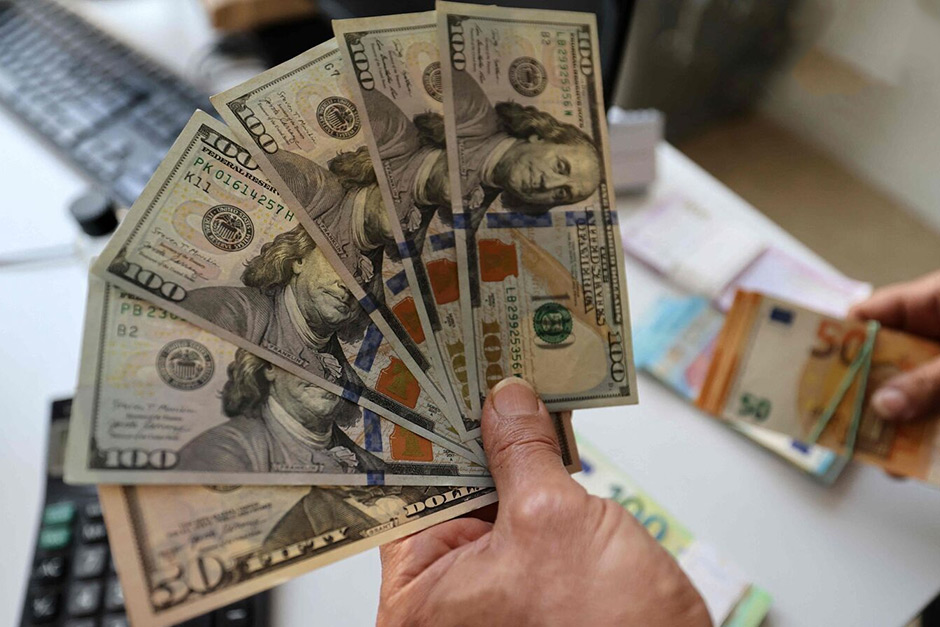
The global financial landscape is once again navigating a period of heightened uncertainty, with the mighty U.S. Dollar finding itself under considerable pressure. This shift is not merely a technical correction but a deeper reflection of investor jitters stemming from evolving economic signals and, crucially, the opaque path of U.S. policy decisions. As markets worldwide brace for potential shifts, economies like India are watching closely, poised to adapt to the ripple effects of a fluctuating dollar.
The Roots of Dollar Weakness Amidst Policy Ambiguity
For much of the recent past, the U.S. Dollar reigned supreme, bolstered by aggressive interest rate hikes by the Federal Reserve aimed at taming persistent inflation. However, as inflation shows signs of cooling and recessionary fears loom, the narrative has begun to shift. Investors are now grappling with mixed signals from Washington: the Federal Reserve’s commitment to its inflation target versus growing calls for rate cuts to prevent an economic downturn.
Beyond monetary policy, fiscal policy also plays a significant role in this investor unease. Debates surrounding the U.S. debt ceiling, government spending, and the broader economic outlook ahead of an election cycle contribute to a climate of unpredictability. This confluence of monetary and fiscal policy ambiguity is leading investors to question the long-term attractiveness of dollar-denominated assets. Consequently, the U.S. Dollar Index (DXY), which measures the dollar’s strength against a basket of six major currencies, has seen a notable decline, reflecting a broader search for stability and alternative avenues for growth. This sentiment is further amplified by geopolitical tensions, which, while not directly policy-driven, add another layer of complexity to global financial markets.
India’s Economic Landscape and the Rupee’s Resilience
For an import-dependent nation like India, a weakening dollar often brings a sigh of relief. A softer dollar translates to cheaper imports, most notably crude oil, which forms a significant chunk of India’s import bill. This can provide crucial elbow room for policymakers in managing domestic inflation, potentially even allowing the Reserve Bank of India (RBI) greater flexibility in its monetary policy decisions.
Moreover, a less aggressive dollar can enhance the appeal of emerging markets, including India, for foreign institutional investors (FIIs) and foreign portfolio investors (FPIs). As investors diversify their portfolios away from potentially volatile dollar assets, Indian equities and debt markets could see increased inflows, bolstering the rupee and supporting domestic asset prices. While a stronger rupee might slightly impact the competitiveness of India’s exports by making them more expensive for global buyers, the overall benefit from reduced import costs and potential capital inflows is often seen as a net positive for the Indian economy. Indian expatriates sending remittances home also benefit, as their dollar earnings now convert to more rupees, boosting household incomes. This intricate dance between global currency dynamics and local economic factors underscores India’s growing interconnectedness with the world economy.
“The current volatility in the dollar reflects a broader global re-evaluation of risk and return, where policy certainty, or the lack thereof, becomes a primary driver,” observes Dr. Nisha Sharma, Chief Economist at Ambit Asset Management. “For India, this presents a nuanced opportunity – while export competitiveness needs monitoring, the easing of import pressures and potential capital inflows can significantly aid our growth trajectory.”
Navigating the Global Currents
The U.S. Dollar’s current predicament serves as a potent reminder of how interconnected global financial markets are and how policy decisions in one major economy can send ripples across the world. As investors continue to grapple with the uncertainty surrounding U.S. monetary and fiscal policies, the dollar is likely to remain under scrutiny. For India, this period of global recalibration offers both challenges and opportunities.
By judiciously managing its economic policies and continuing to build a resilient domestic market, India can strategically navigate these global currents, potentially harnessing the benefits of a changing currency landscape while mitigating the risks. The coming months will be crucial in determining whether the dollar regains its shine or if this pressure marks a more sustained shift in global financial power dynamics.

