


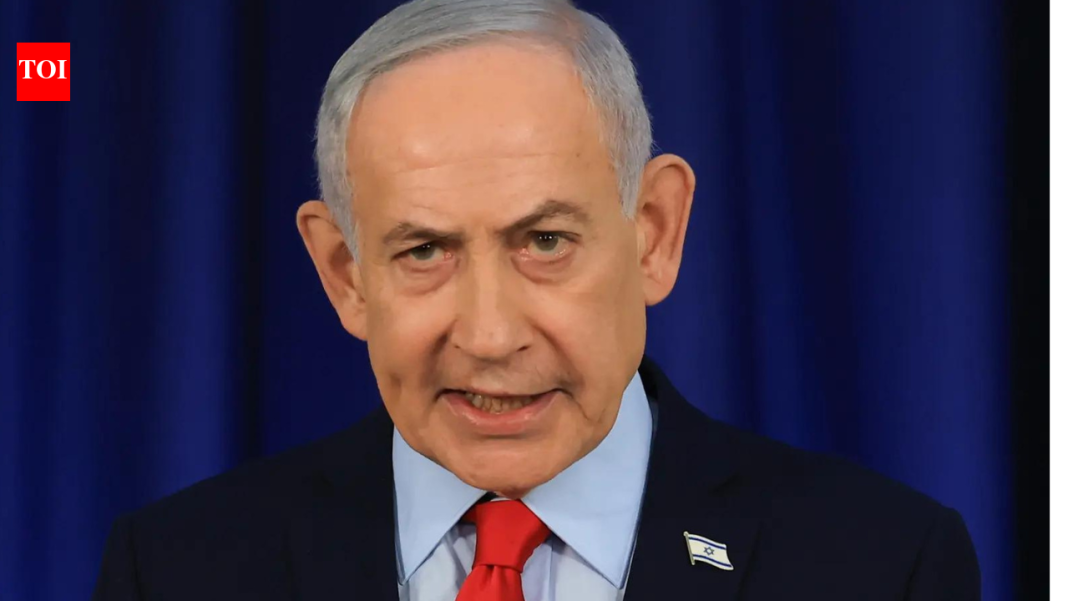
In the high-stakes geopolitical theatre of the Middle East, accusations of a nation attempting to steer a global superpower into conflict are not uncommon. Recently, Israeli Prime Minister Benjamin Netanyahu found himself at the centre of such a storm, vehemently denying claims that he was “dragging” the United States into a war with Iran. His defence notably invoked the independent nature of former President Donald Trump, questioning the very premise that anyone could dictate policy to the unpredictable American leader.
Netanyahu’s forceful rebuttal comes amidst heightened regional tensions, particularly concerning Iran’s nuclear programme and its proxies’ activities. The debate underscores the intricate dynamics of the US-Israel alliance and the perennial anxieties surrounding potential escalation in a region vital to global stability, including for nations like India.
The Assertion and the Unflappable Response
The accusation, emanating from various quarters including some US political circles and media, suggests that Israel’s hawkish stance on Iran might be designed to provoke a US military intervention. Netanyahu, however, dismissed this narrative with a pointed rhetorical question: “Does anyone really think someone can tell Trump what to do?”
This statement is central to his denial, highlighting a widely acknowledged characteristic of Donald Trump’s presidency: his often unilateral decision-making and ‘America First’ foreign policy approach. During his tenure, Trump famously withdrew the US from the Iran nuclear deal (JCPOA) against the advice of many allies, reimposed stringent sanctions, and authorized military actions based on his own assessments. Netanyahu’s argument rests on the premise that a leader of such conviction and independence would be impervious to external manipulation, suggesting that any alignment between US and Israeli policy on Iran stemmed from shared strategic concerns rather than Israeli coercion.
For Israel, Iran’s nuclear ambitions and its regional destabilizing activities, including support for groups like Hezbollah and Hamas, are existential threats. Israeli leaders have consistently advocated for a robust international response to curb Tehran’s capabilities. This advocacy, Netanyahu asserts, is driven by Israel’s sovereign security interests, not a desire to embroil a third party in conflict.
The Intricate Web of US-Israel Relations
The relationship between the United States and Israel is one of the most enduring and multifaceted alliances in modern geopolitics. Characterized by deep military, intelligence, and diplomatic cooperation, it often sees both nations working in tandem on security issues. However, the nature of this alliance also occasionally sparks debate, particularly when perceived interests might diverge or when one partner’s actions could have far-reaching consequences for the other.
Critics of Netanyahu’s approach have argued that Israel’s consistent pressure on Iran has at times put the US in a difficult position, potentially increasing the risk of conflict. However, supporters maintain that Israel, as a sovereign nation facing direct threats, has every right to advocate for its security, and its warnings about Iran are legitimate concerns that the US, as a key ally, should heed. Netanyahu’s denial serves to reaffirm Israel’s independence in its foreign policy while simultaneously acknowledging the shared strategic outlook that often aligns Washington and Jerusalem on critical regional issues.
India’s Balancing Act in a Volatile Region
For India, a country with significant energy interests, a large diaspora, and historical ties across the Middle East, the prospect of an escalated conflict between the US, Israel, and Iran is a matter of profound concern. India maintains a delicate diplomatic balance, fostering pragmatic relationships with all regional players, including both Iran and the United States.
New Delhi relies heavily on crude oil imports from the Middle East, and any disruption to shipping lanes or energy production due to conflict would have immediate and severe economic repercussions. Furthermore, the stability of the Indian diaspora, particularly in the Gulf states, is a critical humanitarian and economic consideration. India has invested in projects like the Chabahar Port in Iran, which is crucial for trade connectivity to Afghanistan and Central Asia, bypassing Pakistan. Escalation could jeopardize such strategic investments and broader regional connectivity initiatives.
Therefore, while not directly involved in the US-Israel-Iran dynamic, India closely monitors these developments, advocating for de-escalation and peaceful resolutions. Netanyahu’s strong denial, even if aimed at a domestic and American audience, reverberates across global capitals, including New Delhi, as it speaks to the underlying tensions that continue to define one of the world’s most critical geopolitical hotspots.
Ultimately, Netanyahu’s statement provides a window into the complex web of alliances, perceived threats, and independent national interests that shape Middle Eastern policy. It underscores that while cooperation is strong, nations like Israel assert their autonomy, especially when confronting existential security challenges, irrespective of the global superpower they partner with.

