


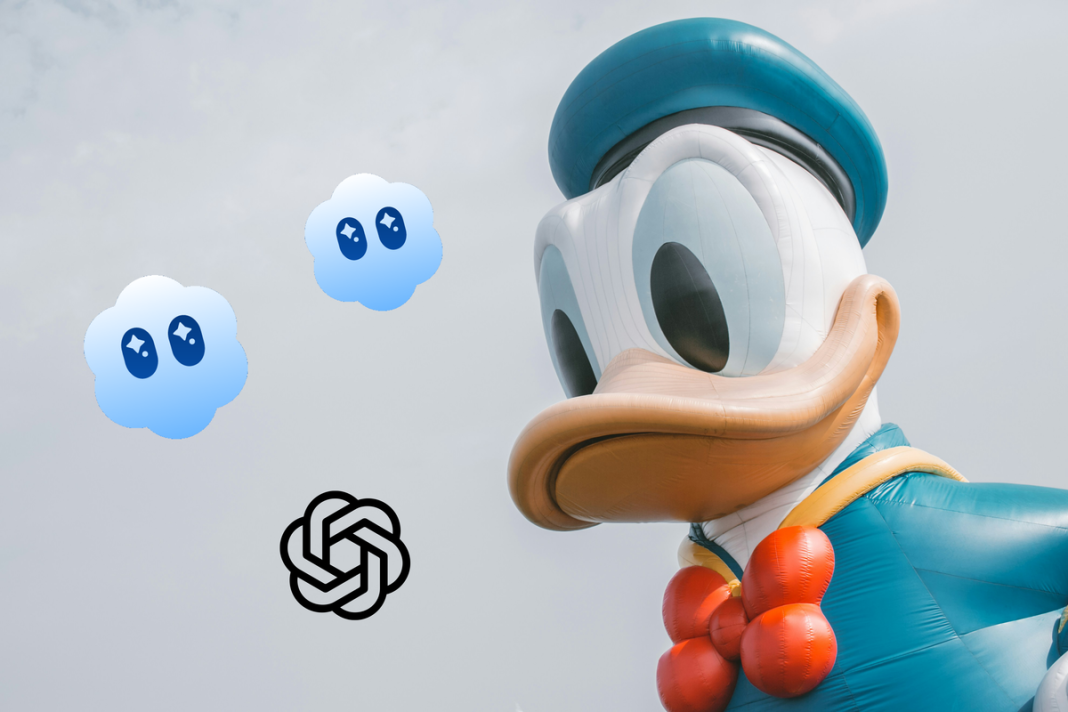
The buzz around artificial intelligence transforming creative industries has been undeniable. From generating scripts to composing music, AI’s potential seemed boundless. When OpenAI unveiled Sora, its text-to-video model capable of producing stunningly realistic and imaginative short clips, the excitement in Hollywood was palpable. The vision of rapidly generating cinematic sequences with a few text prompts seemed to herald a new era. Yet, as major players like Disney reportedly grapple with integrating such technology into their complex production pipelines, a more nuanced reality is emerging: AI, while powerful, might not be the overnight Hollywood revolutionary many anticipated.
The Nuance of Narrative and Vision
Sora, and similar generative AI tools, excel at creating visually impressive, short-form content. They can conjure fantastical landscapes, intricate character actions, and dynamic camera movements with remarkable fidelity. However, Hollywood’s storytelling demands extend far beyond impressive individual shots. Feature films, animated series, and high-end episodic content require intricate narrative arcs, consistent character development across hours of footage, precise emotional beats, and a cohesive artistic vision maintained over thousands of frames.
Disney, renowned for its meticulous world-building, character integrity, and emotional depth, likely faces unique challenges. Ensuring a generated character maintains its exact likeness, expressions, and costume details through numerous scenes, across different lighting conditions and camera angles, is a monumental task. Furthermore, an AI’s interpretation of a text prompt, while often creative, may not align precisely with a director’s singular, often abstract, artistic vision. As one seasoned visual effects supervisor noted, “AI can give you a stunning individual frame, but storytelling is about the thousand frames before and after, all working in harmony with a director’s singular vision. That’s where the magic, and the current limitation, lies.” The level of iterative refinement and precise creative control required for a Disney-caliber production often clashes with the more ‘black box’ nature of current generative AI.
AI as an Assistant, Not an Auteur
These struggles do not render AI useless for Hollywood; rather, they redefine its role. Instead of an autonomous auteur, AI is proving to be a highly effective assistant. It can rapidly generate concepts for storyboards, create previzualizations to help filmmakers visualize scenes, or even produce placeholder footage for editing. It can accelerate the creation of background elements, environmental textures, or provide quick iterations for costume and set design exploration. Tasks that once took hours or days can now be completed in minutes, freeing up human creatives for more complex problem-solving and ideation.
The current state of generative AI suggests that the human element remains indispensable for the sophisticated demands of cinematic storytelling. The decision-making, the nuanced understanding of human emotion, the collaborative effort of a diverse creative team, and the final artistic judgment needed to craft a compelling narrative are still firmly within the human domain. The “struggle” isn’t about AI’s inability to generate images, but its current limitation in consistently delivering the precise narrative coherence, emotional resonance, and unwavering artistic control required for premium content.
In conclusion, while the initial hype suggested a revolutionary upheaval, the reality shaping up in Hollywood, particularly with studios like Disney exploring tools like Sora, points towards an evolutionary integration. AI is becoming a powerful set of tools that augments human creativity and streamlines production workflows, rather than replacing the fundamental act of human storytelling. The magic of cinema, it seems, will continue to rely on the unique blend of technology and the boundless imagination of human artists.

