


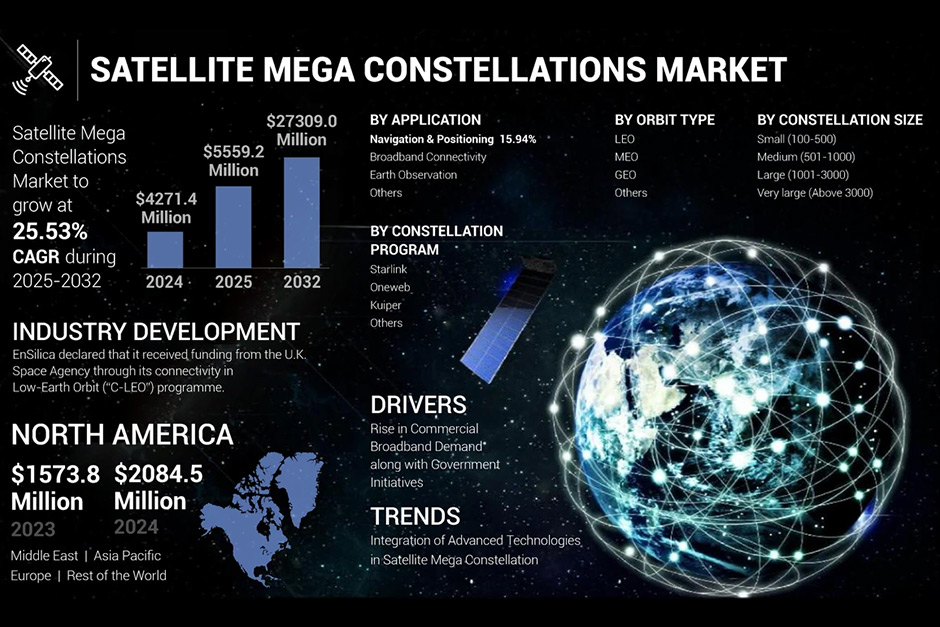
The dawn of the twenty-first century has ushered in an era of unprecedented connectivity, largely driven by advancements in space technology. Central to this revolution are Low Earth Orbit (LEO) satellite mega-constellations – vast networks of thousands of satellites promising global, high-speed internet access, especially to underserved regions. India, with its ambitious space program and burgeoning digital economy, stands to be a significant beneficiary and contributor to this evolving space landscape. However, the deployment and maintenance of these colossal orbital systems present a unique set of technological and operational challenges, while simultaneously raising critical questions about orbital safety and the long-term sustainability of space itself.
Navigating Technological and Operational Complexities
Maintaining a large LEO constellation is an intricate ballet of engineering and logistics. Technologically, the sheer scale demands an unprecedented level of miniaturisation and mass production of reliable satellites, each designed for a specific orbital lifespan. Launch efficiency is paramount; traditional launch methods struggle with the volume required, necessitating innovations like multi-satellite deployments and reusable rocket technology to drive down costs. Once in orbit, ensuring the longevity and reliability of thousands of spacecraft in a harsh radiation environment, susceptible to micrometeoroid impacts, is a continuous battle. Failures in orbit not only reduce constellation effectiveness but also contribute to space debris.
Operational challenges are equally formidable. Managing such a vast network requires sophisticated inter-satellite communication systems that can route data seamlessly across the globe. This intricate choreography extends to ground station infrastructure, which must be globally distributed, highly automated, and capable of processing enormous volumes of data. Spectrum management becomes a critical issue, preventing interference with existing geostationary satellites and terrestrial networks. From an Indian perspective, ISRO’s expertise in satellite manufacturing and launch services, coupled with the growing private sector interest in space-based communication, offers opportunities to address some of these challenges domestically. However, the global nature of these constellations necessitates international collaboration on technical standards and operational protocols.
Orbital Safety and Space Sustainability: A Looming Concern
Perhaps the most profound challenge posed by mega-constellations relates to orbital safety and the long-term sustainability of space. The rapid proliferation of LEO satellites dramatically increases the probability of on-orbit collisions. Even a minor collision can generate thousands of pieces of fast-moving debris, each capable of damaging or destroying other operational satellites. This scenario, often referred to as the Kessler Syndrome, describes a cascading effect where collisions generate more debris, leading to more collisions, potentially rendering entire orbital shells unusable for decades or even centuries.
The issue extends beyond active satellites. Ensuring the prompt and safe deorbiting of satellites at their end-of-life is crucial. While many operators commit to deorbiting within a certain timeframe (e.g., 5 to 25 years), a single malfunction or operational oversight in thousands of satellites could leave defunct objects in orbit, increasing collision risks. This orbital crowding also impacts other space activities, including astronomical observations which face increasing light pollution from reflective satellites, and the operations of other satellite owners who must contend with a significantly increased number of conjunction warnings.
India, through initiatives like the Network for Space Object Tracking and Analysis (NETRA), is actively contributing to Space Situational Awareness (SSA), an essential capability for mitigating collision risks. However, a global, unified approach is still nascent. As a senior Indian space policy analyst observes, “The ultimate success of LEO mega-constellations hinges not just on their technological prowess, but on our collective commitment to responsible orbital stewardship for future generations.” Without robust international governance, common standards for debris mitigation, and transparent data sharing protocols, the promise of universal connectivity could inadvertently jeopardise the very domain it seeks to leverage.
Conclusion
LEO satellite mega-constellations hold immense promise for transforming global connectivity, offering unprecedented access and data speeds. However, this transformative potential comes with significant technological, operational, and environmental caveats. The challenges range from ensuring the reliability and efficient deployment of thousands of satellites to managing the growing threat of orbital debris and maintaining space sustainability. As India continues to expand its footprint in space, its role in advocating for and developing solutions to these global challenges will be critical. Collaborative innovation, stringent regulatory frameworks, and a shared international commitment to responsible space practices are not merely desirable but essential to harness the benefits of LEO constellations without imperilling the future of space exploration and utilisation.

