


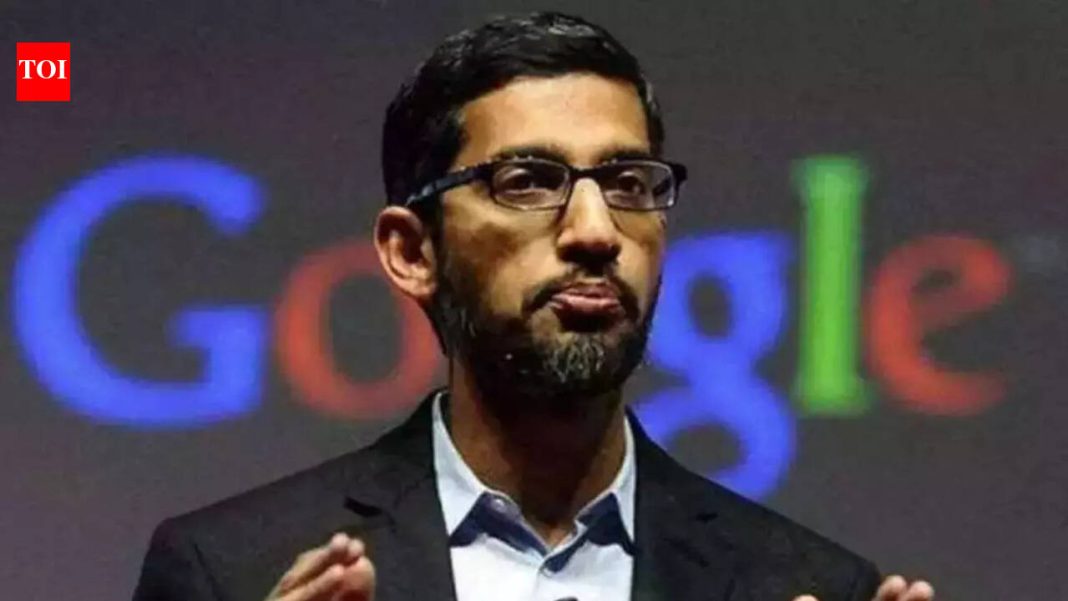
The launch of OpenAI’s ChatGPT in late 2022 felt like a seismic event, instantly bringing the power of generative AI into mainstream consciousness. Suddenly, conversations about artificial intelligence shifted from abstract research to tangible, interactive applications. As the world marvelled at its capabilities, and Google subsequently unveiled its own advanced model, Gemini, a natural question arose in public discourse: who truly came first? Amidst this competitive narrative, Google CEO Sundar Pichai has consistently sought to gently steer the conversation, reminding us that the story of AI’s current boom is far older and deeply rooted in years of sustained, foundational research, often crediting the brilliant minds who laid its very groundwork.
The Deep Roots of Generative AI
For many, ChatGPT was their first real encounter with a sophisticated large language model. Its conversational fluency and ability to generate diverse content were groundbreaking, propelling OpenAI into the global spotlight. However, the technology underpinning these models didn’t appear overnight. Google, long before the public launch of its rival Gemini, had been a quiet but prolific pioneer in AI research for over a decade. Its contributions span from the initial breakthroughs in deep learning to the very architecture that powers most of today’s advanced LLMs.
The most salient example is the 2017 paper titled “Attention Is All You Need,” authored by a team of Google Brain researchers. This seminal work introduced the Transformer architecture, a neural network design that proved incredibly effective at processing sequences of data, revolutionising natural language processing. This architecture is now the backbone of models like Google’s BERT, LaMDA, PaLM, Gemini, and crucially, OpenAI’s GPT series. It was a moment where foundational research from Google created a paradigm shift that continues to define the landscape of AI development.
Sundar Pichai’s Stance: Crediting the Architects
In interviews and public statements, Sundar Pichai has often highlighted Google’s long-standing commitment to AI, positioning the company not merely as a competitor in the product race but as a fundamental contributor to the field’s underlying science. He understands that while product launches grab headlines, the true innovation often lies in the years of diligent academic and engineering effort that precede them. Pichai’s measured reminders serve to acknowledge the enduring legacy of the researchers whose theoretical and practical breakthroughs made these powerful applications possible. This perspective is particularly relevant for the scientific community and for countries like India, which are rapidly building their own AI capabilities and understanding the value of fundamental research.
Pichai, speaking on the long game of AI, once encapsulated this philosophy:
“It’s easy to get caught up in the latest product launch, but the true north for us has always been advancing the core science. We owe a tremendous debt to the researchers and engineers, many of them right here at Google, whose breakthroughs in areas like the Transformer architecture have literally enabled the entire field to leap forward. Their foresight and dedication are what make today’s powerful AI models possible.”
This statement underscores the importance of acknowledging the foundational work done by individuals and teams, rather than solely focusing on market-ready applications. It’s a call to remember the intellectual lineage behind the current AI boom.
India’s Stake in the Global AI Narrative
For India, a nation increasingly positioning itself as a global technology and innovation hub, understanding this nuanced history of AI development is crucial. Indian engineers and researchers have been significant contributors to global tech for decades, and the nation is now rapidly investing in its own AI ecosystem, from startups to academic research. The lesson from Pichai’s perspective resonates deeply here: while adopting and deploying cutting-edge AI is vital, fostering a culture of fundamental research and crediting its pioneers is equally important for long-term growth and self-sufficiency.
India’s burgeoning talent pool, especially in engineering, stands to benefit immensely from a focus on foundational AI research, potentially leading to the next ‘Transformer moment’ emerging from Indian labs. As both global tech giants and Indian innovators race to define the future of AI, a balanced appreciation for both rapid product development and deep scientific discovery will be paramount.
In the grand narrative of artificial intelligence, the question of “who came first” is rarely a simple one of product launch dates. Sundar Pichai’s gentle recalibration serves as a valuable reminder that behind every dazzling AI model lies years of dedicated research, often by unsung heroes whose theoretical contributions underpin the entire industry. As the AI revolution continues its rapid pace, fuelled by both intense competition and collaborative discovery, acknowledging these foundational architects ensures a more complete and accurate understanding of technological progress. It highlights that innovation isn’t just about what hits the market, but about the profound intellectual groundwork that makes it all possible.

