


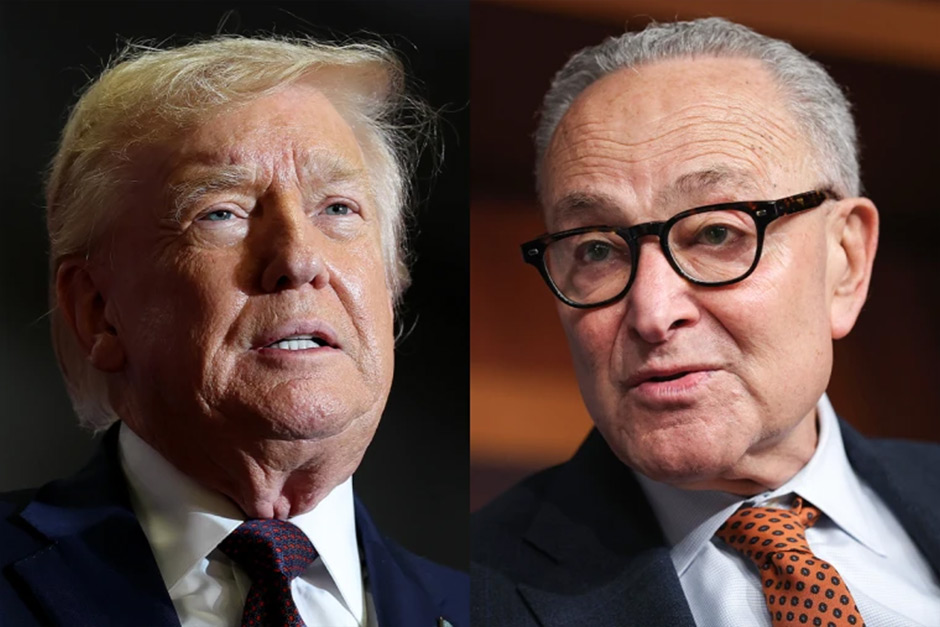
The specter of a government shutdown has become a recurring point of tension in the nation’s political discourse. These periods often bring with them uncertainty about essential services and economic stability. Recently, however, a significant development emerged from Washington: an agreement reached between Democrats and former President Donald Trump to keep the government funded and operational, effectively averting what many saw as an imminent shutdown. This unexpected collaboration highlights the complex and sometimes unpredictable nature of political necessity.
An Unlikely Bipartisan Bridge
The political landscape is frequently characterized by deep divisions, with legislative battles often protracted and challenging. When the threat of a government shutdown looms, the urgency for a resolution intensifies, pushing various factions towards a common ground. In this instance, the deal that unfolded saw Democrats and former President Trump, figures often at odds across numerous policy fronts, engaging in negotiations that ultimately led to a crucial agreement.
This development is particularly noteworthy given the typical partisan dynamics surrounding budget impasses. Historically, such resolutions usually emerge from inter-party discussions within Congress, or directly between congressional leadership and the White House. The direct involvement of a former president, especially one with significant ongoing influence over a major party, in brokering a legislative outcome represents a deviation from conventional political strategies. It signals a pragmatic recognition from all sides that the potential fallout from a shutdown—disruptions to government services, economic instability, and public discontent—outweighed ideological differences.
The Anatomy of Compromise
Details of the agreement indicate a carefully negotiated package designed to secure the necessary votes for passage. While specific legislative intricacies are often complex, the core objective was to provide sufficient funding to keep federal agencies operational. Such deals typically involve trade-offs, where neither side achieves all their initial demands but gains enough concessions to justify their support. For Democrats, the priority often lies in maintaining funding levels for critical social programs and agencies, while for figures like former President Trump, influence over spending priorities or specific policy riders could be key.
The understanding reached is generally viewed as a testament to the power of shared urgency. Many analyses suggest that the deal likely involved a combination of short-term funding measures and strategic adjustments to avoid contentious policy debates that could derail the entire process. As one political observer commented, “This kind of cross-aisle agreement, particularly involving such disparate figures, often signals a recognition of broader public pressure to deliver results, even if temporary. It shows that sometimes, even the most entrenched positions can yield to the imperative of basic governance.” The agreement effectively kicked the can down the road on some more difficult budget decisions, providing a temporary reprieve and allowing for continued government functions.
Implications and The Road Ahead
The immediate impact of this deal is the avoidance of widespread disruptions that a government shutdown would entail. Federal employees can continue their work without fear of furloughs, and essential services, from national parks to scientific research, remain funded. For the public, it offers a sense of relief and stability, signaling that despite deep political chasms, a basic level of functionality can be maintained.
Beyond the immediate relief, this unique collaboration prompts questions about future political dynamics. Does it set a precedent for unconventional alliances in moments of crisis, or is it a singular event born out of extraordinary circumstances? While the immediate goal was achieved, the underlying challenges of long-term budget agreements and partisan gridlock persist. This agreement, while critical in the moment, serves as a reminder that the work of governance often involves navigating a delicate balance between principled stands and the practical need for compromise.
Ultimately, the deal between Democrats and former President Trump to keep the government open underscores a fundamental aspect of parliamentary democracy: the capacity, however difficult, to find common ground when faced with compelling shared interests. It represents a pragmatic pause in ongoing political skirmishes, prioritizing operational continuity over further ideological confrontation.

