


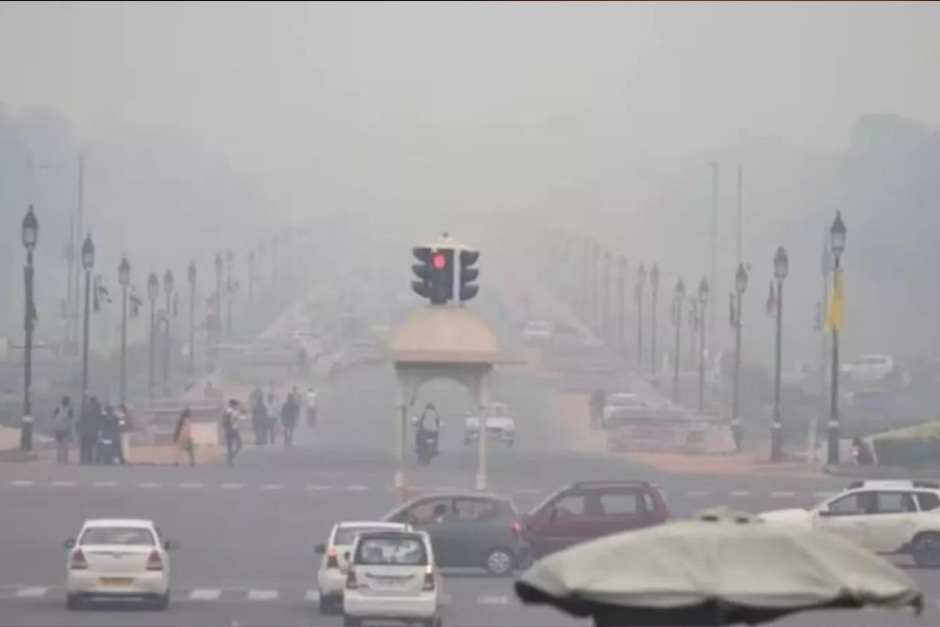
Delhi, a city often cloaked in a thick haze, breathes a collective sigh of relief at the first drop of rain. The common belief, almost a reflex, is that a good downpour will cleanse the air, washing away the particulate matter that chokes its residents. However, recent weather patterns have presented a stark, sobering reality: even significant rainfall has struggled to provide the much-anticipated respite from the city’s stubborn pollution. This phenomenon underscores a critical challenge, revealing that Delhi’s air quality crisis is far too deeply entrenched for mere atmospheric showers to resolve.
The Stubborn Grime: Why Rain Fell Short
The expectation that rain will instantly clear the air stems from a basic understanding of atmospheric physics: water droplets coalesce with pollutants, making them heavier and bringing them down to the ground. This process, known as wet deposition, certainly occurs. Yet, when Delhi experiences light to moderate rainfall, often the most common type, its efficacy in combating severe pollution is limited. The city’s air is a complex cocktail of pollutants, including fine particulate matter (PM2.5 and PM10) from vehicular emissions, industrial discharge, construction dust, and biomass burning, especially stubble burning from neighbouring states during specific seasons. These particles, microscopic in nature, are not always effectively scrubbed by limited precipitation.
Furthermore, atmospheric conditions play a crucial role. Low wind speeds, common during Delhi’s winter months when pollution peaks, prevent horizontal dispersion of pollutants. A phenomenon called temperature inversion, where a layer of warm air traps cooler, pollutant-laden air close to the ground, exacerbates the problem. In such scenarios, even rain can become a double-edged sword. While larger particles may settle, the rain can mix with ground-level pollutants to form a toxic sludge, and crucially, if the air is calm, it fails to disperse the finer, more harmful particles across a wider area. The sheer volume and continuous generation of pollutants simply overwhelm the natural cleansing capacity of moderate rain.
A Persistent Health Crisis and Economic Burden
The failure of rain to significantly mitigate pollution means that Delhi’s residents continue to grapple with severe health implications. Hospitals routinely report a surge in patients suffering from respiratory ailments, chronic coughs, asthma attacks, and bronchitis, particularly among children and the elderly. Long-term exposure to high levels of PM2.5 can lead to more severe conditions, including lung cancer, heart disease, and strokes, fundamentally impacting the quality and longevity of life. The mental health burden of living in a perpetually polluted environment is also a growing concern.
The economic ramifications are equally daunting. Productivity losses due to illness, increased healthcare expenditures, and the city’s diminished attractiveness for tourism and investment paint a grim picture. The persistent air quality issue poses a significant barrier to Delhi’s aspirations of becoming a truly global, livable metropolis. “We often look to rain as a quick fix, but it’s like using a band-aid on a gaping wound,” explains Dr. Rakesh Kumar, an environmental health expert based in Delhi. “The root causes of Delhi’s pollution are systemic and require sustained, multi-pronged interventions, not just hoping for a meteorological miracle. The particles are too fine, too abundant, and too constantly generated for transient weather events to offer a lasting solution.”
Beyond the Downpour: Solutions and Sustained Efforts
The lessons learned from rain’s limited impact on Delhi’s pollution pain are clear: reliance on natural phenomena is insufficient. A concerted, multi-sectoral approach is paramount. This includes stringent enforcement of emission standards for industries and vehicles, transitioning to cleaner fuels, and robust waste management practices to curb open burning. Tackling agricultural stubble burning in neighbouring states requires not just penalties but also incentivizing alternative methods for farmers.
Investing in public transport infrastructure, promoting electric vehicles, and ensuring proper dust control at construction sites are also critical steps. Furthermore, adopting advanced air purification technologies at scale, coupled with widespread public awareness campaigns about personal protective measures and the importance of collective action, can contribute significantly. The Graded Response Action Plan (GRAP), implemented during severe pollution episodes, offers a framework, but its effectiveness hinges on timely and uncompromising execution.
In conclusion, while rain may offer a fleeting psychological comfort and wash away some superficial grime, it cannot wash away Delhi’s deep-seated pollution crisis. The city’s resilience against natural cleansing mechanisms serves as a powerful reminder that the path to breathable air lies in sustained policy implementation, technological innovation, and a fundamental shift in our collective environmental stewardship. Only then can Delhi truly hope to breathe easy, irrespective of the weather forecast.

