


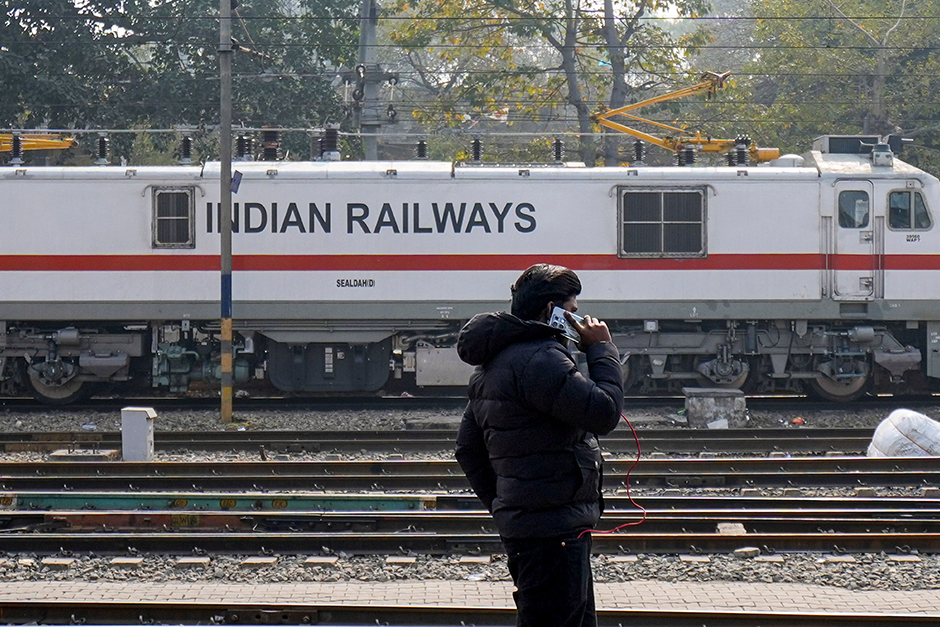
In a significant boost to India’s burgeoning railway network, the Union Cabinet has given its nod to seven multi-tracking projects spanning four crucial states: Delhi, Haryana, Maharashtra, and Karnataka. This monumental decision, entailing an investment of approximately ₹18,537 crore, is poised to dramatically enhance rail capacity, streamline freight movement, and improve passenger connectivity across some of the nation’s most economically vibrant regions. The move underscores the government’s commitment to modernizing and expanding railway infrastructure, a cornerstone of the country’s logistical and developmental aspirations.
Transforming Connectivity: Project Scope and Locations
The approved projects encompass a mix of doubling, third, and fourth line additions, crucial for decongesting overburdened routes and accommodating future growth in both passenger and freight traffic. These strategic interventions are spread across key corridors, promising a significant overhaul of the existing rail infrastructure.
North India’s Arteries Strengthened: Delhi & Haryana
For the National Capital Region and its adjoining state, Haryana, the projects are set to revolutionize daily commutes and inter-state logistics. With Delhi serving as a vital nexus for both passenger and goods movement across North India, the expansion here is critical. The approved lines in this region will primarily focus on augmenting capacity on high-density routes, facilitating smoother movement of trains in and out of the capital. Haryana, a key agricultural and industrial hub, will benefit from improved access to markets and ports, reducing transit times and logistics costs for businesses.
Powering Western and Southern Growth: Maharashtra & Karnataka
Maharashtra, with its robust industrial belts and the bustling port city of Mumbai, is a lynchpin for India’s economic engine. The new tracks will significantly enhance freight throughput, crucial for the state’s manufacturing and export sectors. Similarly, Karnataka, a dynamic state known for its technology hubs and agricultural produce, will see improved connectivity between its major cities and industrial zones. These projects are designed to not only reduce travel times but also to create dedicated corridors for freight, thereby improving the overall efficiency and reliability of the railway system in these high-growth areas.
Economic Impetus and Broader Impact
The ₹18,537 crore investment is not merely about laying new tracks; it’s a strategic infusion into the nation’s economic arteries. The projects are fully funded by the Central government and are expected to generate substantial employment, both direct and indirect, during their construction and operational phases. This will provide a significant boost to local economies in the beneficiary regions.
The core objective behind these capacity enhancement projects is to allow for the introduction of more trains, thereby reducing journey times and improving punctuality. For commuters, this translates to more frequent services and a less arduous travel experience. For industries, the benefits are even more profound. Enhanced freight capacity means faster movement of raw materials to factories and finished goods to markets and ports, ultimately boosting trade and reducing logistical bottlenecks.
“This monumental investment underscores the government’s unwavering commitment to modernizing India’s railway infrastructure,” stated a senior official from the Ministry of Railways, emphasizing the long-term vision. “These projects are not just about laying tracks; they are about laying the foundation for enhanced economic growth, seamless connectivity, and a more efficient transport network for millions of citizens and businesses across these vital states.”
Furthermore, shifting more freight from roads to railways has positive environmental implications, as rail transport is generally more fuel-efficient and emits fewer greenhouse gases per tonne-kilometre compared to road transport. This aligns with India’s broader climate goals and efforts towards sustainable development.
Looking Ahead: A Network for New India
These seven projects, approved under the Pradhan Mantri Gati Shakti framework, are a testament to the integrated planning approach aimed at addressing critical infrastructure gaps. The focus on multi-tracking is particularly important for high-density corridors where existing single or double lines are operating at saturation, leading to delays and operational inefficiencies. Once completed, these new lines will not only decongest the existing network but also provide the necessary infrastructure backbone for future industrial and urban expansion.
The Cabinet’s decision marks a pivotal moment in India’s railway modernization journey. With significant investments pouring into crucial states like Delhi, Haryana, Maharashtra, and Karnataka, the nation is steadily building a robust, efficient, and future-ready railway network that will serve as a powerful engine for economic growth and national progress for decades to come.

