


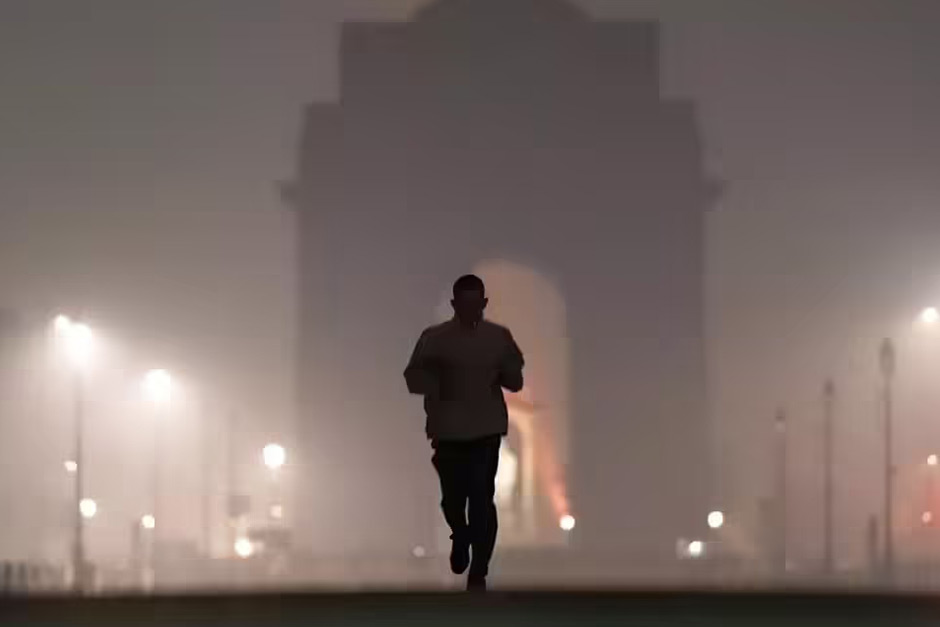
Delhi, the vibrant heart of India, once again finds itself under a suffocating blanket of smog, with its Air Quality Index (AQI) spiralling into the ‘severe’ category. On recent days, the capital city recorded an alarming AQI of 414, plunging its 30 million residents into a public health emergency and bringing daily life to a grinding halt. This environmental crisis has not only dimmed the city’s lustre but has also directly impacted critical infrastructure, leading to significant delays in air and rail travel as visibility dips to perilously low levels.
The ‘severe’ AQI reading is a stark indicator of the dangerously high concentration of pollutants in the atmosphere, posing immediate health risks to all, particularly the vulnerable – children, the elderly, and those with pre-existing respiratory and cardiovascular conditions. The grey, hazy sky over Delhi is not merely an aesthetic problem; it represents a tangible threat to lung health, visibility, and overall well-being, reiterating a recurring annual challenge that continues to plague the megalopolis.
The Alarming Numbers and Immediate Impact
An AQI of 414 translates to a critical level of air pollution, primarily driven by PM2.5 and PM10 particulate matter. According to the Central Pollution Control Board (CPCB) classification, an AQI between 401 and 500 is considered ‘severe’, meaning the air quality is so poor that it can affect healthy people and seriously impact those with existing diseases. This invisible menace has had very visible consequences across the capital.
Indira Gandhi International (IGI) Airport, one of the busiest in the world, reported numerous flight delays and diversions. Pilots struggled with visibility dropping below the required minimums for safe take-offs and landings, causing inconvenience and significant economic losses. Similarly, railway services operating in and out of Delhi faced disruptions, with trains running behind schedule as loco pilots navigated through dense fog exacerbated by pollution.
Beyond travel, the smog has compelled residents to alter their routines. Schools in some areas have been advised to shift to online classes or remain closed, while health advisories urge people to stay indoors, wear N95 masks when venturing out, and avoid strenuous outdoor activities. The city’s parks, usually bustling with morning walkers and joggers, now wear a deserted look, reflecting the gravity of the situation.
Underlying Causes and the Recurrent Crisis
Delhi’s air pollution crisis is a complex issue rooted in a confluence of factors that intensify particularly during the post-monsoon and winter months. One of the most significant contributors is stubble burning in the neighbouring agricultural states of Punjab and Haryana. Farmers often resort to burning crop residue to clear their fields quickly for the next sowing cycle, releasing massive plumes of smoke that travel with prevailing winds towards Delhi.
In addition to agricultural fires, local sources of pollution play a crucial role. Vehicular emissions from the city’s ever-growing number of vehicles, industrial emissions from surrounding factories, and dust from construction activities are constant contributors. The meteorological conditions prevalent during this period – calm winds, lower temperatures, and temperature inversion – trap these pollutants close to the ground, preventing their dispersal and leading to the infamous “smog chamber” effect over the Indo-Gangetic plains.
This annual recurrence highlights a systemic failure to implement effective, long-term solutions. Despite various policy interventions, including the odd-even car rationing scheme and bans on certain construction activities, the fundamental issues persist, turning Delhi’s air quality into a predictable and perilous event each year.
Health Concerns and Public Response
The health ramifications of prolonged exposure to ‘severe’ air pollution are profound. Doctors report a significant surge in patients complaining of respiratory ailments such as bronchitis, asthma attacks, and chronic obstructive pulmonary disease (COPD). Long-term exposure increases the risk of cardiovascular diseases, strokes, and even certain types of cancer. Children, whose lungs are still developing, are particularly vulnerable to irreversible damage.
The public’s response ranges from resignation to increasing frustration. Many residents feel helpless in the face of a crisis that seems beyond their individual control. There is a growing clamour for more decisive action from authorities, not just temporary measures but sustainable policies that address the root causes of pollution. “Every year, it’s the same story. We need sustainable solutions, not just temporary fixes,” lamented Priya Sharma, a long-time Delhi resident and mother of two, expressing a sentiment shared by many.
The economic toll is also considerable, impacting tourism, trade, and productivity. The repeated disruptions to transport and daily life dent Delhi’s image as a global hub and pose a significant challenge to its economic growth.
Towards a Breathable Future
Delhi’s battle against smog is a microcosm of a larger environmental struggle faced by many rapidly developing cities. Addressing this crisis demands a multi-pronged approach: stricter enforcement against stubble burning with viable alternatives for farmers, accelerating the transition to cleaner fuels and electric vehicles, regulating industrial emissions, and implementing dust control measures at construction sites. Public awareness campaigns and behavioural changes are equally vital.
The challenge is immense, but the stakes are higher. For Delhi to truly thrive, its residents must be able to breathe clean air. A concerted effort involving government agencies, environmental bodies, industries, and its citizens is imperative to ensure that the capital city can shed its unfortunate tag as one of the world’s most polluted cities and pave the way for a healthier, more sustainable future.
—

