


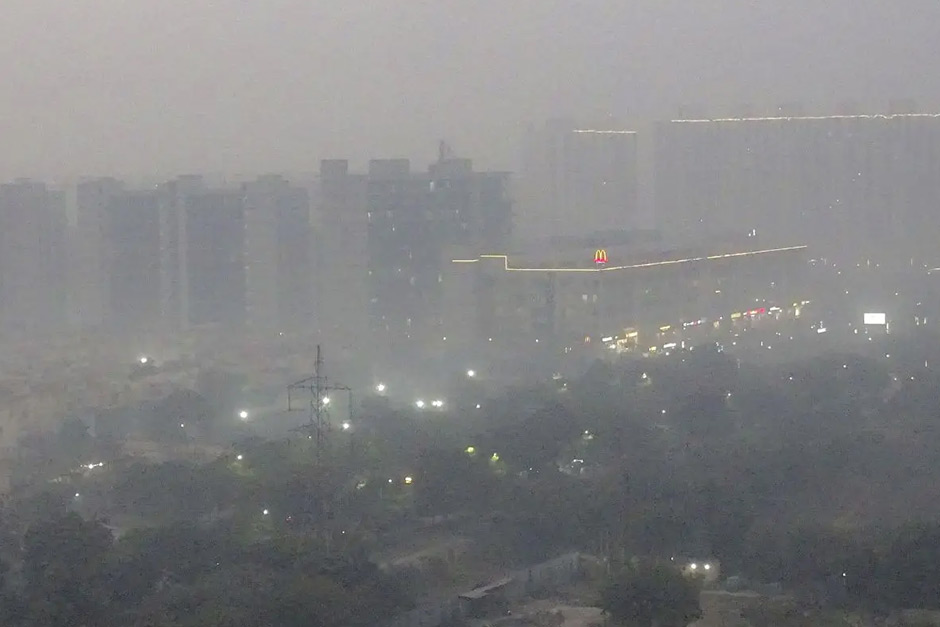
Delhi, the national capital, finds itself once again grappling with a severe environmental challenge as its air quality has deteriorated significantly, slipping into the ‘Very Poor’ category. A thick blanket of smog has descended upon the city, drastically reducing visibility and casting a pall over daily life. The Air Quality Index (AQI) has consistently breached the 300-mark, signaling a hazardous environment for its millions of inhabitants and reigniting concerns about public health and long-term ecological sustainability.
The Alarming Rise in AQI and Its Health Implications
The AQI crossing 300 indicates a ‘Very Poor’ air quality status, meaning prolonged exposure can lead to respiratory illnesses on a wider scale, and even short exposure can cause breathing discomfort to people with lung diseases, heart diseases, or active children and older adults. The primary culprits are fine particulate matter, PM2.5 and PM10, which are microscopic particles capable of penetrating deep into the lungs and even entering the bloodstream. PM2.5, in particular, is considered the most dangerous due to its minute size.
This alarming spike in pollution levels poses serious health risks. Vulnerable populations, including children, the elderly, and individuals with pre-existing respiratory or cardiovascular conditions, are particularly susceptible to the adverse effects. Symptoms such as persistent coughing, shortness of breath, irritation in the eyes and throat, and a general feeling of malaise are becoming increasingly common. Doctors are advising residents to avoid strenuous outdoor activities, keep windows closed, and wear N95 masks when venturing outside.
“The recurrent nature of Delhi’s air pollution crisis demands immediate and sustained action. We are seeing an increase in patients presenting with acute respiratory symptoms, especially among children and the elderly. Long-term exposure can lead to chronic lung diseases, heart conditions, and even affect cognitive development in children,” explains Dr. Ritu Sharma, a pulmonologist based in Delhi, emphasizing the critical health emergency.
Understanding the Multifaceted Contributing Factors
The reasons behind Delhi’s perennial air quality crisis are complex and multi-factorial, stemming from both regional influences and localized urban activities. A significant contributor during this time of year is stubble burning in the neighbouring states of Punjab and Haryana. Farmers often burn crop residue after harvesting paddy, creating vast plumes of smoke that travel towards Delhi due to prevailing wind patterns.
Domestically, vehicular emissions remain a persistent source of pollution. The sheer volume of vehicles on Delhi’s roads, coupled with often congested traffic, releases significant amounts of nitrogen oxides, carbon monoxide, and other harmful gases. Industrial emissions from factories located in and around the National Capital Region (NCR) also play a substantial role. Furthermore, the relentless pace of construction activities generates immense dust, adding to the particulate matter load in the atmosphere. The demolition of old structures and the building of new infrastructure contribute significantly to the suspended particulate matter.
Crucially, meteorological conditions also conspire against Delhi. During winter months, lower temperatures and reduced wind speeds lead to a phenomenon known as temperature inversion, where a layer of warm air traps cooler, pollutant-laden air close to the ground. This prevents the dispersion of pollutants, allowing them to accumulate and form the dense smog observed across the city.
Government Initiatives and the Path Forward
In response to the deteriorating air quality, authorities often implement measures under the Graded Response Action Plan (GRAP). These measures typically include banning construction and demolition activities, restricting the entry of non-essential trucks, increasing the frequency of public transport, and potentially even introducing odd-even vehicle rationing schemes. Anti-smog guns are deployed at construction sites and major intersections, and strict vigilance is maintained against waste burning and industrial emissions.
While these emergency measures offer temporary relief, the challenge demands a more comprehensive and sustained approach. Efforts to transition to cleaner fuels, promote electric vehicles, improve public transportation infrastructure, and strictly enforce emission norms are crucial. Regional cooperation with neighbouring states to manage stubble burning through viable alternatives for farmers is equally vital. Public awareness campaigns encouraging carpooling, using public transport, and adopting greener practices can also make a collective difference. The battle against air pollution in Delhi requires a concerted effort from all stakeholders – government, industry, and individual citizens – to ensure a healthier and breathable future for the capital.

