


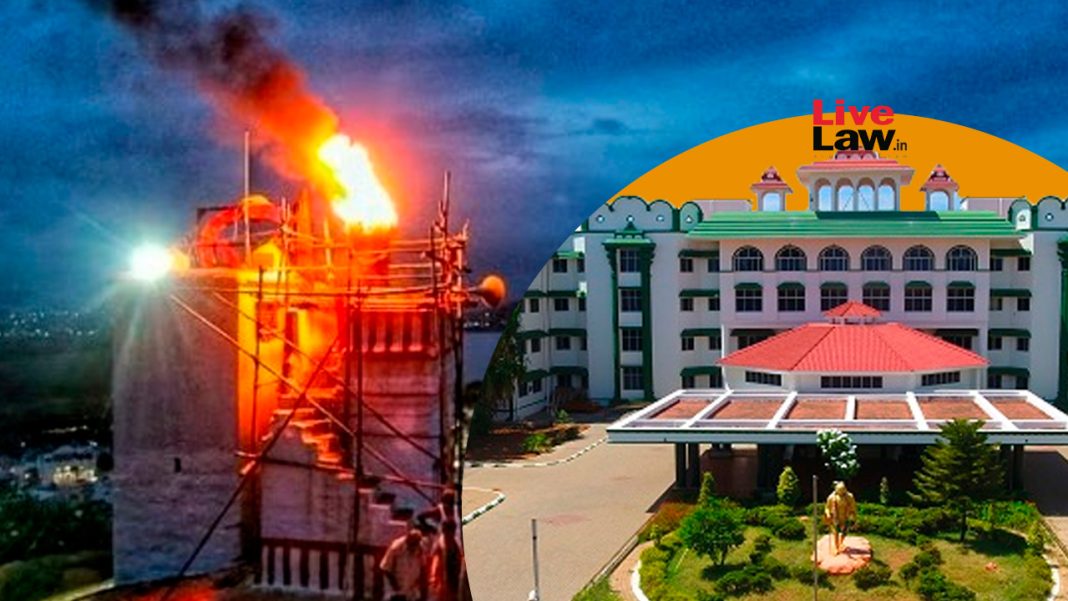
A long-standing dispute surrounding the annual Karthigai Deepam festival at the ancient Thiruparankundram Arulmigu Subramaniya Swamy Temple in Madurai has taken a dramatic turn. Madurai district authorities have emphatically informed the Madras High Court that the alleged ‘Deepathoon’, a structure believed by some to be central to the Deepam lighting ceremony, is nothing more than a “figment of a judge’s imagination.” This assertive stance, presented through an affidavit, marks a significant development in a sensitive religious matter currently under judicial scrutiny.
The controversy centres on the location and method of lighting the sacred Karthigai Deepam, a ritual of immense significance to devotees. For years, debates have simmered over the precise spot for the ceremonial lamp and whether a particular pillar or structure, referred to as ‘Deepathoon,’ ever historically existed to facilitate it. The authorities’ recent submission directly challenges previous observations and assumptions that may have entered judicial discourse, pushing the High Court to re-examine historical evidence and administrative practices.
The ‘Deepathoon’ Denied: Authorities’ Stance
The affidavit filed by the Madurai district administration, including the District Collector and the Hindu Religious and Charitable Endowments (HR&CE) Department, before the Madras High Court’s Madurai Bench, asserts a clear position: no such structure as ‘Deepathoon’ exists, nor has it ever existed within the Thiruparankundram temple premises or its immediate vicinity. The authorities contend that any mention of such a structure stems from a misunderstanding or misinterpretation, possibly originating from an earlier judicial observation or litigant claims.
The HR&CE Department, which governs countless temples across Tamil Nadu, plays a crucial role in managing the religious customs and physical assets of these ancient sites. Their involvement underscores the administrative and historical weight behind this refutation. The department’s counsel reportedly presented detailed historical records, architectural plans, and survey reports of the Thiruparankundram temple to support their claim, aiming to dismantle the premise of the ‘Deepathoon’ once and for all.
“Our comprehensive investigation, including historical records, archaeological surveys, and existing temple blueprints, unequivocally shows that no structure named ‘Deepathoon’ has ever been part of the Thiruparankundram temple complex. The repeated insistence on its existence, we submit, is based on a misunderstanding and does not align with verifiable facts,” stated a representative from the Madurai District Administration in their submission to the court, emphasizing the depth of their inquiry.
This forceful statement directly challenges any prior judicial pronouncements or assumptions that might have acknowledged or implicitly accepted the existence of such a structure. The authorities are essentially asking the High Court to base its future decisions on documented reality rather than perceived historical artifacts.
Untangling the Thiruparankundram Deepam Row
The Karthigai Deepam festival at Thiruparankundram, one of the six abodes of Lord Murugan (Arupadaiveedu), draws lakhs of devotees annually. The lighting of the colossal Deepam at the hillock is a highlight, symbolising divine light and victory. The current row isn’t just about a structure; it encompasses broader questions about who controls the ritualistic aspects, the role of various stakeholders, and adherence to ancient traditions versus modern logistical requirements.
Petitioners in the original case had reportedly sought directions from the court regarding the proper conduct of the Deepam festival, with some arguments possibly referencing a ‘Deepathoon’ as a traditional fixture for the lamp. The Madurai authorities’ affidavit is a direct response to such claims, aiming to clarify the ground reality and prevent future disputes based on what they term a mythical entity. This dispute highlights the complexities that can arise when historical beliefs, religious sentiments, and administrative realities intersect, especially within the hallowed precincts of a living temple tradition.
Judicial Crossroads and Future Implications
The Madras High Court now faces the intricate task of adjudicating this matter. It must meticulously review the historical evidence, administrative reports, and legal arguments presented by all parties. The court’s decision will not only determine the future conduct of the Karthigai Deepam festival at Thiruparankundram but also set a precedent for how similar disputes involving historical claims and religious practices are handled across the state.
The core challenge for the judiciary lies in reconciling potentially long-held beliefs or traditions with verifiable historical and archaeological facts. While respecting religious sentiments, the court must ensure that temple administration adheres to documented realities. The outcome of this particular ‘Deepam Row’ promises to have significant implications for temple management and the interpretation of ritualistic practices in Tamil Nadu. As the legal proceedings continue, all eyes remain on the Madras High Court to provide a definitive resolution to this unique blend of faith, history, and administrative clarity.

