


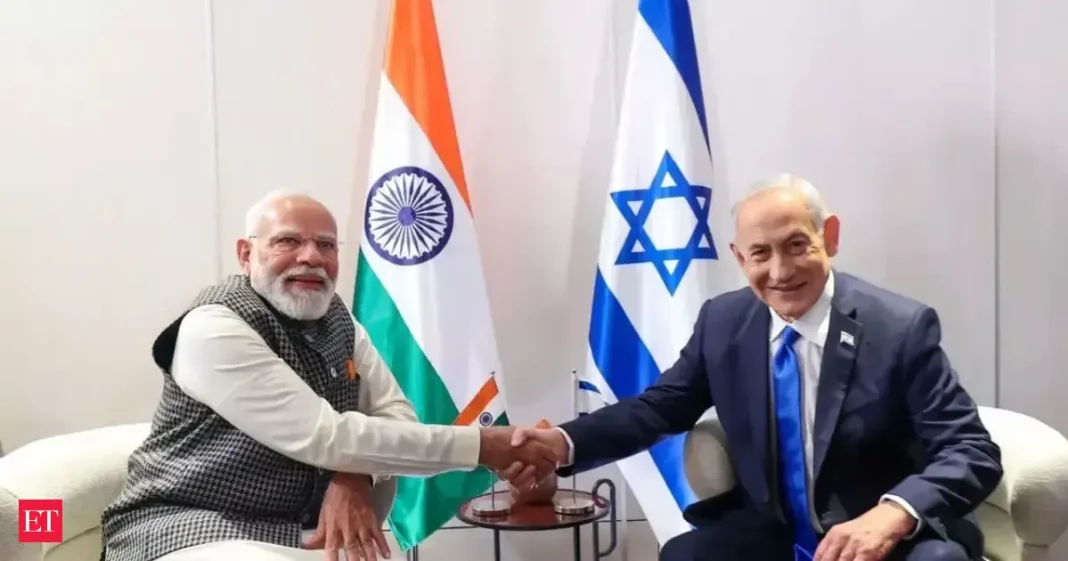
In a diplomatic clarification that carries significant weight for India’s foreign policy, Israeli Foreign Minister Gideon Sa’ar recently stated that the decision regarding military strikes on Iran was taken after Prime Minister Narendra Modi had concluded his visit to Israel. This statement, made amidst heightened tensions in the Middle East, meticulously delineates India’s position and non-involvement in the escalating regional conflict, offering a crucial timeline that safeguards India’s carefully cultivated diplomatic posture.
Sa’ar’s Revelation: A Timely Diplomatic Demarcation
The Middle East remains a volatile theatre, with the shadow of potential conflict between Israel and Iran perennially looming. Against this backdrop, PM Modi’s visit to Israel was a critical moment for strengthening bilateral ties, focusing on areas like defence, technology, and agriculture. It was during this sensitive period that the world watched for any indications of geopolitical shifts. Foreign Minister Sa’ar’s subsequent statement serves as a vital piece of diplomatic communication, especially for countries like India with strong interests across the region.
“The decision on military strikes on Iran was taken after PM Modi left Israel,” Foreign Minister Sa’ar reportedly stated, providing a crucial timeline that effectively separates India’s state visit from Israel’s sovereign security decisions. This explicit clarification is not merely a chronological detail; it is a diplomatic shield, ensuring that India’s engagement with Israel is not misinterpreted as an endorsement or involvement in potential military actions against another nation, particularly Iran, with whom India also shares significant historical and strategic ties.
For India, maintaining a balanced and non-aligned stance in the complex geopolitics of the Middle East is paramount. New Delhi has consistently advocated for dialogue and de-escalation in regional disputes, upholding its commitment to peace and stability. Sa’ar’s statement therefore comes as a welcome assurance, reinforcing India’s independent foreign policy trajectory and its role as a responsible global actor.
India’s Balanced Diplomacy Amidst Regional Flux
India’s relationship with both Israel and Iran is multi-faceted and rooted in strategic autonomy. With Israel, India has forged a robust partnership, particularly in defence, intelligence sharing, and innovation. This relationship has seen significant growth over the past decade, marked by high-level exchanges and collaboration on cutting-edge technologies.
Concurrently, India shares a long-standing historical and economic relationship with Iran. Iran is a critical partner for India’s energy security, albeit a complex one given international sanctions. Furthermore, the Chabahar Port, developed with Indian assistance, is a strategic gateway for India to Afghanistan and Central Asia, bypassing Pakistan. This port’s operational success hinges on regional stability and cordial relations with Iran. Given these intricate connections, any perception of India leaning towards one side in the Israel-Iran rivalry would be detrimental to its broader strategic interests.
Foreign Minister Sa’ar’s statement, by providing a clear chronological distinction, implicitly acknowledges and respects India’s diplomatic sensitivities. It underscores the understanding that while India engages deeply with its partners, it does so from a position of strategic independence, unwilling to be drawn into regional conflicts that do not directly pertain to its immediate security. This diplomatic nuance allows India to continue fostering its bilateral relationships without compromising its principled stance on regional peace.
Regional Ramifications and India’s Outlook
The potential for military action in the Gulf region carries immense implications, not just for the immediate belligerents but for the global economy and security. India, as a major energy importer and with a significant diaspora in the Middle East, has a profound stake in regional stability. Any escalation could lead to disruptions in oil supplies, increased energy prices, and challenges for the safety and repatriation of Indian citizens residing in the Gulf states.
Therefore, India’s consistent call for diplomatic resolutions and adherence to international law in addressing geopolitical disputes is not merely rhetorical but stems from pragmatic considerations of its national interest. The clarification from Israel’s Foreign Minister reassures that India’s diplomatic engagements, even with close partners, do not imply complicity in actions that could destabilise a region vital to its strategic and economic well-being.
As the geopolitical landscape continues to evolve, India’s foreign policy navigates a complex web of relationships. The statement by Foreign Minister Sa’ar is a testament to the sophistication of contemporary diplomacy, where timing and clarity play pivotal roles in managing perceptions and safeguarding national interests amidst a volatile international order. It allows India to continue its engagement with all regional players from a position of strength and unwavering commitment to peace.
The incident reaffirms that India remains steadfast in its policy of promoting dialogue and de-escalation, advocating for a peaceful resolution to conflicts while maintaining strong, independent bilateral ties across the geopolitical spectrum.

