


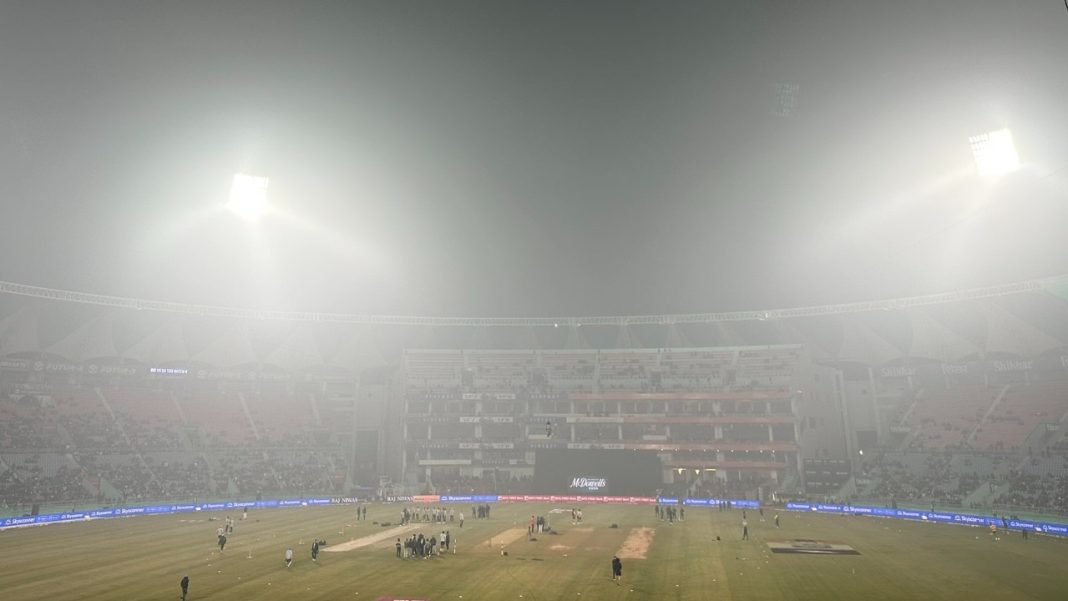
The roar of the crowd, the crack of the bat, the tension of a T20I under floodlights – these are the quintessential experiences that define cricket in India. Yet, a recent fixture, a much-anticipated T20 International between India and South Africa in Lucknow, found itself grappling not with a formidable opposition, but with an opponent far more unpredictable: dense December fog. The resulting delay, frustrating for players and spectators alike, has reignited a familiar debate and led to widespread criticism of the Board of Control for Cricket in India (BCCI) on social media platforms like X (formerly Twitter).
As the winter chill set in across North India, the Ekana Cricket Stadium in Lucknow was shrouded in a thick, impenetrable blanket of fog just hours before the scheduled toss. Players were seen struggling during practice, and visibility dropped to dangerously low levels, making a prompt start impossible. The delay, stretching for several hours, eventually forced a shortened game, leaving thousands of ticket-holding fans and millions of television viewers feeling short-changed. This incident wasn’t just a minor inconvenience; it has become a flashpoint for fans questioning the logic behind scheduling high-profile T20Is in North Indian cities during peak winter months.
The Recurring Specter of Winter Fog
North India’s winters are notorious for their severe fog, a natural phenomenon that significantly impacts daily life, including air and road travel. For a sport like cricket, which relies heavily on clear visibility for both players and umpires, dense fog can be a game-stopper. From a player’s perspective, limited visibility poses not just a performance challenge but also a significant safety risk. Fast bowlers might struggle to see their run-up marks, fielders might lose sight of the ball in flight, and batsmen could face genuine danger from unseen deliveries.
Moreover, the heavy dew that often accompanies winter fog in the evenings further complicates matters, especially in T20 cricket. The wet ball becomes difficult for spinners to grip and for fast bowlers to control, often leading to lopsided contests where the team batting second gains an undue advantage. These factors combine to dilute the competitive spirit and spectacle of the game, a critical consideration for the fast-paced, entertainment-driven T20 format.
Critics argue that the BCCI, with its vast experience and resources, should be acutely aware of these predictable climatic challenges. Scheduling T20Is, which are often evening fixtures, in cities like Lucknow, Delhi, or Chandigarh during December and January is seen by many as a recurring oversight that prioritises other considerations over player welfare and spectator experience. The match in Lucknow, for many, was simply another stark reminder of this persistent issue.
BCCI’s Scheduling Conundrum: Balancing Demands
The BCCI operates under immense pressure to manage a packed international calendar, accommodate broadcaster demands, and ensure equitable distribution of matches across various venues in India. There are valid arguments that drive these scheduling decisions. Spreading matches to Tier-2 cities like Lucknow helps foster cricketing culture in newer regions and provides fans outside the traditional metros a chance to witness international cricket live. Furthermore, broadcasters often dictate prime-time slots, which invariably fall in the evening, aligning with the fog-prone hours.
However, the recent incident has brought the balancing act under sharp scrutiny. Fans, who invest their time, money, and emotional energy into the sport, feel their concerns are being overlooked. “It’s absolutely baffling why the BCCI keeps scheduling T20Is in North India in December,” lamented a prominent cricket analyst, Harish Mehta, on social media. “The fog is not a surprise; it’s an annual event. This isn’t just about a delayed start; it’s about player safety, fan experience, and maintaining the integrity of the game. We need smarter scheduling, not just more scheduling.”
The financial implications of such delays are also significant. Broadcasters face losses due to altered schedules and reduced viewership, while event organizers bear the cost of extended operations. More importantly, the trust and goodwill of the fans are eroded when predictable weather patterns repeatedly disrupt their cricketing entertainment.
Towards a Clearer Future for Indian Cricket
The dense fog in Lucknow served as a potent, if frustrating, reminder that while the show must go on, it cannot ignore the realities of its environment. The public outcry following the IND vs SA T20I delay is a clear signal that fans are increasingly vocal about administrative decisions affecting their cricketing experience. While the BCCI faces a complex task of managing a demanding schedule, the incident in Lucknow underscores the critical need for a more pragmatic approach, especially concerning winter fixtures in Northern India.
Perhaps a re-evaluation of the domestic calendar, or an emphasis on day matches for T20Is in specific regions during winter, could be viable solutions. Ultimately, finding a sustainable balance that respects player welfare, enhances fan experience, and accounts for local climatic conditions will be crucial for the continued health and popularity of Indian cricket. The goal should be to ensure that the excitement of international cricket is never overshadowed by predictable environmental challenges.

