


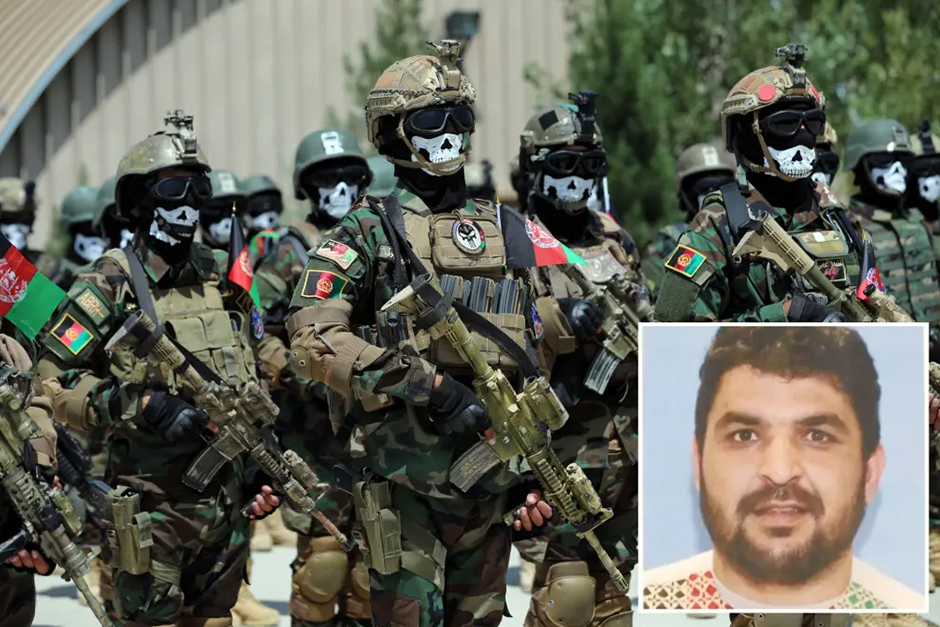
The recent shooting incident in Washington D.C., which resulted in the tragic death of one person and injury to three others, has taken a concerning turn with the identification of the alleged shooter. Rahmanullah Lakanwal, a 30-year-old former Afghan commando, is now reportedly linked to Afghanistan’s infamous ‘Zero Unit’ – an elite, CIA-trained counter-terrorism force accused by human rights groups of operating as a ‘death squad’. This development not only deepens the mystery behind the DC tragedy but also casts a long shadow on the complex legacy of foreign interventions and proxy forces, a subject of significant interest and concern in India given its regional implications.
The DC Shooting: A Former Elite Operative Implicated
On a quiet Monday evening in Northwest Washington D.C., what appeared to be a random act of gun violence unfolded. Police identified the suspect as Rahmanullah Lakanwal, a former Afghan national. The shooting, which occurred in a residential area, left a trail of shock and grief. As investigations began, Lakanwal’s background quickly became the focal point. Authorities revealed he was a veteran of the Afghan special forces, a detail that immediately raised questions about the circumstances that led a highly trained operative, once tasked with combating terrorism, to commit such a heinous act on American soil.
Lakanwal’s past affiliation with an elite military unit, rather than clarifying motives, has instead opened a Pandora’s Box of complex issues, connecting a seemingly domestic crime to the volatile geopolitical landscape of Afghanistan. For an Indian audience, accustomed to monitoring the repercussions of regional instability, this link immediately resonates with discussions around the vetting of foreign nationals and the long-term impact of proxy forces.
The Shadow of the Zero Unit: Elite Force or “Death Squad”?
The ‘Zero Unit’ was one of several specialized Afghan counter-terrorism units, meticulously trained, equipped, and funded by the U.S. Central Intelligence Agency (CIA) after the 9/11 attacks. Their primary mission was to hunt down Taliban and Al-Qaeda operatives, playing a crucial role in sensitive intelligence-gathering and direct action missions. Operating largely outside the conventional Afghan military command structure, these units were known for their effectiveness and aggression in combating insurgent threats across Afghanistan.
However, their operational methods frequently drew severe criticism from international human rights organizations and monitoring bodies. Reports surfaced over years alleging that the Zero Unit, among others, was involved in extrajudicial killings, arbitrary detentions, forced disappearances, and civilian casualties during night raids. These accusations led to the controversial moniker of ‘death squads,’ painting a grim picture of unchecked power and accountability deficits.
Human Rights Watch, Amnesty International, and various UN agencies consistently documented abuses by these units, highlighting a pattern of disregard for international humanitarian law. “The Zero Units, while effective in their counter-terrorism mandate, operated with a distinct lack of oversight, creating a culture where accountability for egregious human rights violations was rare,” noted Dr. Meena Khan, a South Asian security analyst based in Delhi. “The implications of highly trained individuals from such a background finding their way into civilian populations, particularly after the collapse of their original command structure, are a significant concern, not just for the West but for regional powers like India that have a vested interest in Afghan stability.”
The collapse of the Afghan government in August 2021 left thousands of these elite commandos, including those from units like the Zero Unit, adrift. Many sought refuge in other countries, including the United States, raising critical questions about vetting processes and the psychological scars of prolonged, intense combat in a morally ambiguous environment.
Conclusion: A Complex Legacy Unravels
The alleged link between Rahmanullah Lakanwal and Afghanistan’s controversial Zero Unit transforms the DC shooting from a singular act of violence into a stark reminder of the long-term consequences of protracted conflicts and the creation of highly specialized, often extra-legal, military forces. It underscores the challenges faced by nations attempting to resettle individuals with complex and potentially traumatic operational histories.
For India, a country that shares a volatile neighbourhood with Afghanistan and has its own intricate history with regional proxy dynamics, this revelation resonates deeply. It highlights the crucial need for robust international cooperation in monitoring and addressing the ramifications of conflict spillover, the responsible management of former combatants, and the critical importance of upholding human rights even in the most challenging counter-terrorism operations. The tragic events in Washington D.C. serve as a sobering testament to how the shadows of past conflicts can extend far beyond their original battlegrounds, creating unforeseen challenges in distant lands.

