


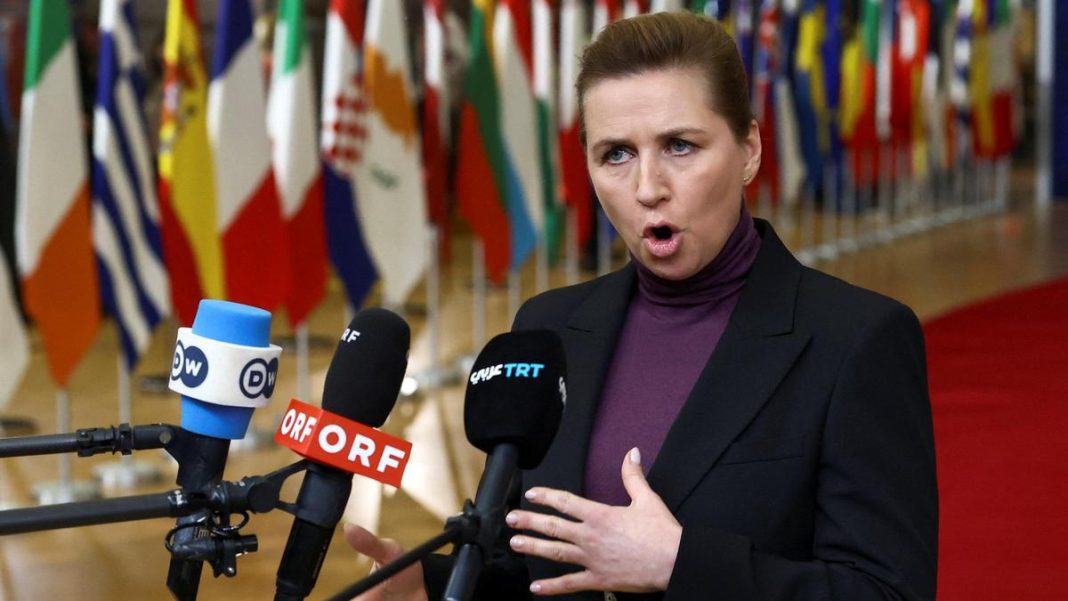
The Arctic, once largely considered a pristine frontier for scientific exploration, is rapidly transforming into a pivotal arena for global geopolitics. At the forefront of this evolving narrative, Danish Prime Minister Mette Frederiksen has voiced strong support for a permanent NATO presence around Greenland, a move that signals a significant reorientation of strategic priorities in the high north. This declaration underscores the growing recognition among Western powers of the Arctic’s strategic importance, driven by climate change opening new shipping routes and increased military activity by regional powers. For nations like India, which maintains a keen interest in Arctic affairs, these developments warrant careful observation, as they reflect broader shifts in the international security landscape.
The Arctic’s Geopolitical Reawakening
The Earth’s northernmost region is no longer just a distant ice cap; it is a critical intersection of climate science, economic opportunity, and strategic competition. Rapidly melting ice caps are unblocking previously inaccessible sea lanes, most notably the Northern Sea Route (NSR) along Russia’s Arctic coast. These routes promise shorter transit times between Asia and Europe, potentially reshaping global trade patterns. Accompanying these routes is the allure of untapped natural resources, including vast reserves of oil, gas, and rare earth minerals, attracting the attention of resource-hungry nations worldwide.
Simultaneously, the region has witnessed a significant increase in military posturing. Russia, with the longest Arctic coastline, has systematically rebuilt and expanded its military infrastructure in the region, reactivating Soviet-era bases and deploying advanced weaponry. This has prompted NATO members, including the United States, Canada, and Norway, to enhance their own surveillance and defense capabilities in response. Greenland, an autonomous territory within the Kingdom of Denmark, sits at a crucial geographical choke point between the Atlantic and Arctic oceans, making its surrounding waters strategically vital for monitoring and defense operations. Its location offers unparalleled access to key maritime routes and potential ballistic missile pathways, amplifying its importance in any future military calculations.
Denmark’s Firm Stance and NATO’s Northern Flank
Prime Minister Frederiksen’s endorsement of a permanent NATO presence around Greenland is a clear signal of Denmark’s commitment to reinforcing the alliance’s northern flank. This stance aligns with a broader push within NATO to strengthen its collective defense posture across all domains, including the Arctic. The move is seen as a direct response to the heightened military presence and operational tempo from non-NATO actors in the region, primarily Russia. A permanent presence would likely involve increased surveillance capabilities, regular naval deployments, and potentially enhanced air patrols, establishing a consistent deterrent and monitoring capacity.
Speaking on the necessity of this robust defense, PM Frederiksen recently stated, “We must acknowledge the reality that the Arctic is no longer a low-tension area. A strong, visible, and enduring NATO presence around Greenland is paramount for our collective security and for maintaining stability in a region vital to global interests.” Her remarks underscore a growing consensus that the Arctic’s strategic void has been filled, necessitating a proactive and continuous engagement from the alliance. Such a presence would not only protect Danish and Greenlandic sovereignty but also contribute to NATO’s overall situational awareness and rapid response capabilities across its vast area of responsibility.
India’s Arctic Stakes and Global Repercussions
For India, a nation increasingly asserting its global influence and strategic autonomy, developments in the Arctic are of considerable interest. As an observer state in the Arctic Council, India has actively pursued scientific research in the region, establishing the Himadri research station in Svalbard, Norway, and launching its first multi-sensor moored observatory, IndARC. India’s interest extends beyond scientific inquiry to climate change impacts, resource potential, and the geopolitical implications of new shipping routes. The militarization of the Arctic, signaled by Denmark’s call for a permanent NATO presence, adds another layer of complexity to India’s strategic calculations.
India champions a rules-based international order and freedom of navigation, principles that could be challenged by an increasingly militarized and contested Arctic. While not directly involved in the immediate security dynamics of the region, India watches these developments through the lens of their impact on global trade, energy security, and the balance of power. Increased great power competition in the Arctic could divert attention and resources from other critical global challenges, and potentially even trigger new flashpoints. India’s approach balances its economic interests (e.g., potential for cleaner energy and resources, shorter trade routes) with its commitment to peaceful international cooperation and environmental protection. The Danish PM’s statement, therefore, serves as a significant indicator of how rapidly the Arctic is transitioning from a zone of cooperation to one of heightened strategic rivalry, demanding India’s continued vigilance and informed policy responses.
In conclusion, Prime Minister Frederiksen’s strong endorsement for a permanent NATO presence around Greenland marks a significant moment in the unfolding geopolitical saga of the Arctic. It reflects a growing recognition of the region’s critical strategic value and the need for a robust deterrent against rising military activity. As the ice continues to melt, revealing both opportunities and challenges, the international community, including India, will need to navigate this complex landscape with diplomacy, foresight, and a steadfast commitment to maintaining global peace and stability.

