


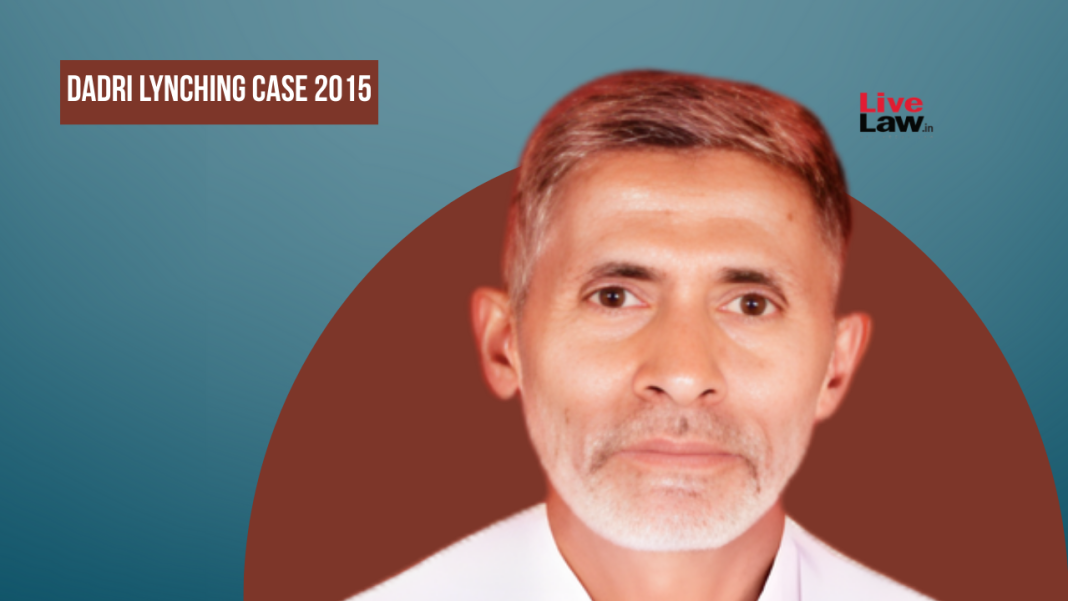
The quest for justice in India’s high-profile cases often navigates a labyrinth of legal challenges and political maneuvers. One such complex saga, the 2015 Dadri lynching case, has taken another significant turn. Javida Begum, the wife of Mohammad Akhlaq, the victim of the brutal mob lynching in Uttar Pradesh’s Bisada village, has approached the Allahabad High Court. Her petition challenges the Uttar Pradesh government’s move to withdraw the criminal case against the accused, reigniting a fierce debate over due process, victims’ rights, and the state’s role in ensuring justice.
The State’s Bid for Withdrawal and its Rationale
The Uttar Pradesh government, through a petition filed by the District Government Counsel (DGC) in Gautam Buddh Nagar, sought to withdraw the criminal case against the 15 accused individuals in the Akhlaq lynching case. This move, initiated in late 2023, cited a lack of sufficient evidence as the primary reason for seeking the withdrawal. The government argued that the evidence collected during the investigation was inadequate to secure a conviction and that continuing the trial would be a futile exercise, consuming judicial resources without a clear path to a successful prosecution. Such requests, known as applications for withdrawal of prosecution under Section 321 of the Code of Criminal Procedure (CrPC), empower the public prosecutor, with the consent of the court, to withdraw from the prosecution of any person either generally or in respect of any one or more of the offences for which he is tried.
Critics, however, view this move with suspicion, perceiving it as politically motivated, especially given the sensitive nature of the case which had garnered international attention and raised serious questions about communal harmony and the rule of law in India. The Dadri incident, where 50-year-old Mohammad Akhlaq was dragged out of his home and beaten to death by a mob over suspicions of consuming beef, remains a grim reminder of communal polarization. The government’s decision to withdraw the case, therefore, immediately sparked concerns among civil rights activists and legal experts about the potential precedent it could set and the message it sends regarding accountability in hate crime cases.
Javida Begum’s Legal Challenge: A Plea for Justice
Javida Begum’s petition before the Allahabad High Court is a powerful assertion of a victim’s right to justice. Represented by her legal counsel, she contends that the UP government’s application for withdrawal is illegal, arbitrary, and an affront to the principles of natural justice. Her plea argues that the state government cannot unilaterally withdraw a case of such grave magnitude, especially when a chargesheet has already been filed and the trial process is underway. The petition highlights that there is ample evidence on record, including eyewitness testimonies and forensic reports, which point towards the involvement of the accused. Furthermore, Begum’s legal team asserts that the government’s claim of “insufficient evidence” is a pretense and that the move is an attempt to shield the accused from legal accountability. They emphasize that the victim’s family has a fundamental right to see the perpetrators of such a heinous crime brought to justice.
The High Court’s role in this matter is crucial. While Section 321 CrPC grants power to the Public Prosecutor to withdraw a case, it mandates that such withdrawal requires the consent of the court, which is not merely a formality. Courts are expected to apply their mind to ensure that the withdrawal is in good faith, in the interest of public justice, and not for extraneous considerations or to thwart the course of justice. This legal battle in the Allahabad High Court will thus scrutinize the state’s justifications and the broader implications for the victims of communal violence. It underlines the persistent struggle of families like Akhlaq’s, who continue to fight for legal closure years after the tragic incident.
Speaking on the significance of the move, a prominent legal expert, who wished to remain unnamed given the sensitivity, stated, “The court’s scrutiny of the government’s withdrawal plea is paramount. It’s not just about a single case; it’s about upholding faith in the justice delivery system, especially for victims of hate crimes. A government cannot become a shield for the accused, and the court must ensure that the withdrawal is based on sound legal principles, not political expediency.” This sentiment resonates with many who believe that the state has a primary responsibility to prosecute crimes vigorously, particularly those that shake the social fabric.
The Allahabad High Court’s decision will undoubtedly have far-reaching consequences, impacting not only the Dadri lynching case but also setting a precedent for how similar sensitive cases are handled in the future. Javida Begum’s courageous stand against the state’s plea underscores the enduring fight for accountability and justice, ensuring that the memory of Mohammad Akhlaq and the quest for truth in his death do not fade into legal oblivion.
*

