


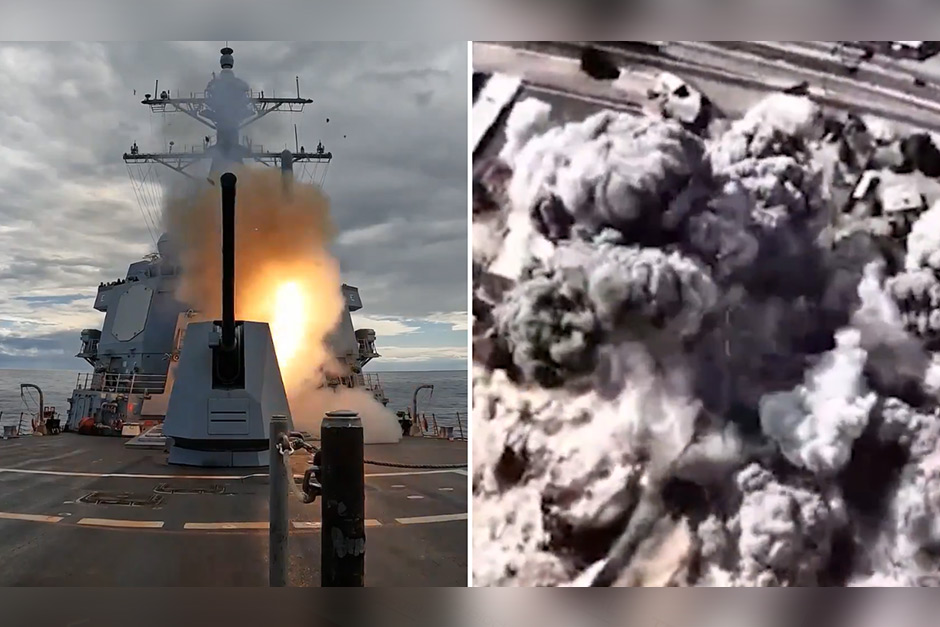
The Middle East, a region perpetually on the brink, appears to have lurched further into uncertainty following a dramatic claim from the United States. In a statement that reverberated globally, US officials asserted the successful destruction of the Islamic Revolutionary Guard Corps (IRGC) headquarters in a recent strike, accompanied by the blunt declaration: “Cut off the head of the snake.” This audacious claim, if confirmed, marks a severe escalation in the long-standing, volatile standoff between Washington and Tehran, promising far-reaching implications for regional stability and global geopolitics.
The Claim: A Decapitating Strike?
Details surrounding the alleged strike remain sparse and subject to the fog of war and conflicting narratives. According to unnamed US sources, the precision strike targeted a critical command and control facility, believed to be the nerve center of the IRGC’s operations. The rhetoric employed, “cutting off the head of the snake,” suggests an intent to cripple the IRGC’s leadership and operational capacity, a strategic move aimed at debilitating Iran’s most powerful military and political institution. While US officials have lauded the operation as a decisive blow against Iranian aggression and destabilizing activities, independent verification from the ground, or a clear admission or denial from Iran, has yet to emerge. Such information asymmetry is common in high-stakes confrontations, leaving observers to piece together the truth from fragments.
The Islamic Revolutionary Guard Corps is not merely a conventional military force. Established in the aftermath of the 1979 Iranian Revolution, it has evolved into a formidable entity with significant influence across military, economic, and political spheres within Iran and throughout the region. The IRGC oversees its own ground, naval, and air forces, controls Iran’s ballistic missile program, and commands the Basij militia, a domestic security force. Crucially, its Quds Force, an elite expeditionary unit, is responsible for extraterritorial operations and cultivating a network of proxy groups across the Middle East, including Hezbollah in Lebanon, Houthi rebels in Yemen, and various militias in Iraq and Syria. The US has long designated the IRGC as a foreign terrorist organization, citing its support for these groups and its alleged role in attacks against US interests and allies. Therefore, a strike against its perceived headquarters represents a direct challenge to the core of Iran’s power structure.
A senior US defence official, speaking on condition of anonymity due to the sensitivity of the operation, articulated the rationale behind the strike: “Our intelligence indicated a direct threat emanating from that facility. This action was a necessary, proportional response to degrade their ability to execute further attacks and to protect our personnel and allies in the region.” This statement underscores the US’s assertion of self-defence and deterrence as primary motivators for the operation, further escalating the war of words and actions in an already tinderbox region.
Regional Ramifications and India’s Delicate Balancing Act
The potential fallout from such a strike is immense, threatening to unravel an already fragile regional security architecture. An attack on the IRGC’s command structure could provoke a significant retaliatory response from Iran, potentially targeting US assets, its allies like Israel and Saudi Arabia, or even international shipping lanes in the Persian Gulf and the Strait of Hormuz, a critical choke point for global oil supplies. The ensuing escalation could trigger a wider regional conflict, drawing in various state and non-state actors and creating a fresh wave of instability, humanitarian crises, and economic disruption.
For India, a nation deeply invested in regional stability, the developments in the Middle East are a cause for serious concern. India’s strategic interests are inextricably linked to the Gulf region. The immediate anxieties revolve around several key areas:
- Energy Security: India imports a substantial portion of its crude oil and natural gas from the Middle East. Any disruption to oil production or, more critically, to maritime trade routes through the Strait of Hormuz, could lead to a sharp spike in global oil prices, severely impacting India’s economy and inflation.
- Diaspora Safety: Millions of Indian expatriates live and work in the Gulf countries, sending vital remittances back home. Their safety and well-being would be jeopardized in the event of a conflict, necessitating potentially massive evacuation efforts.
- Trade and Investment: India has significant trade ties and investments in the region, including projects like the Chabahar Port in Iran, which offers a crucial access point to Afghanistan and Central Asia, bypassing Pakistan. Escalation could derail these strategic initiatives.
- Geopolitical Balancing: India maintains diplomatic ties with both the US and Iran, navigating a complex geopolitical landscape. New Delhi has consistently advocated for de-escalation, dialogue, and a peaceful resolution to disputes, wary of being drawn into great power rivalries. Its traditional policy of strategic autonomy means it avoids taking sides, instead focusing on multilateral engagement and protecting its national interests.
The international community, including India, will be closely watching for Iran’s official response and any further actions from the US. The immediate priority for global diplomacy will be to prevent a full-blown war that could have catastrophic consequences far beyond the region. Calls for restraint and dialogue are likely to intensify, but whether these appeals will be heeded in the face of such a provocative strike remains to be seen. The Middle East, once again, finds itself at a precarious crossroads, with the path ahead shrouded in uncertainty and the potential for severe ramifications for the entire world.

