


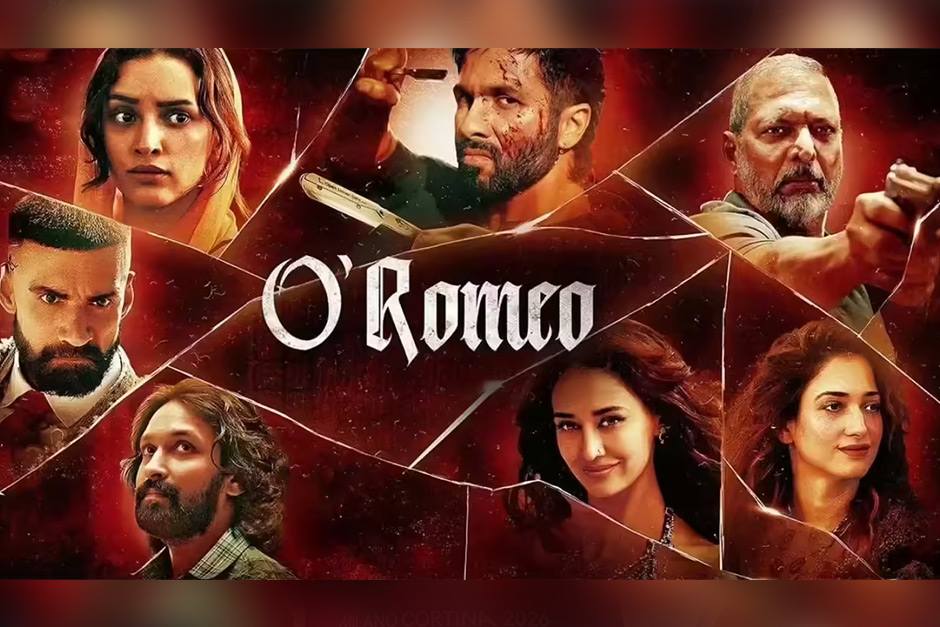
The highly anticipated release of Shahid Kapoor’s upcoming film, O Romeo, has received a significant green light from the judiciary. In a recent development that has garnered considerable attention within Bollywood circles, the Bombay High Court has refused to grant an interim injunction to stall the film’s release. The lawsuit was filed by Ms. Zara Ustara, daughter of the late veteran screenwriter Hussain Ustara, who alleged copyright infringement and plagiarism of her father’s original work.
The court’s decision marks a crucial moment for the film’s production house and director, allowing them to proceed with their scheduled release without the looming threat of legal impediment. The judgment underscored that Ms. Ustara “failed to establish a case” strong enough for the court to interfere with the film’s release at this juncture, effectively clearing the path for O Romeo to hit theatres.
The Allegations: A Daughter’s Fight for Her Father’s Legacy
The genesis of this legal battle lies in the claims made by Ms. Zara Ustara, who asserted that the storyline and core elements of O Romeo bore striking resemblances to an original script penned by her father, Hussain Ustara. Ustara, a revered figure in Indian cinema known for his poignant storytelling and intricate character development in a bygone era, left behind a legacy that his daughter is now striving to protect.
Ms. Ustara contended that her father’s unproduced script, which had been circulated within the industry decades ago, was allegedly appropriated by the makers of O Romeo without due credit or compensation. Her petition highlighted specific plot points, character arcs, and thematic elements that she believed were direct lifts from her father’s intellectual property. She sought an injunction to prevent the film’s release, arguing that allowing it to proceed would cause irreparable damage to her father’s memory and the integrity of his creative work. The claim was not merely about financial remuneration but also about acknowledging her father’s contribution and ensuring his creative genius was not exploited.
In her detailed submission, Ms. Ustara’s legal team presented what they believed to be substantial evidence, including copies of her father’s original manuscript and comparative analyses between his work and the promotional materials released for O Romeo. The case brought to the forefront the long-standing challenges of intellectual property protection in the Indian film industry, where stories often find circuitous routes and their origins can become blurred over time.
The Court’s Scrutiny: “Failed to Establish a Case”
During the intense legal proceedings, the Bombay High Court meticulously examined the arguments put forth by both sides. The court’s primary focus was on whether Ms. Ustara could establish a prima facie case of copyright infringement and, more critically, whether the balance of convenience favoured granting an injunction to stall a major film release.
After thorough deliberation, the court concluded that Ms. Ustara had not presented sufficient evidence to warrant such a drastic measure. The judgment elaborated on several key points. Firstly, the court noted the considerable time elapsed between the alleged creation of Ustara’s original script and the filing of the lawsuit, raising questions about the timeliness of the claim. Secondly, while acknowledging some superficial similarities, the court found that the overall treatment, narrative structure, and character development in O Romeo were sufficiently distinct from the alleged original work to preclude a clear-cut case of plagiarism at this preliminary stage.
A legal expert, who wished to remain anonymous due to ongoing industry commitments, commented on the ruling, stating, “Courts are often reluctant to grant injunctions that halt the release of a film unless there’s overwhelming, undeniable evidence of infringement. The financial implications for producers are immense, and the bar for such relief is extremely high. Here, it appears the court found the similarities insufficient to meet that threshold.” This perspective underscores the court’s cautious approach to interfering with creative projects, especially when substantial investments have already been made.
The court emphasized that while Ms. Ustara’s concerns were noted, the evidence presented did not definitively prove that the filmmakers had directly copied or extensively adapted her father’s work without permission. The nuances of creative inspiration versus outright theft remain a complex area in intellectual property law, and in this instance, the scales did not tip in favour of an injunction.
Implications for O Romeo and the Industry
With the court’s refusal to stall its release, O Romeo is now free to proceed with its marketing and distribution plans unhindered. This verdict provides significant relief to the film’s producers, director, and the lead actor, Shahid Kapoor, who can now look forward to its premiere without legal uncertainty. For the filmmakers, it’s a validation of their creative process and a strong signal that their interpretation of the romantic drama stands on its own merits.
Beyond this specific case, the ruling serves as a vital reminder for the Indian film industry regarding the critical importance of proper documentation, copyright registration, and timely action when intellectual property disputes arise. It highlights the challenges faced by creators and their descendants in proving infringement, especially for older works that may lack the robust digital footprints common today. While Ms. Ustara’s battle may not have resulted in an injunction, it has undeniably sparked a conversation about respecting the legacies of unsung writers and the need for greater transparency and accountability in story acquisition within Bollywood.
The industry will undoubtedly observe the full release and reception of O Romeo with renewed interest, not just for its cinematic merits, but also for the underlying legal precedent set by this high-profile intellectual property dispute. It reaffirms the judiciary’s stance on balancing the rights of alleged infringees with the significant commercial interests of film productions.

