


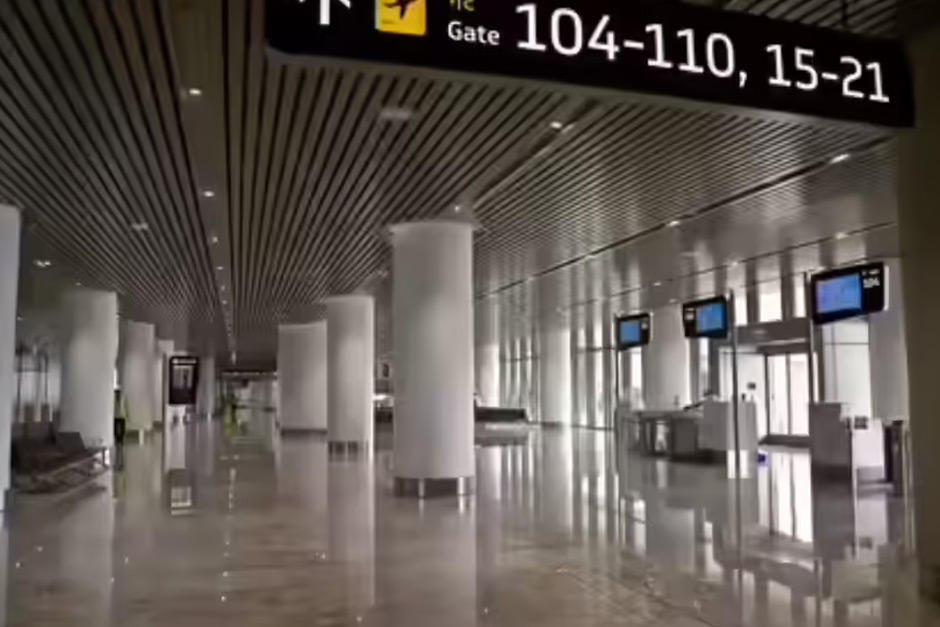
Mumbai’s Chhatrapati Shivaji Maharaj International Airport (CSMIA) has long been the pulsating heart of India’s aviation network, often operating beyond its theoretical capacity. Its single active runway system handles an astounding volume of air traffic movements, leading to frequent delays and a challenging environment for airlines and passengers alike. In a significant move to alleviate this persistent congestion, authorities have initiated plans to redirect a couple of peak-hour flights from CSMIA to the soon-to-be-operational Navi Mumbai International Airport (NMIA).
This directive marks a crucial step in operationalizing the much-anticipated dual-airport system for the Mumbai Metropolitan Region (MMR). While NMIA’s full commissioning is still underway, the strategic pre-emptive transfer aims to provide immediate relief to Mumbai’s overburdened airspace and infrastructure, promising a smoother travel experience for millions.
Mumbai’s Crowded Skies: A Persistent Challenge
CSMIA is renowned globally for its operational intensity, managing an impressive number of flights per hour on a single runway. However, this efficiency comes at a cost. The airport, landlocked and surrounded by urban development, has virtually no scope for physical expansion. This inherent limitation means that any increase in flight schedules or passenger demand directly translates into longer holding patterns for arriving aircraft, extended taxi times, and cascading delays across the entire network. Airlines often struggle to maintain on-time performance, impacting their operational costs and passenger satisfaction.
The problem intensifies during peak hours – typically early mornings, late evenings, and specific midday windows – when business travel and connecting flights converge. Air Traffic Control (ATC) navigates a delicate ballet of arrivals and departures, where even minor disruptions can create significant ripple effects. The necessity for a secondary airport, capable of absorbing a substantial portion of this traffic, has been clear for decades, culminating in the ambitious NMIA project.
The Strategic Shift: Phased Decongestion
The decision to move specific peak-hour flights to Navi Mumbai is a calculated measure by aviation authorities, including the Directorate General of Civil Aviation (DGCA) and the Ministry of Civil Aviation (MoCA), to kickstart the distributed load concept. While the exact number and nature of these initial flights are yet to be fully detailed, it is expected to involve specific domestic routes or perhaps flights from smaller, regional carriers.
This phased approach is pragmatic. It allows for the gradual testing of NMIA’s operational readiness, including ground handling, ATC coordination, and passenger facilitation, even before its grand inauguration. It also provides an opportunity to refine logistical aspects, such as inter-airport connectivity and public transport options for passengers. The move is not just about shifting flights; it’s about establishing a precedent and setting the operational rhythm for what will eventually become a bustling, full-fledged international airport.
“This move is not just about decongesting Mumbai; it’s about optimising the entire Mumbai Metropolitan Region’s air traffic infrastructure,” remarks aviation analyst Rohan Sharma. “It signals a crucial step towards a dual-airport system that many global cities already benefit from, promising greater efficiency and resilience.”
Looking Ahead: Benefits and Challenges of a Dual Hub
The long-term benefits of a fully operational dual-airport system for Mumbai are manifold. Reduced congestion at CSMIA will lead to improved on-time performance, lower fuel consumption for airlines (due to fewer holding patterns), and a more relaxed environment for air traffic controllers. For passengers, it means fewer delays, potentially more competitive fares as airline operational costs decrease, and a wider choice of departure and arrival points.
However, the transition also presents its own set of challenges. Primary among these is ensuring seamless connectivity between Navi Mumbai and the rest of the MMR. While infrastructure projects like the Mumbai Trans Harbour Link (MTHL) have significantly improved travel times, adequate public transport options – including metro lines and dedicated bus services – will be crucial for passenger convenience. Clear communication from airlines and airport operators about which airport flights will depart from or arrive at will also be essential to prevent passenger confusion.
As NMIA inches closer to its full operational status, these initial flight transfers serve as a critical preparatory phase. They represent a proactive approach to managing India’s rapidly growing air traffic demand, ensuring that Mumbai, a key economic gateway, continues to thrive with robust and efficient aviation infrastructure. The skies above Mumbai are poised for a significant transformation, promising smoother journeys for all.
—

