


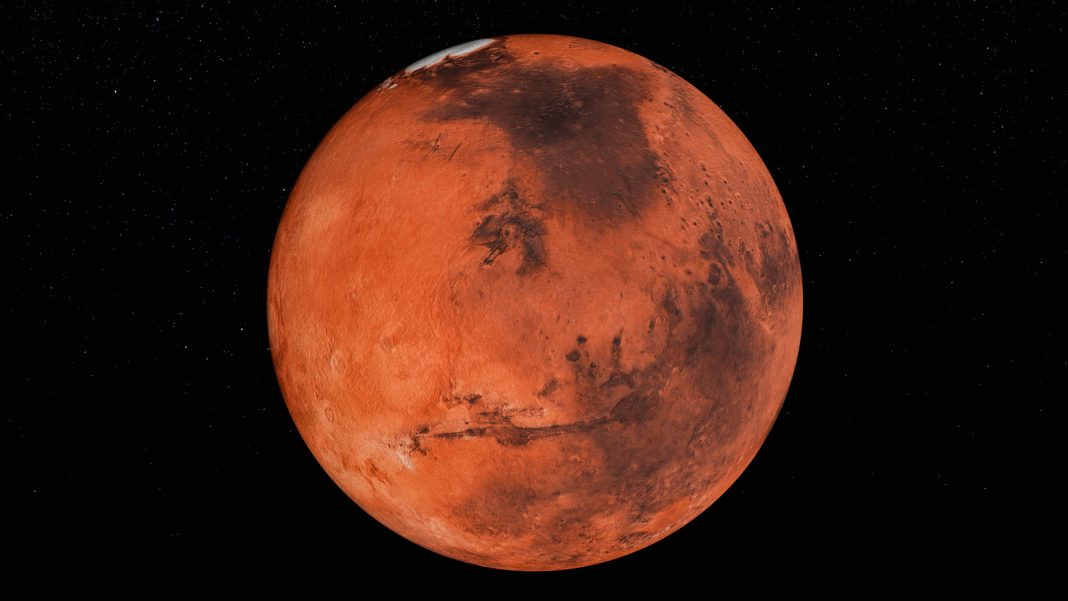
The quest for life beyond Earth has always captivated human imagination. For decades, Mars, our dusty red neighbor, has been at the forefront of this fascination. With NASA’s Perseverance rover diligently exploring the ancient river delta and lakebed of Jezero Crater, the question often arises: could it have found something truly extraordinary, something alien?
Perseverance is more than just a rover; it’s a sophisticated mobile laboratory designed to seek out signs of ancient microbial life and collect samples for future return to Earth. While the idea of little green men is firmly in the realm of fiction, the possibility of discovering fossilized microbes or evidence of past biological processes on Mars is a serious scientific endeavor.
What Perseverance is Searching For
Perseverance’s primary mission is astrobiological. It’s not looking for active, complex life forms but rather for what scientists call “biosignatures.” These are specific elements, compounds, textures, or structures that, when found in combination, could indicate the past presence of life. Think of it like a detective looking for clues at a very old crime scene.
The rover is equipped with instruments like SHERLOC and PIXL, which can analyze the chemical composition and mineralogy of rocks and soil at a microscopic level. It’s particularly interested in carbon-based organic molecules, the building blocks of life as we know it. While organic molecules can be created through non-biological processes, their specific arrangement or association with certain mineral structures might hint at a biological origin.
Furthermore, Perseverance is searching for environments that could have supported life billions of years ago. Jezero Crater was chosen precisely because it once hosted a lake and a river delta, offering conditions where water, energy, and essential chemical elements could have converged – all key ingredients for life.
The Challenge of Confirmation
Finding a tantalizing clue on Mars is one thing; confirming it as definitive evidence of alien life is another entirely. The challenge is immense. Many geological processes can mimic biosignatures. For example, certain mineral formations can look strikingly similar to microbial fossils, and organic molecules can be formed by volcanic activity or delivered by meteorites, completely unrelated to life.
The scientific community operates under a strict principle: “extraordinary claims require extraordinary evidence.” This means that any potential discovery of Martian life would need to withstand rigorous scrutiny and be supported by multiple, independent lines of evidence. As one planetary scientist might put it, “Identifying life, especially ancient microbial life from another planet, is arguably the most significant scientific discovery humanity could make. That’s precisely why the scientific community proceeds with such deliberate caution and demands the highest standards of proof.”
The instruments on Perseverance, while incredibly advanced for a spacecraft, still have limitations. They can tell us a lot about the chemistry and structure of Martian samples, but to definitively prove a biological origin, more sophisticated analysis back on Earth is essential. This is where the Mars Sample Return campaign comes in, a hugely ambitious future mission planned to bring Perseverance’s collected rock and regolith samples back to terrestrial laboratories.
Conclusion: An Ongoing Quest
So, could NASA’s Perseverance rover have found something alien? It’s constantly collecting data and observations that could, in the future, contribute to such a groundbreaking revelation. However, as of now, there has been no definitive, confirmed evidence of past or present life on Mars. The rover is diligently gathering the pieces of a cosmic puzzle, meticulously selecting and caching samples that hold the most scientific promise.
The search continues, driven by curiosity and supported by incredible engineering and scientific dedication. While we might not be getting a headline about alien microbes tomorrow, every rock analyzed and every sample collected by Perseverance brings us closer to understanding whether Earth is truly unique in its ability to foster life, or if life once bloomed, however briefly, on our red planetary neighbor.

