


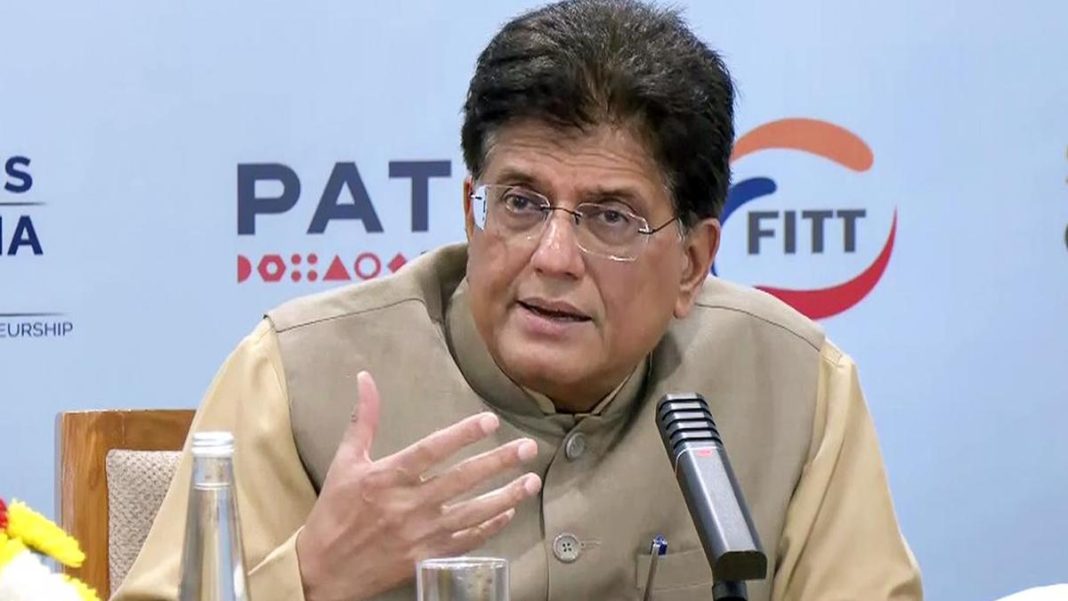
India’s vast agricultural landscape is once again witnessing a significant standoff, this time involving its cotton farmers. A recent statement by Union Minister for Commerce & Industry, Textiles, Consumer Affairs, Food & Public Distribution, Piyush Goyal, hinting at the potential for increased imports of US cotton, has ignited widespread concern and strong opposition among India’s cotton cultivators. Farmers, already grappling with fluctuating market prices and high input costs, fear that such a move could trigger a severe price crash, jeopardising their livelihoods and the stability of the domestic cotton market.
Goyal’s Remarks Spark Unease Among Growers
The controversy stems from remarks made by Minister Goyal during a recent interaction, where he reportedly indicated a willingness to consider importing US cotton to meet the demands of India’s textile industry. The minister’s rationale often revolves around ensuring an adequate supply of raw materials for the robust textile sector, which is a major contributor to India’s exports and employment. He emphasised the importance of keeping the industry competitive by potentially allowing access to specific grades or quantities of cotton not always readily available or consistently priced domestically.
However, this perspective has not resonated well with the farming community. For Indian cotton farmers, the timing of these remarks could not be worse. The country has just concluded a harvesting season that yielded a substantial crop. With a healthy domestic supply already in the market, farmers contend that any move to allow significant imports would only exacerbate an existing downward pressure on prices. Many agricultural bodies and farmer unions have voiced their apprehension, highlighting that while the textile industry seeks specific qualities, the overall market needs to remain insulated from price shocks.
“We have worked tirelessly, invested heavily, and produced a good crop,” stated a representative from a leading farmer cooperative in Maharashtra. “If the government now opens the floodgates for US cotton, our efforts will be in vain. We are already struggling to get prices above the Minimum Support Price (MSP) in many regions. Imports at this juncture would be nothing short of a death knell for small and marginal cotton farmers, forcing us into deeper debt.” This sentiment encapsulates the deep-seated anxiety prevailing among the cotton-growing populace.
The Specter of a Price Crash and Farmer Demands
The primary fear articulated by farmer organisations across states like Maharashtra, Gujarat, Telangana, and Karnataka is that of a catastrophic price crash. They argue that India already produces sufficient quantities of cotton, and any additional supply from imports would flood the market, causing prices to plummet far below sustainable levels. Farmers are already experiencing challenges in realising remunerative prices, often selling their produce below the MSP due to market dynamics, lack of adequate procurement mechanisms, or quality concerns.
The call from farmer bodies is unequivocal: the government must prioritise domestic growers. They are urging the Ministry of Textiles and the Ministry of Commerce to reconsider any plans for increased cotton imports. Instead, their demands include:
- Robust Procurement: Ensuring that government agencies actively procure cotton at or above the MSP, especially when market prices are low.
- Import Duty Hike: Imposing or increasing import duties on cotton to make foreign cotton less attractive and protect domestic prices.
- Support for Domestic Consumption: Promoting policies that encourage the domestic textile industry to source cotton primarily from Indian farmers.
There’s a strong argument being made that while the textile industry’s needs are crucial, they should not come at the expense of the livelihoods of millions of farmers. The economic viability of cotton cultivation directly impacts rural economies, and a price crash could have cascading negative effects on consumption, credit, and overall rural prosperity.
Balancing Act: Industry Needs vs. Farmer Livelihoods
The situation presents a delicate balancing act for the Indian government. On one hand, the textile industry is a vital sector, contributing significantly to India’s GDP and employment. It requires consistent access to specific grades of raw cotton at competitive prices to maintain its export competitiveness against global rivals. Certain specialised textile products may indeed require particular varieties of cotton that are either not grown in abundance in India or face inconsistent quality and supply.
On the other hand, the welfare of millions of cotton farmers is paramount. Agriculture forms the backbone of the Indian economy, and policies must ensure fair returns for farmers’ hard work. The government’s ‘Atmanirbhar Bharat’ (Self-Reliant India) initiative also champions the cause of domestic production and local value chains. Unchecked imports could contradict the spirit of this initiative, undermining domestic producers.
Finding a resolution will likely require extensive dialogue between all stakeholders – farmer representatives, textile industry bodies, and government ministries. Solutions might include targeted support for specific cotton varieties that the industry requires, better quality control mechanisms, enhanced market intelligence for farmers, and a carefully calibrated import policy that safeguards farmer interests while also supporting industrial growth. The challenge lies in crafting a policy framework that serves both the loom and the field, ensuring India’s agricultural and industrial sectors can thrive in tandem without one undermining the other.
The unfolding situation calls for careful deliberation to prevent a potential crisis in the cotton belt, highlighting the perennial tension between India’s agricultural foundations and its industrial ambitions.

