


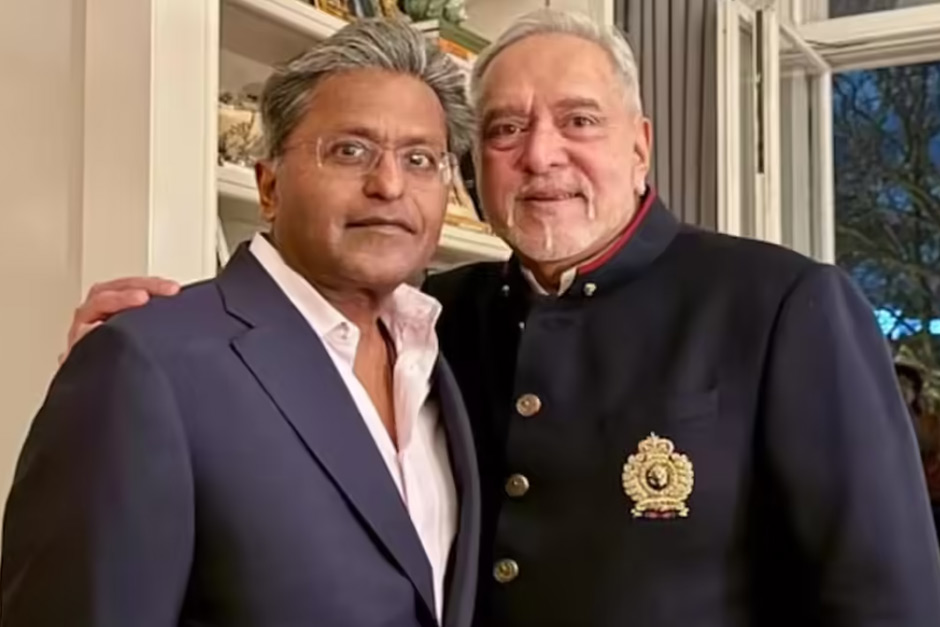
The Ministry of External Affairs (MEA) recently reaffirmed India’s resolute commitment to bringing back financial fugitives like Lalit Modi and Vijay Mallya, stating that all available legal and diplomatic avenues are being vigorously pursued. This reiteration comes amidst a renewed public discourse, largely fueled by a viral video circulating on social media, which showcased the duo in a seemingly carefree setting abroad, reigniting public frustration and calls for justice.
The video, capturing snapshots of Lalit Modi and Vijay Mallya at a recent high-profile event outside India, quickly spread across various platforms. For many Indian citizens, it served as a stark reminder of the economic offences they are accused of and the perceived impunity with which they continue to live overseas. The timing of the MEA’s statement is particularly pertinent, as it seeks to address the palpable public sentiment demanding accountability and the return of individuals who have allegedly defrauded Indian institutions of vast sums.
MEA Reiterates Unwavering Commitment to Extradition
Responding to media queries regarding the status of these high-profile fugitives, the MEA spokesperson underscored the government’s consistent and unwavering resolve. “Our commitment to bringing back fugitives remains unwavering. We are actively pursuing these cases through all available legal and diplomatic channels,” an MEA spokesperson stated, emphasizing the continuous efforts being made. This statement reflects a long-standing position of the Indian government, which has for years been engaged in complex legal battles across international jurisdictions to secure the extradition of individuals accused of serious financial crimes.
The pursuit of Modi and Mallya involves intricate legal processes, including extradition requests filed with the UK authorities, where both currently reside. These processes often entail navigating multiple court levels, addressing detailed legal arguments, and providing extensive documentation. Despite these challenges, the Indian government has consistently maintained that it will not relent in its efforts to ensure that those who have allegedly siphoned off public money face the rule of law back home.
The Viral Video and Resurgent Public Frustration
The recent viral video featuring Lalit Modi, former IPL czar accused of money laundering and foreign exchange violations, and Vijay Mallya, the erstwhile Kingfisher Airlines chief wanted for loan defaults and money laundering, sparked a significant reaction across India. The images of them seemingly enjoying a lavish lifestyle, far removed from the legal troubles they face in India, resonated deeply with an Indian public that often feels the pinch of economic hardship.
Social media platforms became a hotbed of discussion, with citizens expressing anger, disappointment, and a renewed demand for swift action. Hashtags calling for their immediate return and questioning the pace of justice began trending. This public outpouring serves as a critical backdrop to the MEA’s latest statement, highlighting the pressure on the government to demonstrate tangible progress in these long-pending cases. The perception of justice delayed or denied for high-profile individuals can often erode public trust, making the government’s consistent messaging on their commitment even more crucial.
A Protracted Legal Battle: The Cases of Modi and Mallya
The cases of Lalit Modi and Vijay Mallya represent two of India’s most prominent and challenging extradition efforts. Lalit Modi, the founder of the Indian Premier League (IPL), fled India in 2010 amid allegations of financial irregularities, money laundering, and betting. The Enforcement Directorate (ED) has been investigating various charges under the Prevention of Money Laundering Act (PMLA) and the Foreign Exchange Management Act (FEMA).
Vijay Mallya, on the other hand, is accused of defaulting on loans worth over ₹9,000 crores taken by his defunct Kingfisher Airlines from various Indian banks. He left India in March 2016 and has since been fighting extradition attempts from the UK. Both cases have seen several legal twists and turns in UK courts, with challenges mounted on various grounds, including prison conditions in India and human rights concerns. While the UK courts have often ruled in India’s favour regarding the prima facie case, the legal process allows for multiple appeals, contributing to the prolonged delays.
The MEA’s recent affirmation, therefore, is not merely a political statement but a reiteration of an ongoing and complex legal and diplomatic struggle. It underscores the Indian government’s resolve to continue pressing ahead, utilising every instrument at its disposal, to ensure that these individuals are brought back to face trial and accountability in India. The public’s watchful eye, sharpened by viral videos and ongoing media scrutiny, will undoubtedly remain fixed on the progress of these high-stakes pursuits.

