


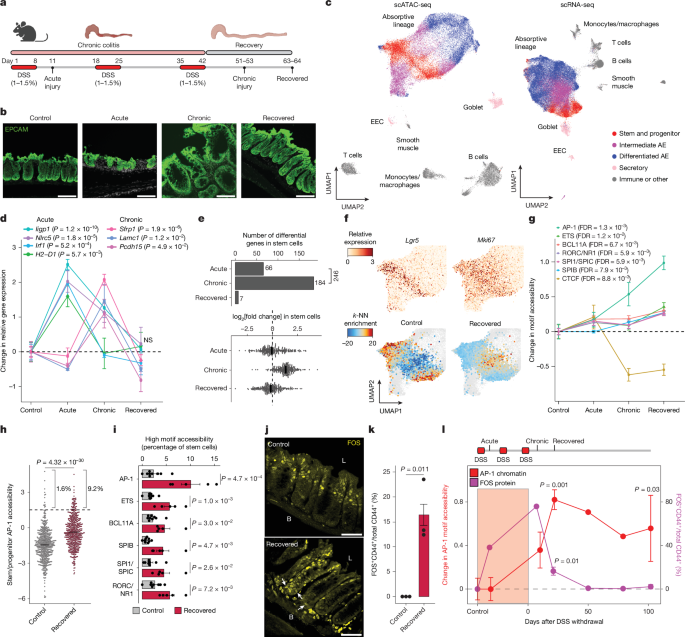
The human body is an incredible system, constantly adapting and remembering. While we often think of memory in terms of our brains, our cells possess their own sophisticated forms of recall. A fascinating and concerning area of research is revealing how chronic inflammation, particularly in conditions like colitis, leaves a lasting “epigenetic memory” within cells – a memory that, surprisingly, can fuel the growth of future tumors.
Beyond Immediate Irritation: The Enduring Echoes of Inflammation
For a long time, the link between chronic inflammation and cancer was understood primarily as a direct consequence: ongoing irritation damages cells, increasing the chances of cancerous mutations. While this holds true, new insights point to a more subtle, long-term mechanism at play. It’s not just the immediate damage but a persistent cellular memory.
This memory isn’t stored in DNA sequences themselves but in the “epigenetic” landscape surrounding them. Think of your DNA as a giant cookbook of recipes. Epigenetic marks are like sticky notes, highlights, or dog-eared pages that tell your cells which recipes to use, when, and how much. They don’t change the recipe itself, but they profoundly influence how it’s read and acted upon. Chronic inflammation, like that seen in colitis, can induce specific epigenetic changes – adding or removing these chemical “tags” on DNA or associated proteins. These tags alter gene expression, making certain genes more active or silent, effectively ‘remembering’ the inflammatory state long after the flare-up has subsided.
The Silent Fuel: How Epigenetic Memory Drives Malignancy
The critical finding is that these epigenetic alterations persist. Even when inflammation is brought under control, cells can retain these marks, essentially becoming “primed” for cancer development. This isn’t just a passive scar; it’s an active predisposition. Genes that control cell growth, repair mechanisms, and immune responses can be left in an altered state, making them more vulnerable to subsequent mutations or less responsive to the body’s natural tumor-suppressing signals.
“It’s like cells are stuck in a persistent ‘alert’ state,” explained Dr. Anya Sharma, a lead researcher in gastrointestinal epigenetics. “Even without the active inflammatory trigger, their internal programming makes them hyper-responsive to growth signals or less efficient at repairing DNA damage. This epigenetic legacy effectively lowers the threshold for tumor initiation and progression.”
This understanding is particularly vital for conditions like inflammatory bowel disease (IBD), where individuals face a significantly higher risk of colorectal cancer. It suggests that the past inflammatory episodes aren’t merely historical events, but rather persistent risk factors woven into the very fabric of the cells. This epigenetic memory becomes a silent, internal fuel, slowly stoking the embers of potential tumor growth, making cells more receptive to becoming malignant over time.
Unlocking New Avenues for Prevention and Treatment
The discovery that colitis leaves an epigenetic memory that fosters tumor growth is a profound shift in our understanding of cancer development. It moves beyond just treating the active inflammation to considering its long-term molecular footprint. This knowledge opens exciting new avenues for intervention.
If we can identify the specific epigenetic marks left by inflammation, we might be able to develop therapies that actively erase this dangerous memory or reprogram cells back to a healthy state. Imagine screening tools that detect these “memory” tags before a tumor even forms, allowing for proactive intervention. This research not only offers a deeper understanding of the intricate dance between inflammation and cancer but also illuminates a path toward more targeted prevention strategies and potentially more effective treatments for inflammation-driven malignancies.

