


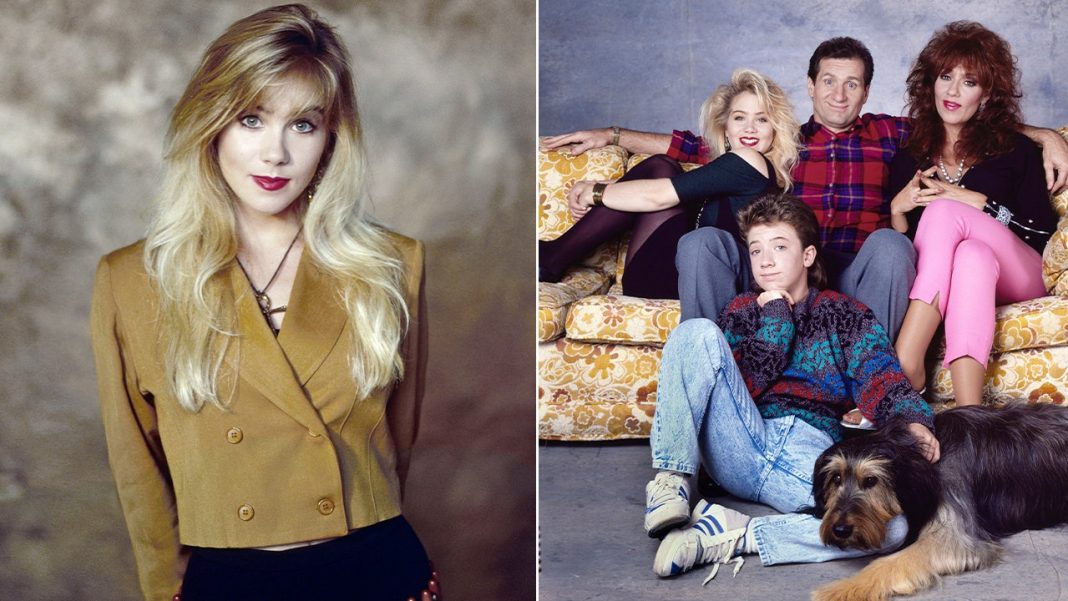
Ah, Kelly Bundy. The name alone conjures images of big hair, a perpetually exasperated father, and an unapologetically ditzy demeanor that was, for better or worse, iconic. For decades, Christina Applegate’s portrayal of the eldest Bundy child in Married… with Children cemented her place in television history. But time, as they say, marches on, and our cultural lens shifts. Applegate recently reflected on Kelly Bundy’s “full rock s–t” status, confessing that the character “wouldn’t have a shot in hell today.” And frankly, she’s not wrong.
When Kelly Was “Full Rock S–t”
For those who grew up watching Married… with Children, Kelly Bundy was a phenomenon. She was the quintessential “dumb blonde” stereotype, yes, but she also possessed a certain rebellious charm. She was confident, often oblivious, and had a knack for malapropisms that became legendary. The show itself was a groundbreaking satire of the American family, pushing boundaries with its irreverent humor and often offensive jokes.
Christina Applegate’s comment about Kelly being “full rock s–t” perfectly encapsulates the character’s unapologetic attitude. Kelly owned her sex appeal, her lack of academic prowess, and her love for all things materialistic. In the late ’80s and ’90s, this kind of character, while certainly a caricature, resonated with a segment of the audience for her sheer audacity and the show’s willingness to mock societal norms. It was a different era, where humor often leaned into exaggerated stereotypes, and Married… with Children thrived on pushing those buttons.
Why Kelly Bundy Wouldn’t Survive Today’s Landscape
Fast forward to the present day, and it’s easy to see Applegate’s point. The cultural shifts over the last few decades have been immense, particularly concerning the representation of women in media. What was once seen as edgy or even endearing about Kelly Bundy would likely be met with widespread criticism today.
The “dumb blonde” trope, for example, has largely been retired, and for good reason. Audiences now demand more nuanced, complex female characters who aren’t solely defined by their looks or perceived lack of intelligence. The constant objectification Kelly endured, often played for laughs, would also face significant backlash in an era highly attuned to issues of sexism and body shaming.
As one pop culture observer, Sarah Jenkins, put it, “Kelly Bundy was a caricature that worked within the very specific, often controversial, humor of the late ’80s and ’90s. Today, audiences demand more nuance, more respect, and characters who aren’t just the butt of every joke about intelligence or appearance. The world has changed, and our expectations for television characters have evolved with it.”
The rise of movements like #MeToo, coupled with a broader societal push for inclusivity and respectful representation, means that a character like Kelly Bundy, as she was originally written, would struggle to find a place in mainstream television. While we can appreciate the nostalgia and the comedic genius Applegate brought to the role, acknowledging that some aspects of older media don’t quite land in our current climate is a sign of growth, both for the audience and for creators.
A Nod to Evolution
Christina Applegate’s candid reflection on Kelly Bundy isn’t a dismissal of her past work, but rather a keen observation on how culture evolves. It’s a powerful reminder that while we can cherish the characters and shows of our youth, it’s equally important to understand how they fit—or don’t fit—into today’s world. Kelly Bundy was “full rock s–t” for her time, and that’s precisely why she remains memorable. But recognizing that she wouldn’t have a shot today simply highlights how far we’ve come in our understanding and portrayal of complex human stories on screen.

