


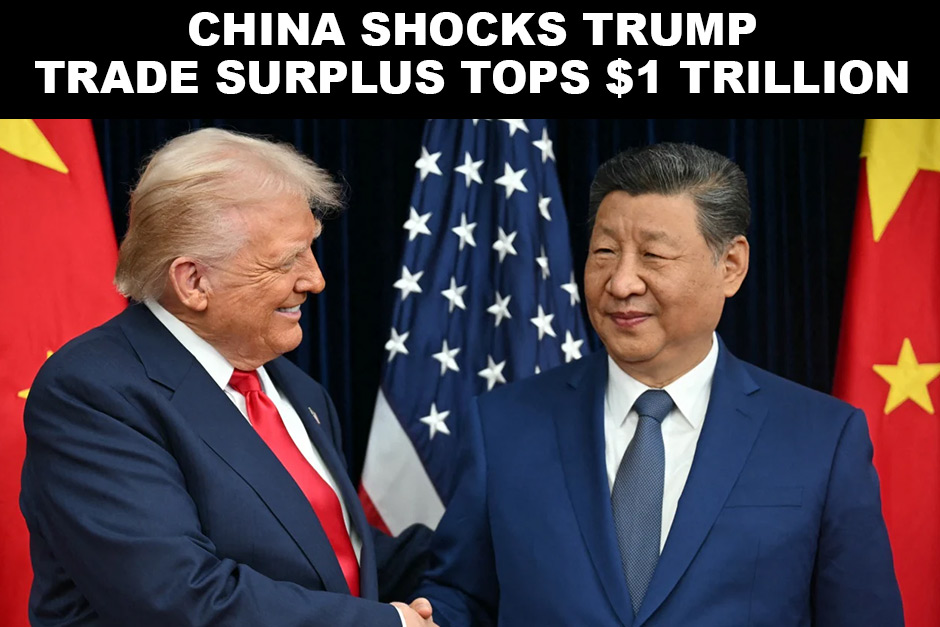
The numbers are in, and they’re hard to ignore: China’s trade surplus with the world has reportedly soared to an eye-watering $1 trillion. This isn’t just a big number; it’s a colossal one, especially when you consider the global economic landscape and the persistent use of tariffs aimed at rebalancing trade. For many, this figure sparks a fundamental question: what exactly is going on? How is it possible for China to not only maintain but dramatically expand its trade advantage, even as policy initiatives try to curb it?
The Unyielding Juggernaut: China’s Economic Resilience
The simple truth is that while tariffs create friction, they haven’t derailed China’s manufacturing and export engine. Several factors contribute to this remarkable resilience. Firstly, China’s sheer scale and efficiency in production remain unmatched in many sectors. From consumer electronics to industrial machinery, it has built an ecosystem that can produce goods faster, often cheaper, and at a volume that few other nations can replicate. This isn’t just about low-cost labor anymore; it’s about sophisticated supply chains, advanced automation, and a deep pool of skilled workers.
Secondly, China has been adept at shifting its export portfolio. While once synonymous with inexpensive textiles and toys, its focus has increasingly moved towards higher-value goods: electric vehicles, advanced batteries, renewable energy components, and sophisticated electronics. These are products for which global demand is exploding, and China has positioned itself as a leading innovator and producer. Furthermore, Chinese companies have become incredibly agile, finding new markets and direct-to-consumer channels, effectively bypassing some traditional trade gatekeepers. As a veteran trade analyst we spoke with remarked, “It’s like trying to stop a waterfall with a sieve. Global supply chains are so deeply intertwined with China that disentangling them completely overnight is simply not feasible, regardless of the policy headwinds.”
Beyond the Tariffs: Global Implications
This massive surplus isn’t just an economic footnote; it has significant global implications. For nations striving to reduce their trade deficits with China, it’s a stark reminder that current strategies may need a serious rethink. Tariffs, while causing some disruptions and inspiring partial supply chain shifts, haven’t fundamentally altered the overall trade balance. This calls into question the long-term effectiveness of such measures as a primary tool for trade rebalancing.
Moreover, China’s continued export dominance puts pressure on domestic industries in many importing countries. It forces them to compete with highly efficient Chinese producers, often prompting calls for further protection or investments in domestic manufacturing capabilities. The growing surplus also highlights China’s increasing economic leverage on the global stage. Trade isn’t just about goods and services; it’s a powerful tool of influence, and a $1 trillion surplus underscores a significant shift in global economic power dynamics. It signals a new era where the world must grapple not only with China’s manufacturing might but also its growing technological prowess and its strategic investments across the globe.
A Shifting Paradigm for Global Trade
The $1 trillion trade surplus is a clear indicator that the global trade playbook is being rewritten. It’s a testament to China’s adaptability, its deep industrial capacity, and its strategic pivot towards high-tech exports. For the rest of the world, it’s a call to action: to understand the deeper economic currents at play, to foster innovation, and to develop comprehensive, forward-looking strategies that go beyond traditional protectionist measures. The goal should be to forge a more equitable and stable global trade future, one that acknowledges the new realities of an interconnected world and the enduring power of China’s economic engine.
This isn’t just about numbers; it’s about understanding how the global economy is evolving and what it means for everyone involved.

