


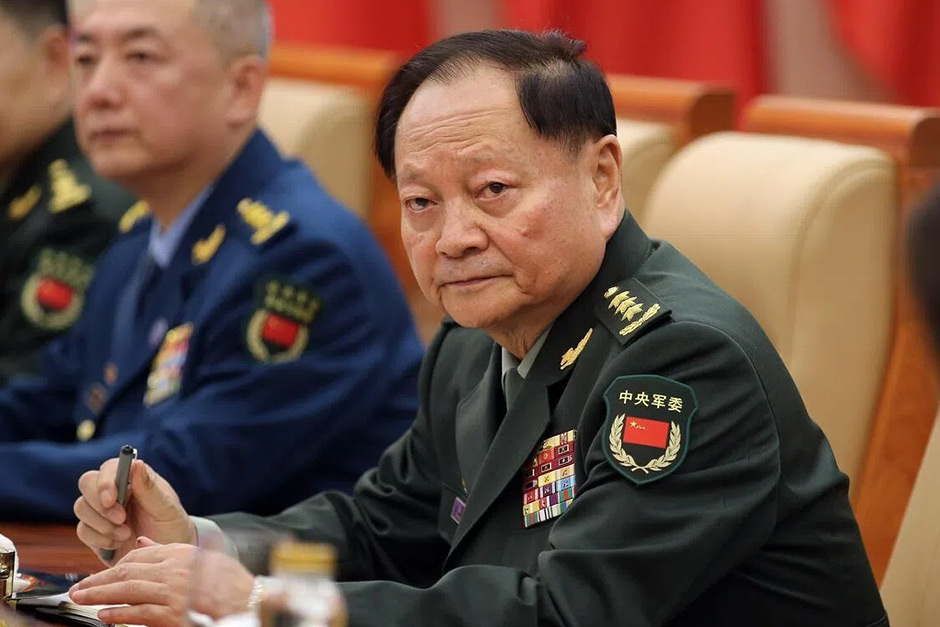
A bombshell report has sent ripples across global strategic communities, alleging that one of China’s highest-ranking former generals, Zhang Yang, may have leaked sensitive nuclear and missile secrets to the United States. The accusations, emerging from intelligence sources cited in international media, suggest a motive rooted in personal ambition – the general allegedly traded classified information for official promotions within the Communist Party of China (CPC) and the People’s Liberation Army (PLA). If true, this revelation points to an astonishing breach of national security at the pinnacle of China’s military establishment, carrying profound geopolitical implications.
The Heart of the Allegations: Espionage for Ambition
The core of the report revolves around General Zhang Yang, who once headed the Political Work Department of the Central Military Commission (CMC), a powerful body overseeing the PLA. Zhang was a rising star, considered a close confidant of former CMC Vice Chairman Xu Caihou, and seemingly on a path to even greater influence. However, his career ended abruptly in 2017 when he became the subject of an anti-corruption investigation and later died by suicide. At the time, official Chinese media attributed his death to severe disciplinary violations, including corruption and possession of illicit assets.
The new allegations, however, paint a far more sinister picture. They claim that Zhang Yang, over an extended period, provided the US with highly classified data concerning China’s nuclear arsenal, missile technology, and strategic military plans. The alleged quid pro quo was consistent career advancement within the rigid hierarchies of the PLA and the CPC. This goes beyond mere corruption; it suggests a deep-seated betrayal of national trust for personal gain, compromising some of China’s most closely guarded strategic assets. While China has officially maintained Zhang’s death was due to corruption, it has remained silent on these specific espionage accusations, adding a layer of mystery to an already complex narrative.
Geopolitical Tremors and China’s Internal Struggle
The implications of such a leak are immense. For China, it represents a catastrophic failure of counterintelligence and raises serious questions about the loyalty and vetting processes within its military leadership. President Xi Jinping’s ambitious anti-corruption campaign, which has purged numerous high-ranking officials including Zhang Yang, was partly aimed at consolidating power and ensuring loyalty. These allegations, however, suggest that the rot might run deeper than financial impropriety, touching the very fabric of national security. It could fuel internal mistrust, lead to further purges, and potentially destabilize the PLA’s command structure as Beijing attempts to ascertain the full extent of any compromise.
For US-China relations, already strained by trade wars, technological competition, and geopolitical rivalries, these allegations add another layer of complexity. While an intelligence coup for the US, public acknowledgement or proof could escalate tensions dramatically. The revelation of a top general leaking nuclear secrets would fundamentally alter the strategic trust – or lack thereof – between the two global powers, potentially impacting arms control discussions and regional security dialogues.
As one anonymous geopolitical analyst noted, “If these reports hold true, they don’t just expose a security breach; they expose a profound internal vulnerability within a major global power, forcing a reassessment of its strategic capabilities and the cohesion of its leadership.”
An Indian Lens: Regional Stability and Strategic Vigilance
For India, these developments warrant close observation and strategic vigilance. India shares a contentious border with China and constantly monitors its military modernization and strategic capabilities. A significant breach of China’s nuclear and missile secrets could alter the regional strategic calculus, affecting perceptions of power balance and deterrence in Asia. Any internal instability or distrust within the PLA, potentially sparked by such revelations, could lead to unpredictable actions, particularly along the Line of Actual Control (LAC).
Moreover, the incident serves as a stark reminder for all nations, including India, about the perpetual challenge of internal security and counter-espionage. Even highly centralized and secretive regimes like China’s are vulnerable to high-level compromises. It underscores the critical importance of robust intelligence infrastructure, meticulous vetting processes for senior officials, and constant vigilance against foreign interference. While the full truth behind Zhang Yang’s alleged actions may never be officially disclosed by Beijing, the ripple effects of these accusations will undoubtedly be felt across the Indo-Pacific, prompting nations to reassess regional dynamics and their own security postures.
The allegations against General Zhang Yang highlight the high stakes in the clandestine world of espionage and the complex interplay of power, ambition, and national security in the 21st century. As details continue to emerge, the world watches to understand the true impact of what could be one of the most significant intelligence leaks in recent memory.

